
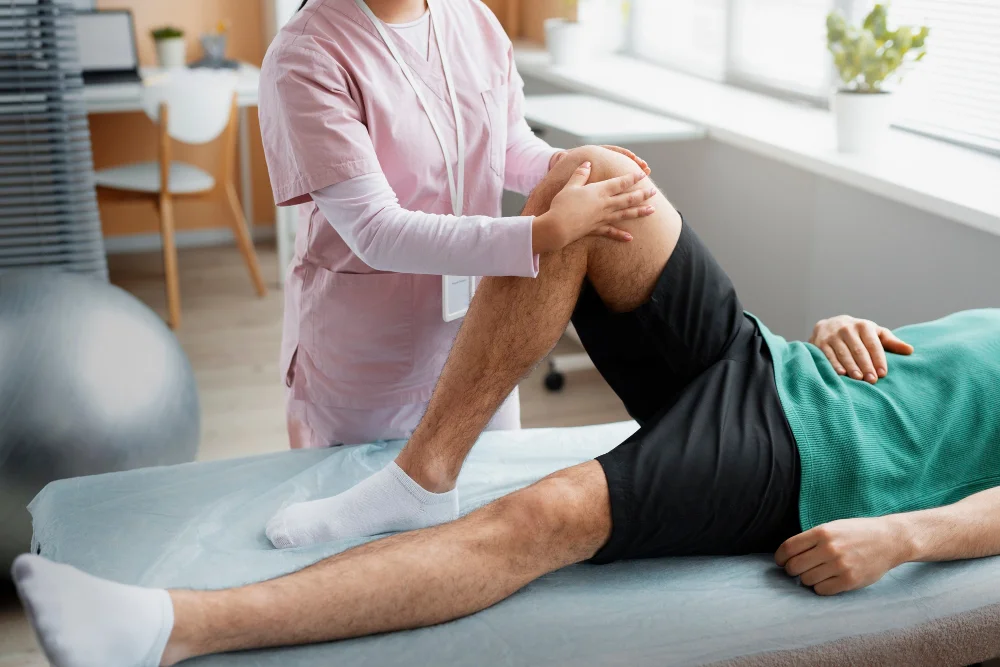
Can chiropractor help with MCL injury?
Yes, a chiropractor can help with an MCL injury by improving knee mobility, addressing surrounding muscle restrictions, and guiding progressive rehabilitation. For anyone asking, “Can chiropractor help with MCL injury,” the answer depends on the severity of the tear and the stage of recovery. An MCL injury can cause more than pain along the inner knee. It can affect stability, walking, range of motion, and confidence when putting weight on the affected leg. Understanding the injury grade is essential because a mild sprain and a complete tear require different levels of care. Chiropractic treatment can include joint mobilization, soft tissue therapy, and therapeutic exercises.
The right approach changes as the ligament heals. Exercises such as heel slides, quadriceps sets, and straight leg raises can support early recovery, while more demanding movements are introduced later. The article also explains how long an MCL tear can take to recover without surgery, which exercises can place excessive stress on the healing ligament, and why calf or hip discomfort can sometimes occur alongside an MCL injury. These details can make the difference between simply waiting for the knee to improve and understanding how recovery should progress.
What Is an MCL Injury?
A medial collateral ligament (MCL) injury occurs when the strong band of tissue that connects the thigh bone to the shin bone along the inner side of the knee is stretched or torn.
The MCL connects the femur to the tibia and helps prevent excessive inward movement of the knee. Its condition is therefore closely related to knee stability during walking, turning, and other weight bearing activities.
What Does the MCL Do?
The MCL provides stability along the inner side of the knee. It helps resist forces that push the lower leg outward relative to the thigh.
The ligament also contributes to controlled knee movement when the leg changes direction or rotates. This function becomes particularly important when the foot is planted while the body moves in another direction.
Damage to the MCL can reduce this stabilizing function. The degree of instability depends on how much of the ligament has been damaged.
Causes of MCL Injury
An MCL injury usually occurs when a force pushes the knee inward while the foot remains planted. This places excessive tension on the ligament along the inner side of the knee.
Common causes include:
- A direct blow to the outside of the knee
- A sudden change of direction with the foot planted
- A twisting motion during sports
- An awkward landing after a jump
- A fall that forces the knee into an abnormal position
- Skiing accidents involving a sudden twisting force
- Contact injuries during football, soccer, hockey, or basketball
The direction of the force is important. A blow to the outside of the knee can push the knee inward and overstretch the MCL. A planted foot combined with sudden rotation can create a similar load without direct contact.
An MCL injury can also occur with damage to other knee structures. Combined injuries can involve the ACL, meniscus, or other ligaments, particularly after a high force injury.
MCL Injury Symptoms and Signs
MCL injury symptoms commonly include pain and tenderness along the inner side of the knee. The severity depends on the extent of ligament damage.
Symptoms are the problems experienced by the person after the injury:
- Pain along the inner knee
- Tenderness around the MCL
- Pain when putting weight on the affected leg
- Pain when turning or changing direction
- A feeling that the knee is unstable
- Difficulty bending or straightening the knee
- Reduced confidence when walking
Signs are findings that can be observed or identified during an examination:
- Swelling around the inner knee
- Bruising along the medial side of the knee
- Tenderness when the MCL is pressed
- Reduced knee range of motion
- Increased looseness during specific stability testing
The symptoms do not always indicate the severity of the injury by themselves. A relatively small tear can cause considerable pain, while a more extensive injury may produce greater instability rather than proportionally greater pain.
What Are the Grades of an MCL Injury?
MCL injuries are commonly classified into three grades according to the extent of ligament damage and knee stability.
| Grade | Ligament damage | Typical findings |
|---|---|---|
| Grade 1 | The MCL is stretched with minor fiber damage | Localized tenderness and pain, with little or no instability |
| Grade 2 | The MCL is partially torn | Greater pain and swelling, with some loss of stability |
| Grade 3 | The MCL is completely torn | Significant ligament disruption and greater knee instability |
Grade 1 injuries involve relatively minor structural damage. The ligament remains largely intact, so substantial instability is uncommon.
Grade 2 injuries involve a partial tear. The damaged ligament provides less resistance against forces that would normally be controlled by the MCL.
Grade 3 injuries involve a complete tear. The resulting loss of ligament tension can produce noticeable instability, particularly when the knee is placed under side to side stress.
The grade is determined through a clinical assessment rather than symptoms alone. Imaging can also be used when another knee injury is suspected or the extent of damage needs further evaluation.
Can MCL Injury Cause Calf Pain?
An MCL injury can be associated with discomfort that extends toward the inner lower leg, but the MCL itself is located at the kneboth e rather than in the calf.
Calf discomfort can develop when an injured knee changes the way the leg is used. Altered walking mechanics can place additional demand on the calf muscles and other structures in the lower leg. Calf pain should not automatically be attributed to an MCL injury, particularly when it appears with significant swelling, warmth, redness, or sudden severe pain. These symptoms can have other causes and warrant appropriate medical evaluation.
Can MCL Injury Cause Hip Pain?
An MCL injury does not directly damage the hip, but changes in walking mechanics can affect how the hip is loaded. A painful or unstable knee can cause a person to shorten their stride, shift their weight, or avoid loading the affected leg. These changes can alter the work performed by the hip muscles during walking and other activities.
Hip pain that persists despite improvement in the knee should be assessed separately. It may involve a different musculoskeletal problem rather than being a direct consequence of the MCL injury.
Can a Chiropractor Help With an MCL Injury?
Yes, chiropractic care can help with an MCL injury by addressing knee mobility, surrounding muscle dysfunction, and movement during recovery. For patients searching “Can chiropractor help with MCL injury,” chiropractic care can be appropriate during recovery when the injury has been properly assessed and treatment matches its severity and healing stage. A knee pain chiropractor can assess knee movement,
Chiropractic care is most relevant when the injury has been properly assessed and the knee is stable enough for active rehabilitation. The goal is not to manually repair a torn ligament. Instead, treatment supports the recovery process by improving movement, reducing related musculoskeletal restrictions, and progressively restoring strength and function.
Many isolated MCL injuries are treated without surgery. Rehabilitation commonly focuses on restoring knee movement, rebuilding strength, and gradually returning the knee to normal activity.
For someone seeking a chiropractor for knee pain, the assessment should therefore look beyond the painful area. The hip, knee, ankle, and surrounding muscles all contribute to how the leg moves and absorbs force.
How Can Chiropractic Care Help With an MCL Injury?
Chiropractic care can help an MCL injury by addressing the movement problems that develop around the injured knee during recovery.
An MCL injury can temporarily change how the leg bends, straightens, bears weight, and controls movement. Protecting the ligament is necessary, but prolonged restriction can also lead to stiffness and reduced muscle function. Rehabilitation protocols therefore emphasize restoring range of motion and progressively rebuilding strength.
A chiropractic approach can focus on several functional goals:
- Restoring comfortable knee movement
- Improving mobility in restricted joints
- Addressing tight or overworked muscles around the knee and leg
- Rebuilding strength in the muscles that support the knee
- Improving balance and control of the affected leg
- Progressing movement as the ligament heals
This approach is particularly relevant after the initial injury has been evaluated and the appropriate level of protection has been established.
The stage of the injury matters. A recently injured MCL should not be treated in the same way as a healing MCL that has regained basic stability. Treatment intensity and exercise selection should progress according to pain, movement, strength, and knee stability.
What Does Chiropractic Treatment for an MCL Injury Involve?
Chiropractic treatment for an MCL injury can involve joint mobilization, soft tissue therapy, and therapeutic exercises selected according to the stage of recovery.
The purpose of these treatments is different. Joint mobilization addresses restricted movement, soft tissue therapy addresses surrounding muscle and tissue dysfunction, and therapeutic exercises rebuild strength and control.
Joint Mobilization
Controlled manual movements can improve restricted joint motion while maintaining appropriate movement of the affected area. The technique is selected according to the condition of the knee and the surrounding joints.
Following an MCL injury, reduced movement can develop because of pain, swelling, protective muscle tension, or reduced activity. Restoring comfortable motion is an important part of rehabilitation because normal knee function requires adequate flexion and extension.
The treatment does not involve forcing the injured ligament through painful movement. A chiropractor evaluates the available motion and applies appropriate techniques to joints that require improved mobility.
Mobility work can also include the hip or ankle when restrictions in those areas affect how the lower extremity moves. This creates a more complete approach than focusing exclusively on the tender area along the inner knee.
Soft Tissue Therapy
Soft tissue therapy addresses muscles and other soft tissues that can become tight or overloaded after an MCL injury.
When knee movement changes, muscles around the thigh, calf, hip, and knee can compensate for the injured ligament. These changes can contribute to stiffness and altered movement even as the ligament itself heals.
Treatment can include controlled manual techniques directed at the affected muscles and surrounding soft tissues. The intensity should match the stage of healing and should not place unnecessary stress on the injured MCL.
The purpose is to improve tissue mobility and movement quality so the leg can progressively return to normal activity.
Therapeutic Exercises
Therapeutic exercises are a central part of MCL rehabilitation because the knee needs more than pain reduction. It also needs adequate strength, movement control, and stability before normal activities can be resumed.
Early exercises can include gentle range of motion and quadriceps activation. Examples used in MCL rehabilitation include heel slides, quadriceps sets, and straight leg raises. As strength and stability improve, exercises can progress toward resistance training, balance work, and functional movements.
Heel slides: Lie on the back with the leg extended. Slowly slide the heel toward the body while bending the knee. Stop within a comfortable range and slowly return the leg to the starting position.
Quadriceps sets: Keep the leg straight and tighten the thigh muscle while gently pressing the back of the knee downward. Hold the contraction for several seconds, then relax.
Straight leg raises: Keep the injured leg straight while lying down. Tighten the thigh muscle and slowly raise the leg without bending the knee. Lower it under control.
These exercises should not be treated as a fixed program for every MCL injury. The appropriate exercises depend on injury grade, healing stage, pain, range of motion, stability, and associated injuries.
As recovery progresses, strengthening can include more demanding exercises such as partial squats, resistance exercises, balance training, and controlled functional movements. MCL rehabilitation protocols support progressive strengthening and restoration of proprioception as the knee becomes more stable.
The purpose of progression is to prepare the knee for the demands placed on it during normal activities, work, exercise, or sport. Exercise selection should therefore change as the knee regains movement and strength rather than remaining at the same level throughout recovery.
MCL Tear Recovery Time Without Surgery
An MCL tear can heal without surgery, with recovery commonly taking several weeks depending on the severity of the injury.
| MCL Injury | Typical Recovery Time Without Surgery |
| Grade 1 | Around 1 to 2 weeks |
| Grade 2 | Around 3 to 4 weeks |
| Grade 3 | Around 6 to 8 weeks or longer |
These are general recovery ranges rather than fixed deadlines. A Grade 1 injury usually heals faster because the ligament has only minor damage. Grade 2 injury involves a partial tear and generally requires more time for the ligament to regain strength.
A Grade 3 injury involves a complete MCL tear and can require a longer recovery period. Recovery can also take longer when the injury involves the ACL, meniscus, another ligament, or significant knee instability.
The time needed to return to normal activity depends on more than the number of weeks since the injury. Pain, knee stability, range of motion, strength, and the ability to perform normal movements should all improve before demanding activities are resumed.
For this reason, the expected recovery time can vary even between people with the same MCL injury grade. An uncomplicated isolated injury may progress faster than an injury involving additional damage to the knee.
MCL Exercises to Avoid
Some exercises should be avoided during MCL recovery because they place direct stress on the ligament before it has regained sufficient strength.
- Running and sprinting can be problematic early in recovery. Each stride creates repeated loading through the knee, while sprinting also requires stronger control during foot contact and push off.
- Lateral lunges and side stepping with resistance deserve particular caution. These movements load the inner side of the knee and can reproduce the sideways force that initially injured the MCL.
- Cutting and pivoting drills should also be avoided until adequate knee stability has returned. Rapid direction changes can place substantial rotational and sideways forces through the knee.
- Jumping and repeated landing exercises can create high forces through the knee. They are better introduced later when basic strength and single leg control have improved.
- Deep squats and heavy leg presses are not automatically prohibited for every MCL injury. They can become appropriate during rehabilitation, but excessive resistance or depth can aggravate a painful knee when introduced too early.
The safest approach is therefore based on the stage and severity of the injury, rather than permanently avoiding particular exercises. Early rehabilitation generally uses controlled movements before progressing toward running, jumping, lateral movements, and sport specific activity.
Chiropractic Care for MCL Injury at Ashburn Village Chiropractic
Ashburn Village Chiropractic provides chiropractic care for musculoskeletal and knee problems, with care delivered directly by Dr. Jonathan Solomon. He has provided chiropractic care in the Ashburn community since 2000 and is the longest standing chiropractor in Ashburn.
Dr. Jonathan Solomon earned his Doctor of Chiropractic degree, cum laude, from Life Chiropractic College in Marietta, Georgia, in 1996. He also earned his Bachelor of Arts from Rutgers College in 1991. He is licensed by the Virginia Board of Medicine and nationally board certified in chiropractic care.
For someone looking for a chiropractor for knee pain, experience matters because an MCL injury requires more than simply treating the painful area. Proper care begins with understanding the injury, assessing knee movement and stability, and determining which forms of treatment are appropriate for the current stage of recovery.
At Ashburn Village Chiropractic, patients are evaluated directly by Dr. Jonathan Solomon at each visit. The clinic also has an on site X ray machine when imaging is clinically appropriate, along with chiropractic and physiotherapy equipment used as part of individualized treatment plans.
Dr. Jonathan Solomon’s more than two decades of clinical experience provide continuity from the initial evaluation through follow up care. This allows changes in pain, mobility, and function to be considered as treatment progresses rather than relying on a standardized approach for every knee injury.
For an MCL injury, chiropractic care can focus on restoring appropriate movement, addressing related musculoskeletal restrictions, and progressing exercises as the knee recovers. The objective is to support functional recovery while recognizing when an injury requires additional medical evaluation.
Get a summary of this article with your favorite AI: