
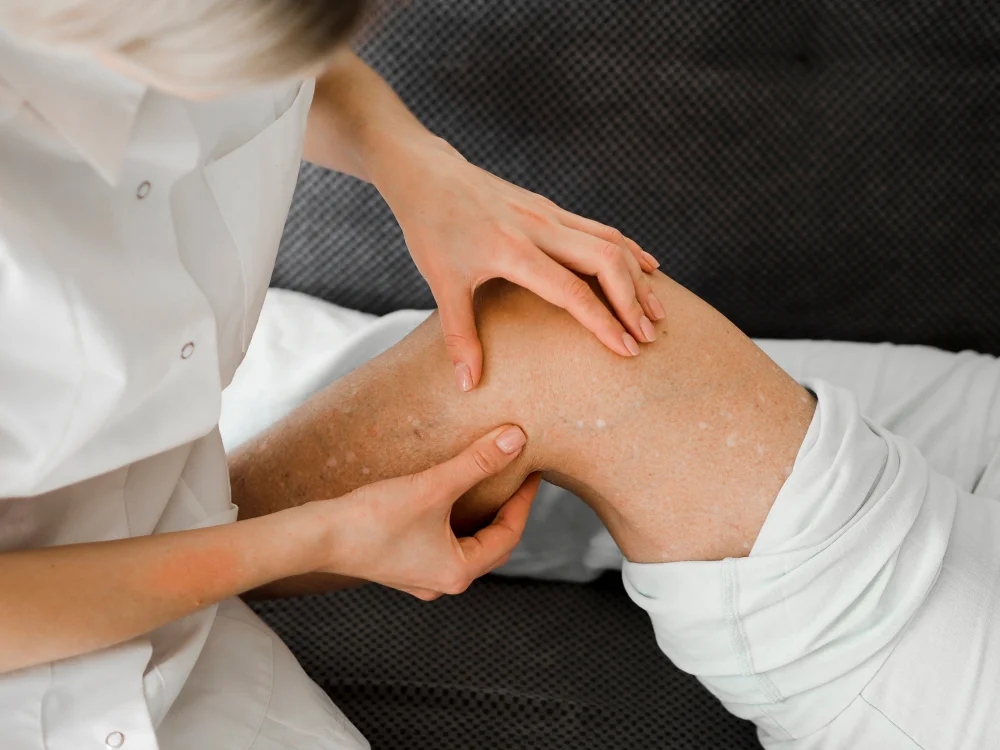
Yes, chiropractic treatment can treat a Baker’s cyst when restricted knee movement, stiffness, or related musculoskeletal problems are contributing to discomfort. The focus is on improving how the knee functions rather than physically draining or removing the cyst. Can Chiropractic Treat Baker’s Cyst is therefore best understood through the type of knee dysfunction involved. Chiropractic care can address joint movement restrictions, surrounding soft tissue problems, and muscle weakness that can affect normal knee function.
Treatment can include joint mobilization, soft tissue therapy, and therapeutic exercises. The right approach depends on the condition of the knee and how the cyst is affecting movement and daily activity.
Managing a Baker’s cyst also involves understanding which activities can aggravate symptoms. Walking, specific exercises, heat or ice, and sleeping position can all affect knee comfort. Knowing how these factors relate to the condition can support a more appropriate approach to conservative care.
What Is a Baker’s Cyst?
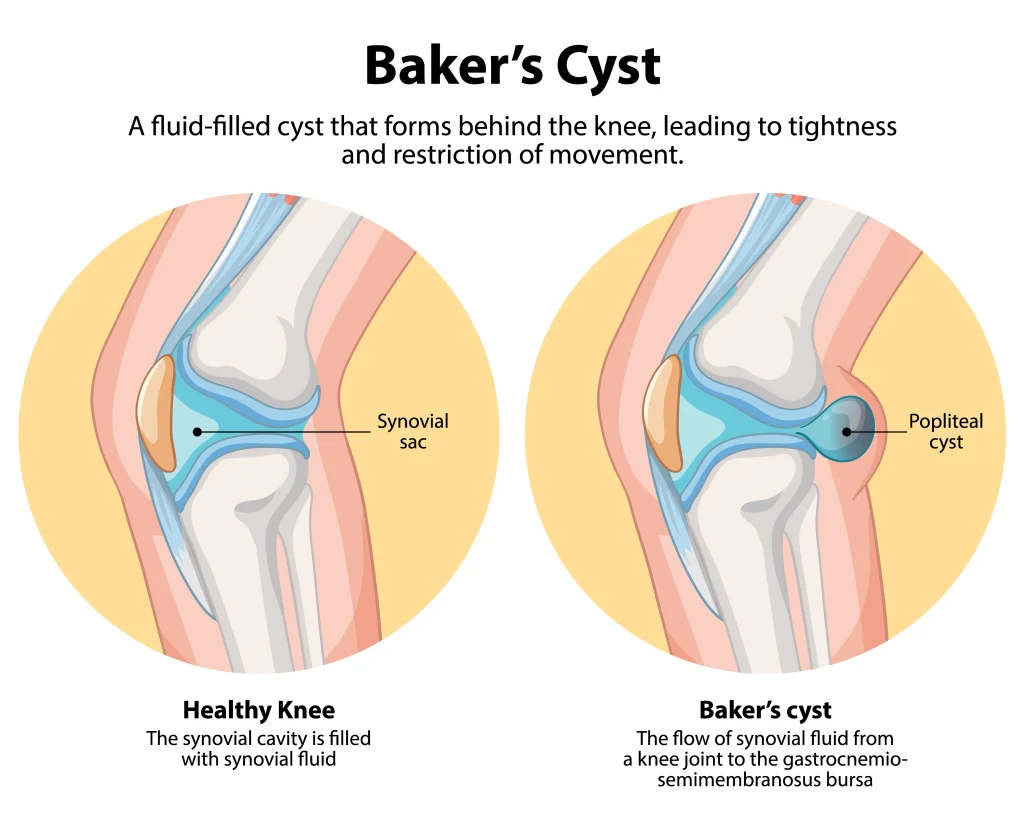
A Baker’s cyst is a small pocket of fluid that forms behind the knee. It is also called a popliteal cyst. The cyst develops when fluid builds up inside the space behind the knee joint. You may notice a soft lump or swelling in that area.
Some Baker’s cysts are small and cause little discomfort. Others can create pressure, tightness, or aching behind the knee. The area may feel more uncomfortable when you bend or straighten your leg.
A Baker’s cyst is usually not a serious condition. Many people can continue their normal activities, although a larger cyst can make knee movement uncomfortable.
The swelling can also feel different depending on how you position your knee. It may become easier to notice when the leg is straight and less noticeable when the knee is bent. If you notice a new lump behind your knee, it is worth having it checked. Not every lump in this area is a Baker’s cyst, so getting the right diagnosis matters.
Can Chiropractic Treat a Baker’s Cyst?
Yes, chiropractic treatment can be part of the treatment plan for a Baker’s cyst when knee stiffness, restricted movement, or related musculoskeletal problems are present. The focus is on improving knee function and addressing factors that affect normal movement.
A Baker’s cyst is a fluid filled sac that develops behind the knee. Chiropractic treatment does not drain the cyst or remove the accumulated fluid. Instead, it addresses musculoskeletal problems that can affect the way the knee functions.
Chiropractic treatment for baker’s cyst is most relevant when the cyst is associated with stiffness or restricted knee movement. Non surgical treatment is commonly used for Baker’s cysts, with exercise and rehabilitation forming part of this approach.
For anyone asking Can Chiropractic Treat Baker’s Cyst, the answer depends on what is causing the knee dysfunction and how the condition is affecting movement. Chiropractic care focuses on the musculoskeletal factors that can be addressed through manual treatment and rehabilitation.
How Can Chiropractic Care Help a Baker’s Cyst?
Chiropractic care can address restricted movement in the knee and related areas of the lower extremity. The knee depends on coordinated movement between the hip, knee, ankle, and surrounding muscles.
A chiropractor for baker’s cyst can assess the lumbar spine, pelvis, hip, knee, ankle, and foot to identify restrictions that affect knee function. This includes evaluating hip rotation, pelvic alignment, knee flexion and extension, ankle dorsiflexion, and foot mechanics. Limitations in these areas can alter lower extremity movement and increase stress on the knee.
Potential benefits include:
- Improved knee range of motion
- Reduced stiffness
- Better movement of the lower extremity
- Improved function of the muscles supporting the knee
- More comfortable knee movement during daily activities
The purpose is to restore better movement rather than focus solely on the swelling behind the knee. The cyst and the movement problems associated with it are separate clinical concerns.
For baker’s cyst pain treatment, improving knee function can be an important part of a non surgical care plan. Rehabilitation and suitable exercise are also recognized components of conservative treatment for Baker’s cysts.
What Chiropractic Treatments Are Used for a Baker’s Cyst?
Chiropractic treatment can include joint mobilization, chiropractic adjustments, soft tissue therapy, and therapeutic exercises. The techniques selected depend on the movement restrictions and musculoskeletal findings identified during the examination. Each treatment has a different purpose, so they should not be treated as interchangeable techniques.
Chiropractic Adjustments and Joint Mobilization
Joint mobilization uses controlled movements to improve restricted joint motion. It can be used when stiffness is limiting normal movement around the knee.
Chiropractic adjustments use specific manual forces to address joint movement restrictions when appropriate. Treatment should remain within a comfortable range and should not force the knee through significant pain.
These techniques are directed at joint function. They do not physically drain the Baker’s cyst or remove the fluid inside it.
Soft Tissue Therapy
Soft tissue therapy addresses tightness and restrictions in the muscles and other soft tissues surrounding the knee.
Treatment can involve muscles around the thigh, hip, and lower leg when these tissues are affecting knee movement. Improving soft tissue mobility can support more normal movement of the lower extremity.
Soft tissue therapy is therefore directed at the structures surrounding the cyst rather than the cyst itself.
Therapeutic Exercises
Therapeutic exercises can improve knee mobility and strengthen muscles that support normal leg function. Exercise and rehabilitation are recognized components of non surgical treatment for Baker’s cysts.
The appropriate baker’s cyst exercises depend on the level of knee mobility, strength, and discomfort. Exercise selection should therefore be based on the individual clinical assessment.
This can include exercises that improve range of motion, strengthen supporting muscles, and gradually restore normal movement. The purpose is to improve knee function without unnecessarily increasing irritation.
Overall, chiropractic care for baker’s cyst focuses on the musculoskeletal factors affecting knee function. It can form part of a broader baker’s cyst conservative treatment approach when appropriate.
The cyst itself can require separate medical management when it remains large, painful, or persistent. Evaluation of the underlying knee condition is also important because Baker’s cysts are commonly associated with problems inside the knee joint.
What makes Baker’s cysts worse?
Activities that increase pressure or irritation in the knee can make a Baker’s cyst more painful or noticeable. Symptoms commonly become worse with increased activity, prolonged standing, or repeated knee bending.
Prolonged standing
Prolonged standing can increase discomfort when a Baker’s cyst is already causing pressure behind the knee. Remaining upright for extended periods keeps the knee and surrounding tissues under continuous load. This can make swelling, tightness, or aching more noticeable as the day continues.
The problem is usually not standing itself. The duration matters when the knee has limited tolerance for sustained loading. Changing position periodically can reduce the amount of continuous stress placed on the affected leg.
Repeated knee bending
Repeated knee bending can aggravate symptoms when movement is already restricted behind the knee. Deep bending brings the tissues around the back of the knee closer together and can increase pressure in an already swollen area. Activities involving frequent squatting or repeated bending can therefore make discomfort more noticeable.
This can be particularly relevant when knee movement is already limited. Repeatedly moving through a range that causes discomfort can increase irritation and make the knee feel stiffer afterward. The amount of bending that aggravates symptoms can differ between individuals.
High impact activities
Running, jumping, and other high impact activities can place greater forces through the knee. These activities require the knee to absorb repeated loads while also controlling movement of the leg. A knee already affected by swelling or irritation may tolerate these demands poorly.
High impact activity does not automatically make every Baker’s cyst worse. The concern is greater when symptoms increase during or after the activity. Persistent increases in pain or swelling indicate that the current activity level may be exceeding the knee’s tolerance.
Exercises for Baker’s Cyst
Gentle exercises can help maintain knee movement and strengthen the muscles that support the knee. Exercise is commonly included in rehabilitation for Baker’s cysts, particularly when stiffness or an underlying knee problem affects movement. The focus is maintaining comfortable movement and improving the strength needed to support normal knee function.
Gentle Exercises That Can Be Performed at Home
Several simple exercises can support knee movement and leg strength without requiring gym equipment. These exercises should remain within a comfortable range and should not cause significant pain.
Heel Slides
Heel slides gently work on knee flexion and extension.
- Lie on the back with both legs extended.
- Slowly slide the affected heel toward the buttocks.
- Bend the knee only as far as comfortable.
- Pause briefly at the comfortable end position.
- Slowly slide the heel back to the starting position.
- Repeat the movement in a controlled manner.
This exercise can help maintain knee movement when stiffness makes bending uncomfortable.
Quadriceps Sets
Quadriceps sets strengthen the front thigh muscles without repeated knee bending.
- Lie on the back with the affected leg straight.
- Place a small rolled towel under the knee if needed.
- Tighten the front thigh muscle while gently pressing the knee downward.
- Hold the contraction for several seconds.
- Relax the thigh completely.
- Repeat the movement without lifting the leg.
This exercise is useful when strengthening is needed but repeated knee movement is uncomfortable.
Straight Leg Raises
Straight leg raises strengthen the quadriceps while keeping the knee relatively straight.
- Lie on the back with one knee bent.
- Keep the affected leg straight.
- Tighten the thigh muscle of the straight leg.
- Slowly raise the leg until it reaches the height of the opposite knee.
- Hold briefly at the top.
- Slowly lower the leg back to the floor.
The movement should remain controlled throughout. The exercise should be stopped if it causes significant knee pain.
Seated Knee Extensions
Seated knee extensions work the quadriceps through a controlled range.
- Sit upright on a stable chair.
- Keep both feet resting on the floor.
- Slowly straighten the affected knee.
- Stop before reaching a painful range.
- Hold the extended position briefly.
- Slowly lower the foot back to the floor.
This exercise can be performed at home without equipment and can be progressed gradually as knee movement improves.
Exercise selection should remain individualized because Baker’s cysts can occur alongside different knee conditions. Physical therapy commonly uses exercises to strengthen the muscles around the knee, while chiropractic care can address movement restrictions identified during an examination.
The exercises above are intended to support comfortable movement and basic strength. They should not be considered a method for directly removing or draining a Baker’s cyst.
What Exercises Should Be Avoided With a Baker’s Cyst?
Exercises that cause significant pain, increase swelling, or place excessive stress on the knee should be avoided while symptoms are active. High impact activities and deep knee bending can be particularly difficult when the knee is already irritated. The concern is choosing movements that exceed the knee’s current tolerance. A suitable exercise should allow controlled movement without causing a substantial increase in symptoms.
Deep Squats
Deep squats require substantial knee flexion and can increase pressure around the back of the knee. This can be uncomfortable when a Baker’s cyst is restricting movement.
A partial squat may be better tolerated than a deep squat during rehabilitation. However, any squat that increases pain or swelling should be stopped rather than forced through discomfort.
Lunges
Lunges place considerable demand on knee control and require repeated bending under load. Deep lunges can be particularly challenging when knee flexion is already uncomfortable.
They should not be used simply to strengthen the leg if the movement increases symptoms. Less demanding strengthening exercises can be selected while knee movement improves.
Running and Jumping
Running, jumping, and other high impact exercises produce repeated forces through the knee. These activities can aggravate symptoms when the knee is already painful or swollen.
Running should not be used as a progression simply because walking has become comfortable. The knee should tolerate lower impact activities first before higher impact demands are introduced.
Heavy Leg Exercises
Heavy leg presses, weighted squats, and similar exercises increase the load placed through the knee. They can be inappropriate when a Baker’s cyst is causing significant pain or restricting movement.
Strength training can still have an important role in rehabilitation. The resistance and range of motion should match the knee’s current capacity rather than forcing progression too quickly.
Is walking good for a Baker’s cyst?
Walking can be beneficial for a Baker’s cyst when it does not increase knee pain or swelling. Gentle walking keeps the knee moving without the repeated impact associated with running or jumping.
However, walking can also make symptoms worse in some cases. The NHS notes that Baker’s cyst symptoms can become worse after walking.
A practical approach is to start with short, comfortable walks on a level surface. If the knee remains comfortable during and after walking, the distance can be increased gradually.
For example:
- Start with a short walk at a comfortable pace.
- Keep the stride natural rather than deliberately lengthening it.
- Avoid hills, running, and uneven surfaces initially.
- Monitor pain and swelling during the walk.
- Check how the knee feels later the same day.
- Increase walking time gradually when symptoms remain stable.
A chiropractor for knee pain can also assess whether restricted movement in the hip, knee, ankle, or foot is affecting walking mechanics. This can help determine whether walking should be modified during rehabilitation.
Which is better for Baker’s cyst, heat or ice?
Ice is generally the better option when a Baker’s cyst is causing swelling or increased pain. Cold therapy can reduce discomfort and help control swelling around the knee. It can be especially useful after activity when the knee becomes more painful or swollen.
Heat is better suited to stiffness when significant swelling is not present. Gentle warmth can relax surrounding muscles and make the knee feel less stiff before movement. Heat is therefore more useful when restricted movement is the main complaint rather than active swelling.
| Symptoms or situation | Better option | Reason |
|---|---|---|
| Swelling behind the knee | Ice | Helps reduce swelling and discomfort |
| Increased pain after activity | Ice | Can calm post activity irritation |
| Knee stiffness without swelling | Heat | Can relax surrounding tissues |
| Stiffness before gentle movement | Heat | Can make movement feel easier |
| Significant swelling and stiffness together | Ice First | Swelling should be controlled before using heat |
For home use, an ice pack can be applied for about 15 to 20 minutes with a cloth between the pack and skin. Heat can be applied for a similar period when stiffness is the primary concern. The skin should remain comfortable during either treatment.
These measures provide symptom relief rather than treatment of the cyst itself. Neither heat nor ice removes the fluid filled sac behind the knee or addresses the underlying joint condition associated with it.
This distinction is relevant when considering Can Chiropractic Treat Baker’s Cyst. Chiropractic care can address musculoskeletal restrictions affecting knee function, while heat or ice can be used as supportive measures for specific symptoms.
Sudden calf swelling, significant pain, redness, or warmth should not be managed with heat or ice alone. These symptoms can occur when a Baker’s cyst ruptures and can resemble a blood clot, requiring prompt medical assessment.
How to sleep with Baker’s cyst?
- Sleeping on the back with the affected leg comfortably supported is generally a suitable position for a Baker’s cyst. A pillow can be placed under the calf and lower leg to support the knee without pressing directly behind it.
- Side sleeping can also work when a pillow is placed between the knees. This keeps the affected leg supported and prevents the knees from pressing against each other.
- Avoid sleeping directly on the affected knee or keeping it deeply bent for long periods. These positions can increase pressure behind the knee and make discomfort more noticeable.
For people considering baker’s cyst treatment without surgery, proper sleeping posture can improve nighttime comfort while the underlying knee problem is being addressed. Changing sleeping position does not remove the cyst itself.
Chiropractic Care for Baker’s Cyst at Ashburn Village Chiropractic
For anyone looking for a chiropractor for knee pain, Ashburn Village Chiropractic provides care focused on knee function, mobility, and related musculoskeletal concerns.
Dr. Jonathan Solomon earned his Doctor of Chiropractic degree, cum laude, from Life Chiropractic College in Marietta, Georgia, in 1996. He also earned a Bachelor of Arts from Rutgers College in New Brunswick, New Jersey, in 1991.
Dr. Jonathan Solomon has provided chiropractic care in Ashburn since 2000. He is licensed by the Virginia Board of Medicine and nationally board certified in chiropractic care. He is also a member of the Virginia Chiropractic Association and American Chiropractic Association.
This education, licensing, board certification, and long clinical experience provide the professional foundation for chiropractic care at Ashburn Village Chiropractic. For knee conditions such as a Baker’s cyst, care can include assessment of joint movement, muscle function, and other musculoskeletal factors affecting the knee.
Get a summary of this article with your favorite AI: