
Can Chiropractor Help With Osgood Schlatter?
Yes. Chiropractic care can help manage Osgood Schlatter by addressing muscle tension, movement restrictions, strength deficits, and activity demands that place stress on the tibial tubercle. Care can also help maintain comfortable movement while the knee continues to mature, without interfering with the natural growth process.
The answer to “can chiropractor help with osgood schlatter” depends on the symptoms, activity level, and demands placed on the developing knee. Understanding which exercises can strengthen the leg without excessive loading, which activities can worsen symptoms, and how to return to sports safely is essential. These factors can determine how comfortably the knee handles everyday movement and increasing physical activity.
What Is Osgood Schlatter?
Osgood Schlatter is a common cause of knee pain in growing children and adolescents. It affects the tibial tubercle, the bony prominence just below the kneecap where the patellar tendon attaches to the shinbone.
During a growth spurt, the bones can grow rapidly while the surrounding muscles and tendons need time to adapt. The quadriceps pull through the patellar tendon onto the developing tibial tubercle. Repeated loading from sports and other activities can irritate this growth area and cause pain, tenderness, and swelling.
The condition usually affects the front of the knee rather than the knee joint itself. It can affect one or both knees and generally improves as growth is completed, although the bony prominence can remain after the pain has settled.
Osgood Schlatter Disease Symptoms
The symptoms are usually felt at the front of the knee and develop gradually rather than after one sudden injury. The severity can vary depending on the amount and type of physical activity. Common symptoms include:
- Pain below the kneecap: Pain is usually centered over the tibial tubercle at the top of the shinbone.
- Tenderness: The tibial tubercle can become painful when touched or pressed.
- Localized swelling: Swelling can develop around the painful growth area.
- A bony bump: The prominence below the kneecap can become larger or more noticeable.
- Pain during running or jumping: High impact activities commonly increase pain.
- Pain with squatting: Repeated knee bending can increase stress around the tibial tubercle.
- Pain with kneeling: Direct pressure over the bony prominence can aggravate symptoms.
- Pain when using stairs: Climbing or descending stairs can increase discomfort.
- Pain after physical activity: Symptoms can become more noticeable during or immediately after sports.
- Limping: More significant pain can cause a temporary limp, particularly after physical activity.
- Symptoms in one or both knees: Osgood Schlatter can affect either knee or both knees at the same time.
Symptoms commonly ease with rest and become more noticeable again when the knee is exposed to repeated running, jumping, squatting, or other activities that load the area.
Causes of Osgood Schlatter
Osgood Schlatter develops from repeated traction at the tibial tubercle while the knee is still growing. The quadriceps attach to the patellar tendon, which attaches to the tibial tubercle. Every time the quadriceps contract to straighten the knee, tension is transferred through this attachment.
Several factors can increase the amount of stress placed on this developing area:
- Adolescent growth spurts: Rapid skeletal growth changes the relationship between the bones, muscles, and tendons around the knee.
- Tight quadriceps: Tightness in the front thigh muscles can increase tension transmitted through the patellar tendon.
- Tight hamstrings and calf muscles: Tightness in other muscles around the leg can also affect lower limb movement and contribute to increased loading.
- Repetitive running: Frequent running repeatedly loads the quadriceps and patellar tendon.
- Repeated jumping: Jumping places substantial force through the extensor mechanism of the knee.
- Frequent changes of direction: Cutting and directional changes can repeatedly load the developing knee.
- High impact sports: Activities such as football, basketball, gymnastics, athletics, and similar sports can increase repetitive stress.
- High training volume: Frequent training with limited recovery can expose the tibial tubercle to repeated loading.
- Repeated squatting or kneeling: These movements can increase stress or direct pressure around the already irritated area.
Osgood Schlatter is therefore associated with the combination of skeletal growth, traction from the quadriceps and patellar tendon, and repeated physical loading. It usually develops gradually rather than from one traumatic knee injury.
Can a Chiropractor Help With Osgood Schlatter?
Yes. Chiropractic care can help manage Osgood Schlatter by addressing the muscle tension, movement restrictions, strength deficits, and activity demands that can increase stress around the tibial tubercle. The goal is to make movement more comfortable and improve the knee’s ability to handle normal and sporting activities.
When asking can chiropractor help with osgood schlatter, the answer depends on the severity of symptoms, activity demands, and how the knee responds to movement.A knee pain chiropractor can also help determine which activities are aggravating the condition and how exercise can be progressed without repeatedly irritating the developing area. Chiropractic care does not stop the growth process or remove the underlying growth related changes. Instead, it focuses on improving function while the knee continues to mature.
Managing Stress on the Tibial Tubercle
The tibial tubercle is placed under tension whenever the quadriceps contract through the patellar tendon. Running, jumping, squatting, and repeated changes of direction can increase this load when the area is already irritated.
Managing this stress does not mean avoiding all physical activity. The more useful approach is to modify activities that consistently increase pain while maintaining movements the knee can tolerate. Activity can then be increased gradually as symptoms and function improve.
A osgood schlatter chiropractic can identify movements that place excessive demand on the affected area and help establish an appropriate progression back to normal activity.
Improving Quadriceps and Hamstring Flexibility
Flexibility around the thigh can influence how much tension is transferred through the knee during movement. Quadriceps tightness is particularly relevant because the quadriceps connect to the tibial tubercle through the patellar tendon.
Hamstring tightness can also affect lower limb movement and the way the knee functions during activities such as running and squatting. Improving flexibility can reduce unnecessary tension and allow the knee to move more comfortably.
The focus is not simply on stretching the painful area. The aim is to improve the movement of the entire lower limb so everyday and sporting activities place less unnecessary demand on the irritated growth area.
Correcting Muscle and Movement Imbalances
Pain can change the way an adolescent walks, squats, lands, or runs. Over time, these changes can place greater demands on other muscles and alter how forces are distributed through the leg.
Strength and movement can be assessed to identify weaknesses or poor control around the hip, knee, and ankle. Treatment can then address the specific movement problems rather than applying the same exercise program to every case.
This is one area where chiropractic for knee pain can complement an active rehabilitation program. Improving lower limb control can make movement more efficient while reducing unnecessary stress during physical activity.
Progressing Knee Strength Without Overloading the Growth Area
Strengthening the muscles around the knee helps the leg tolerate increasing physical demands. However, exercises need to progress according to the knee’s response rather than adding resistance too quickly.
Early exercises can focus on controlled muscle activation and basic strength. As tolerance improves, exercises can progress to squats, lunges, balance work, and other movements that resemble normal activities and sport.
The objective is not to eliminate every sensation from the knee before strengthening begins. It is to gradually build strength without repeatedly provoking significant pain or swelling.
Returning to Sports Without Repeatedly Irritating the Knee
Returning to sport requires more than simply waiting for the pain to disappear. Running, jumping, cutting, and repeated acceleration place much greater demands on the knee than normal walking.
A gradual return can begin with everyday activity, followed by controlled strengthening and sport specific movements. Running and jumping can then be increased as the knee demonstrates adequate strength, control, and tolerance.
Returning to full training too quickly can repeatedly aggravate the tibial tubercle. A chiropractor for osgood-schlatter disease can help guide this progression while monitoring strength, movement, and tolerance to increasing activity.
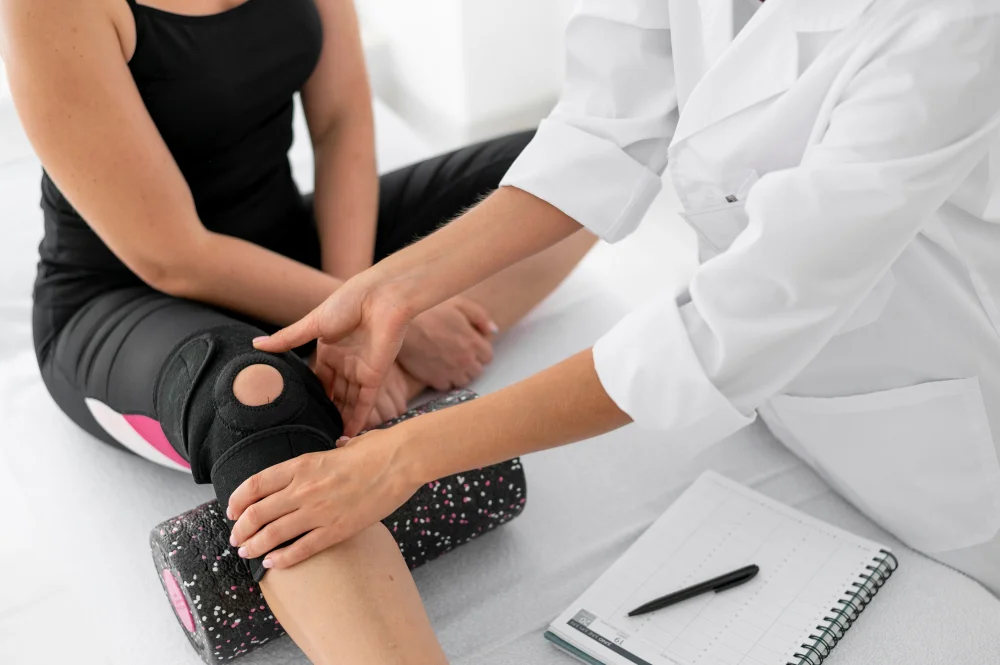
Should You Wear a Knee Brace With Osgood Schlatter?
A knee brace is not necessary for every person with Osgood Schlatter. Some patients use a patellar tendon strap or similar support during activity because it can make movement more comfortable by changing how force is distributed around the patellar tendon.
A brace should not be used to push through significant pain or continue high impact activity that is clearly aggravating the condition. Activity modification, appropriate flexibility work, strengthening, and gradual return to sport remain more important parts of conservative care. If pain continues despite reducing aggravating activities, or symptoms become progressively worse, the knee should be reassessed before increasing physical activity.
Exercises for Osgood Schlatter
Exercises for Osgood Schlatter should improve flexibility, lower limb strength, and movement control without placing excessive stress on the tibial tubercle. The best exercises can be adjusted according to pain, strength, and activity level.
Quadriceps Stretch
The quadriceps connect to the patellar tendon, which attaches directly to the tibial tubercle. Tight quadriceps can increase tension through this area during knee movement.
A gentle quadriceps stretch can improve flexibility without repeatedly loading the knee. It is particularly useful after activity when the thigh muscles feel tight.
Steps:
- Stand upright and hold a wall or stable surface for balance.
- Bend one knee and bring the heel toward the buttocks.
- Hold the ankle with the hand on the same side.
- Keep both knees close together and avoid pulling the heel forcefully.
- Keep the standing leg stable throughout the stretch.
- Hold the position for 20 to 30 seconds.
- Slowly release the leg and repeat on the opposite side.
The stretch should create gentle tension through the front of the thigh. It should not create sharp pain around the tibial tubercle.
Hamstring Stretch
The hamstrings influence how the knee and hip move during walking, running, squatting, and other activities. Limited hamstring flexibility can affect lower limb movement and increase compensatory stress.
Stretching the hamstrings can improve flexibility without directly loading the irritated growth area. The movement should remain controlled and should not force the knee into a painful position.
Steps:
- Sit near the edge of a firm surface.
- Extend one leg forward with the heel resting on the floor.
- Keep the other foot flat on the floor.
- Keep the extended knee slightly relaxed rather than forcefully locked.
- Lean forward from the hips while keeping the back relatively straight.
- Stop when a gentle stretch develops along the back of the thigh.
- Hold for 20 to 30 seconds.
- Return to the starting position and repeat on the opposite leg.
The stretch should be felt through the hamstring rather than as increased pain below the kneecap.
Straight Leg Raise
Straight leg raises strengthen the quadriceps while keeping the knee relatively straight. This allows the thigh muscles to be strengthened without repeated deep knee bending.
Building quadriceps strength can improve the leg’s ability to tolerate daily movement and gradually increase physical activity. The exercise should remain controlled rather than performed with momentum.
Steps:
- Lie flat on the back with both legs extended.
- Bend one knee while keeping the other leg straight.
- Tighten the thigh muscle of the straight leg.
- Keep the knee straight without locking it forcefully.
- Slowly raise the straight leg until it reaches the height of the opposite knee.
- Pause briefly at the top of the movement.
- Lower the leg slowly toward the floor.
- Repeat the movement without allowing the leg to drop quickly.
The movement should remain comfortable throughout the exercise. Increasing pain around the tibial tubercle indicates that the exercise volume or intensity needs adjustment.
Glute Bridge
The gluteal muscles contribute to hip stability and lower limb control during running, jumping, and landing. Weakness around the hips can affect how forces are transferred through the knee.
Glute bridges strengthen the hips while placing relatively little movement through the knee. They can therefore be useful during the earlier stages of strengthening.
Steps:
- Lie on the back with both knees bent.
- Place both feet flat on the floor about hip width apart.
- Position the feet comfortably without bringing them too close to the buttocks.
- Tighten the abdominal and gluteal muscles.
- Press the feet into the floor and slowly lift the hips.
- Continue lifting until the shoulders, hips, and knees form a straight line.
- Hold the position briefly without arching the lower back.
- Slowly lower the hips back to the floor.
- Repeat while maintaining controlled movement.
The exercise should be felt mainly through the gluteal muscles and back of the thighs. The knee should remain comfortable throughout the movement.
Wall Sit
Wall sits develop strength and endurance in the quadriceps and hip muscles. They can help prepare the knee for activities that require sustained lower limb control.
The depth of the wall sit can be adjusted according to symptoms. A shallower position places less demand on the knee and can be progressed as strength and tolerance improve.
Steps:
- Stand with the back against a wall.
- Place the feet slightly forward from the body.
- Keep the feet about hip width apart.
- Slowly slide the back down the wall.
- Bend the knees only as far as comfortably tolerated.
- Keep the knees aligned with the feet.
- Hold the position while maintaining steady breathing.
- Slowly push through the feet and slide back to standing.
There is no need to reach a deep squat position. The exercise should challenge the muscles without significantly increasing pain below the kneecap.
Calf Raise
The calf muscles contribute to ankle movement and lower limb control during walking, running, and jumping. Strengthening them can improve the leg’s ability to manage repeated activity.
Calf raises provide a simple way to strengthen the lower leg without requiring deep knee bending. They can be progressed from two legs to one leg as strength improves.
Steps:
- Stand upright near a wall or stable surface.
- Place both feet about hip width apart.
- Keep the knees comfortably straight without locking them.
- Slowly raise both heels from the floor.
- Rise onto the balls of the feet while maintaining balance.
- Pause briefly at the top.
- Slowly lower both heels back to the floor.
- Repeat the movement without bouncing.
Keep the movement slow and controlled. Avoid shifting excessive weight onto the outside or inside of the feet during the exercise.
Exercise Progression for Osgood Schlatter
Exercises should progress according to symptoms and physical tolerance rather than a fixed schedule. A child or adolescent should be able to perform an exercise with good control before resistance or difficulty is increased.
As strength improves, exercises can gradually become more demanding. Running, jumping, and sport specific movements should be introduced progressively rather than immediately returning to full training. Pain that continues to increase during exercise or remains significantly worse afterward indicates that the current workload may be too high.
What Not to Do With Osgood Schlatter?
Osgood Schlatter can become more painful when the tibial tubercle is repeatedly exposed to high loads. Certain activities should therefore be reduced or modified while symptoms are active. This does not mean stopping all physical activity. Complete inactivity can reduce strength and make returning to sports more difficult. The goal is to avoid activities that consistently increase pain while maintaining comfortable movement.
Do Not Push Through Increasing Knee Pain
Exercise should not continue when pain progressively increases during the activity. Repeatedly loading an already irritated tibial tubercle can prolong symptoms and make recovery more difficult.
Mild discomfort during activity does not always require complete rest. However, pain that becomes sharper, increases with each repetition, or remains significantly worse afterward indicates that the activity is too demanding.
Avoid Repeated High Impact Activities
Running, jumping, sprinting, and repeated changes of direction place substantial loads through the quadriceps and patellar tendon. These activities can aggravate Osgood Schlatter when performed frequently during a painful phase. Reducing their frequency or intensity can decrease stress on the tibial tubercle while maintaining other comfortable activities.
Do Not Return to Full Sports Training Too Quickly
Returning to full training before the knee has regained adequate strength and tolerance can repeatedly irritate the affected area. Sport should be increased gradually rather than moving directly from reduced activity to full practices and competition. Running can progress to faster movements, jumping, and sport specific drills as symptoms allow.
Avoid Deep or Repetitive Squatting When Painful
Deep squatting increases demand on the quadriceps and can increase tension through the patellar tendon. Repeated squatting can therefore aggravate symptoms when the tibial tubercle remains sensitive. Squatting does not need to be permanently avoided. The depth, repetitions, and resistance should be reduced when these movements increase pain.
Avoid Kneeling Directly on the Tibial Tubercle
Direct pressure over the tibial tubercle can be uncomfortable because the area is already irritated. Avoiding prolonged kneeling can reduce unnecessary pressure on the painful prominence. When kneeling is unavoidable, changing position or using adequate cushioning can reduce direct pressure.
Do Not Increase Exercise Load Too Quickly
Strengthening exercises should become more challenging gradually. Adding resistance, repetitions, or training volume too quickly can increase stress around the developing knee. Progress should be based on how the knee responds during exercise and afterward. A noticeable increase in pain or swelling suggests that the current workload needs to be reduced.
Do Not Ignore Persistent or Worsening Symptoms
Osgood Schlatter commonly improves with appropriate activity modification and gradual rehabilitation. Persistent or worsening pain should not simply be treated by continuing the same activity level. A reassessment is appropriate when pain interferes with normal activities, causes limping, or continues despite reducing aggravating activities. This helps determine whether the current approach needs to be changed or whether another knee problem should be considered.
Chiropractic Care for Osgood Schlatter at Ashburn Village Chiropractic
At Ashburn Village Chiropractic, care for Osgood Schlatter focuses on managing symptoms and improving how the knee and lower limb function during activity. Treatment is based on the individual’s symptoms, movement, strength, and activity demands.
The approach can include movement assessment, appropriate soft tissue techniques, flexibility exercises, strengthening, and activity modification. The goal is to reduce unnecessary stress around the tibial tubercle while maintaining appropriate physical activity.
Dr. Jonathan Solomon has practiced chiropractic care in Ashburn since 2000. He earned his Doctor of Chiropractic degree, cum laude, from Life Chiropractic College in Marietta, Georgia, in 1996.
He is licensed by the Virginia Board of Medicine and nationally board certified. His more than two decades of clinical experience provide a strong foundation for evaluating musculoskeletal conditions and developing appropriate conservative care.
Osgood Schlatter generally improves as the affected growth area matures. Chiropractic care does not stop the growth process or remove the bony prominence associated with the condition. Instead, care can focus on managing symptoms, maintaining movement, and gradually improving strength and activity tolerance.
When knee pain continues, worsens, or interferes with normal activities or sports, an appropriate clinical evaluation can help determine the next step in care.
Get a summary of this article with your favorite AI: