
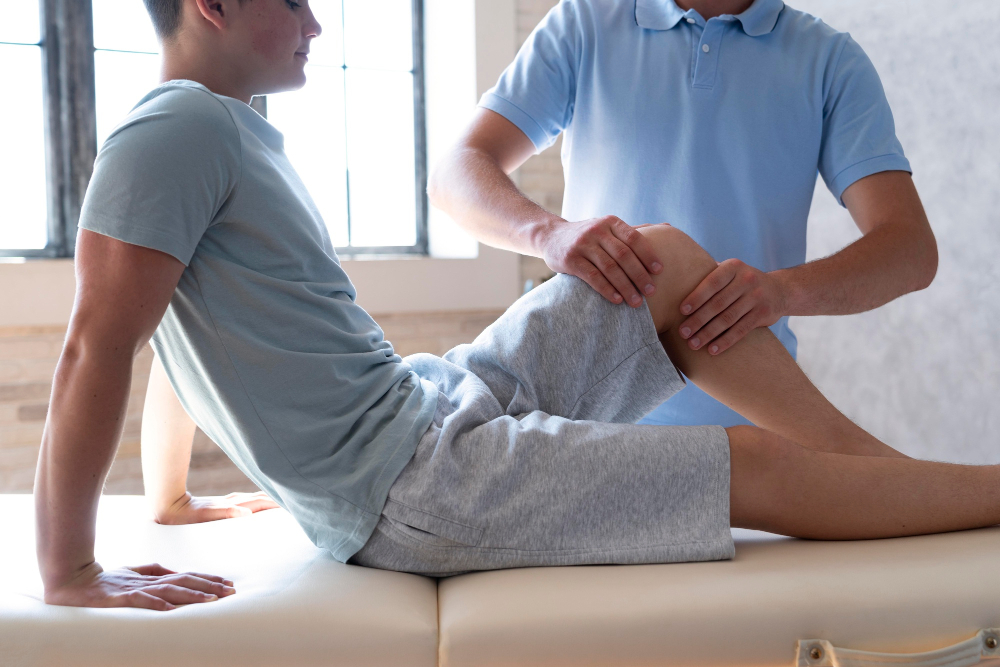
Yes, a chiropractor can help with patellar tendonitis by identifying mechanical problems that may continue placing stress on the patellar tendon. Chiropractic care complements rehabilitation instead of replacing it. Together, they can improve knee function and support recovery. An accurate diagnosis is equally important because several knee conditions produce similar symptoms. Understanding can a chiropractor help with patellar tendonitis also means knowing the underlying cause, choosing the right rehabilitation exercises, recognizing activities that may worsen symptoms, and selecting the most appropriate treatment approach.
What Is Patellar Tendonitis?
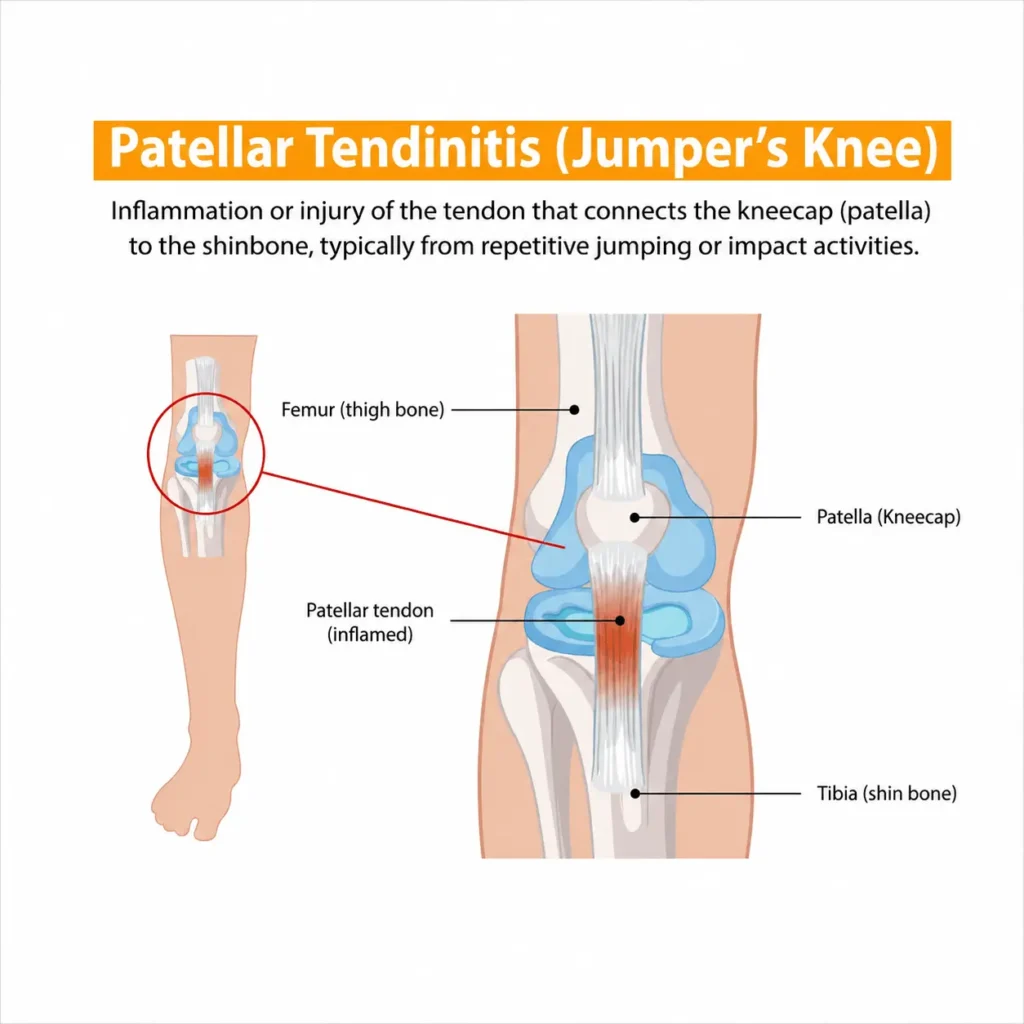
Patellar tendonitis develops when repeated stress on the patellar tendon exceeds its ability to recover between activities. This tendon connects the kneecap to the shinbone and helps straighten the knee during movements such as jumping, running, climbing stairs, and getting up from a chair.
Although the condition is commonly called tendonitis, ongoing cases often involve gradual changes within the tendon instead of active inflammation alone. That is one reason complete rest does not always solve the problem. The tendon usually responds better when the underlying cause of the overload is identified and managed appropriately.
Patellar tendonitis is frequently associated with sports that involve repeated jumping. It can also affect runners, active adults, and anyone whose work or daily routine places repeated force through the knee. In some cases, symptoms begin after increasing exercise intensity or returning to activity too quickly following a break.
Many people search “can a chiropractor help with patellar tendonitis” after knee pain begins affecting training or everyday movement. Before discussing treatment options, it is important to understand what the condition actually is and why it develops.
What Are the Symptoms of Patellar Tendonitis?
The most noticeable symptom of patellar tendonitis is pain just below the kneecap where the patellar tendon attaches. The discomfort often begins during physical activity and may continue after the activity has ended.
Symptoms usually develop gradually rather than overnight. At first, the pain may only appear after exercise. Without appropriate management, it can begin during activity and eventually interfere with routine movements.
Common symptoms include:
- Pain below the kneecap
- Tenderness when pressing on the patellar tendon
- Pain while jumping or landing
- Discomfort when climbing or going downstairs
- Knee pain after running or prolonged walking
- Stiffness after sitting for an extended period
- Reduced power during sports that involve jumping or sprinting
One feature that often helps identify patellar tendonitis is how the pain responds to activity. Many people feel better after resting, yet the discomfort returns once the tendon is placed under repeated load again. That pattern provides useful clinical information during an examination.
What Causes Patellar Tendonitis?
Patellar tendonitis occurs when repeated loading outpaces the tendon’s ability to recover. As this cycle continues, the tendon becomes less capable of tolerating the same forces that were previously manageable.
Jumping and landing place some of the highest demands on the patellar tendon, which explains why the condition is common in athletes. However, sports are not the only cause. Everyday movement patterns and training habits also influence how much stress reaches the tendon.
Factors that commonly contribute include:
- A sudden increase in training volume or intensity
- Frequent jumping or repetitive running
- Tight quadriceps or hamstring muscles
- Weak gluteal muscles that reduce lower limb stability
- Limited movement in the hips or ankles
- Poor landing or squatting mechanics
- Not allowing enough recovery between workouts
- Worn or unsuitable footwear during physical activity
Patellar tendonitis rarely develops because of a single movement. In many cases, several factors gradually increase the workload on the tendon. Restricted hip or ankle mobility, muscle imbalances, poor movement patterns, and repeated loading can all contribute over time. Identifying these contributing factors often provides a clearer understanding of why the condition developed.
Patellofemoral Pain Syndrome vs. Patellar Tendonitis
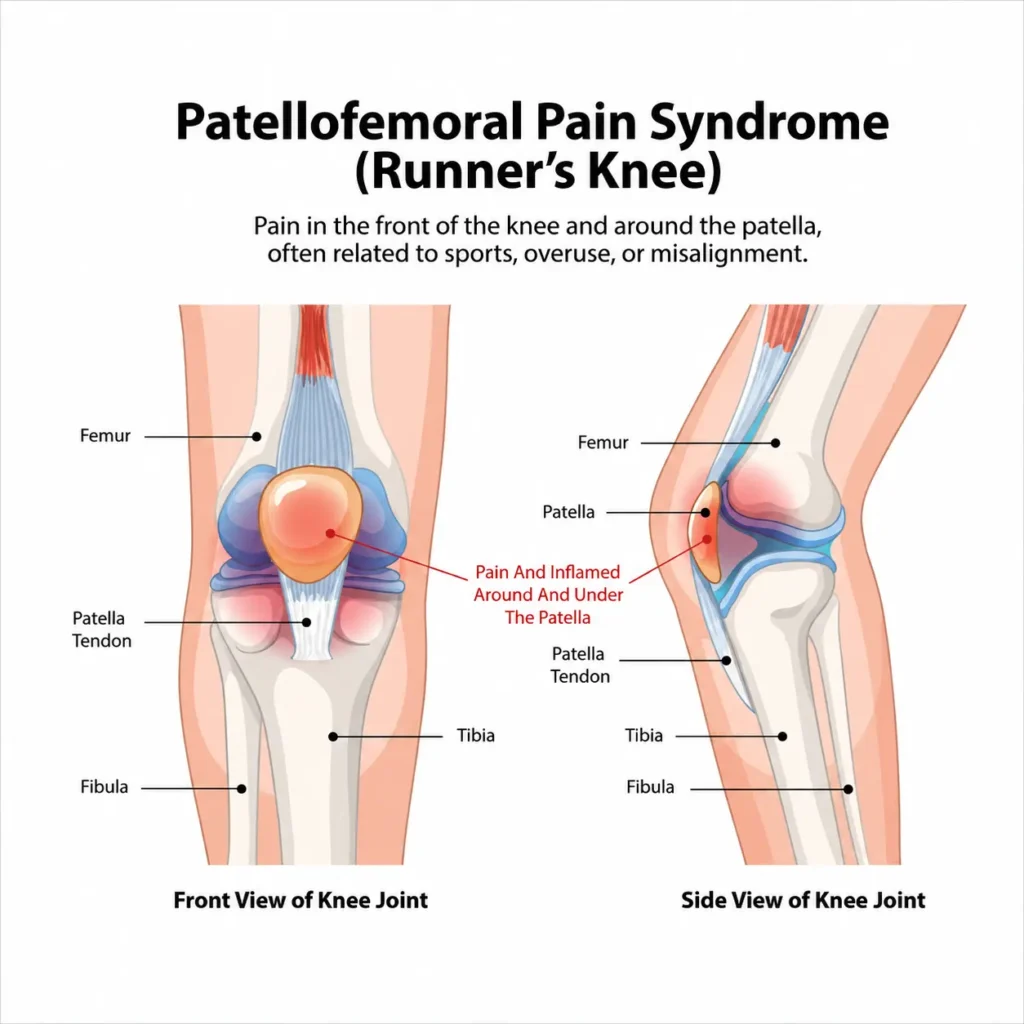
Patellofemoral Pain Syndrome and patellar tendonitis both cause pain around the front of the knee, but they are not the same condition. The difference matters because each condition has different contributing factors and may respond to different treatment approaches.
Patellar tendonitis affects the patellar tendon, which connects the kneecap to the shinbone. The pain is usually felt just below the kneecap where the tendon attaches. It often becomes noticeable during jumping, landing, sprinting, or other activities that place repeated force through the tendon.
Patellofemoral Pain Syndrome involves irritation around the kneecap itself rather than the tendon. The discomfort is commonly felt behind or around the front of the kneecap. Many people notice it while walking downstairs, squatting, kneeling, or sitting with bent knees for long periods.
The location and behavior of the pain often provide valuable clues during an examination. A careful assessment of movement, joint function, and the painful area helps determine which structure is responsible for the symptoms.
The table below highlights the key differences.
| Patellar Tendonitis | Patellofemoral Pain Syndrome |
|---|---|
| Pain is usually located just below the kneecap. | Pain is usually felt behind or around the kneecap. |
| The patellar tendon is the primary source of symptoms. | The joint between the kneecap and femur is commonly involved. |
| Symptoms often increase with jumping, sprinting, or repeated landing. | Symptoms commonly increase during squatting, stair use, kneeling, or prolonged sitting. |
| The tendon is often tender when pressed. | Tenderness is usually less focused over the patellar tendon. |
A person may develop patellar tendon overload while also having poor kneecap tracking or altered lower limb mechanics. Looking only at the painful area may miss contributing problems elsewhere. A thorough clinical examination helps identify the primary source of pain and guides the most appropriate treatment approach.
What Can a Chiropractor Do for Patellar Tendonitis?
Yes, a chiropractor can help with patellar tendonitis by identifying factors that place unnecessary stress on the patellar tendon and addressing them through conservative care. The focus is not only on the painful knee but also on how the entire lower body moves during everyday activities and sports.
Patellar tendon pain often develops because the tendon is repeatedly asked to handle more force than it can tolerate. Sometimes the source of that extra stress is easy to recognize. Other times, it comes from movement patterns or joint restrictions that develop gradually and go unnoticed. For people searching “can a chiropractor help with patellar tendonitis“, the goal is to understand why the tendon is being overloaded in the first place. Finding those contributing factors often leads to a more targeted treatment plan instead of focusing only on symptom relief.
Assess Movement Mechanics
Pain does not always reveal the real source of the problem. Two people can point to the same spot below the kneecap while moving very differently. A movement assessment looks at how the lower body performs during functional activities such as walking, squatting, balancing, or stepping. These movements may reveal changes in knee alignment, hip control, foot positioning, or weight distribution that are difficult to detect while sitting still.
Those findings provide valuable direction for care. Rather than assuming every patient needs the same treatment, the assessment helps determine which mechanical factors deserve the most attention.
Improve Knee, Hip, and Ankle Mobility
The knee depends on the joints above and below it to move efficiently. When the hip or ankle loses normal mobility, the knee often compensates by absorbing forces it was not designed to handle repeatedly.
Restoring motion where restrictions exist can improve the way force travels through the lower limb. Chiropractic adjustments and manual therapy may be considered when reduced joint mobility contributes to altered movement. Improving mobility does not repair the tendon itself. It helps create better conditions for movement by reducing unnecessary mechanical stress during everyday activities.
Correct Muscle Imbalances
Muscles work as a team. When one group becomes weak or another becomes excessively tight, the body naturally looks for another way to complete the same movement. Over time, those compensation patterns may place greater demand on the patellar tendon. Changes in hip stability, quadriceps flexibility, or lower limb control can all influence how force is transferred through the knee.
Identifying muscle imbalances allows treatment to focus on the areas that are no longer sharing the workload effectively. Better muscle coordination supports more efficient movement and reduces repeated strain on the same tissues.
Recommend Activity Modifications
Many people assume the only solution is to stop being active until the pain disappears. In reality, continuing every activity without adjustment can be just as unhelpful as avoiding all movement.
Small changes in daily habits or training routines can reduce unnecessary stress on the tendon while recovery continues. Depending on individual needs, this may include adjusting training volume, modifying workout frequency, selecting more supportive footwear, or limiting repeated jumping for a period of time.
These recommendations are based on how each person moves and what activities place the greatest demand on the knee. They are intended to reduce avoidable tendon loading while allowing people to remain as active as their condition comfortably permits.
Exercises for Patellar Tendonitis
Exercises are one of the most effective conservative treatments for patellar tendonitis because they gradually improve the tendon’s ability to tolerate everyday movement and physical activity. Recovery is usually more successful when the tendon is loaded progressively rather than protected from movement altogether.
Understanding can a chiropractor help with patellar tendonitis also means understanding the role of rehabilitation. Chiropractic care may address movement restrictions, joint mobility, and other mechanical factors that contribute to tendon overload, while exercises help rebuild strength, flexibility, and the tendon’s capacity to handle load.
No single exercise is right for everyone. The most appropriate rehabilitation program depends on your symptoms, activity level, and how your knee responds during and after each exercise session. Progressing gradually is often more effective than trying to recover as quickly as possible.
Quadriceps Stretch
- Stand upright beside a wall or sturdy chair for support.
- Bend the affected knee and bring your heel toward your buttock.
- Hold your ankle with the hand on the same side.
- Keep both knees close together, with the thigh in line with your body.
- Gently pull until you feel a comfortable stretch in the front of your thigh.
- Hold the stretch for 20 to 30 seconds.
- Repeat 2 to 3 times on each leg.
Hamstring Stretch
- Sit on the floor with one leg extended.
- Bend the opposite knee and place the sole of your foot against the inner thigh.
- Keep your back straight.
- Lean forward from your hips until you feel a stretch behind the extended leg.
- Hold for 20 to 30 seconds.
- Return to the starting position slowly.
- Repeat on both legs.
Straight Leg Raise
- Lie on your back on a firm surface.
- Bend one knee while keeping the affected leg straight.
- Tighten the muscles on the front of the straight leg.
- Raise the leg until it reaches the height of the opposite knee.
- Pause briefly at the top.
- Lower the leg slowly with control, keeping your lower back flat against the floor throughout.
- Complete 10 to 15 repetitions for 2 to 3 sets.
Wall Sit
- Stand with your back flat against a wall.
- Walk your feet out until your thighs will be roughly parallel to the floor when you sit down.
- Slide down the wall, keeping your knees directly above your ankles, not past your toes.
- Distribute your weight evenly through your whole foot, not just your toes.
- Hold the position for 15 to 30 seconds.
- Push through your feet to slide back up.
- Repeat for 2 to 3 sets, resting between each.
Step Up Exercise
- Stand in front of a low step.
- Place the affected foot firmly on the platform.
- Push through your heel as you step up.
- Bring the opposite foot onto the step to stand fully upright.
- Step back down slowly with the same leg that led up, controlling the descent rather than dropping.
- Keep your knee aligned over your foot throughout the movement, not caving inward.
- Perform 10 to 15 repetitions for 2 to 3 sets.
Patellar Tendonitis Exercises to Avoid
Some exercises place very high forces through the patellar tendon. Introducing them too early may increase symptoms instead of improving them. Use caution with:
- Deep squats performed through pain
- Box jumps
- Broad jumps
- Repetitive jumping drills
- Sprint intervals
- Heavy leg extensions that increase symptoms
- High impact plyometric exercises
- Sudden increases in training intensity after a period of rest
What Worsens Patellar Tendonitis?
Several everyday activities and training habits can make patellar tendonitis worse, especially when they continue after symptoms have already developed. Recognizing these aggravating factors early can help prevent a mild condition from becoming more difficult to manage.
Common aggravating factors include:
- Returning to competitive sports immediately after a long break.
- Playing multiple games or tournaments within a short period.
- Performing frequent jump training or plyometric sessions without gradually building volume.
- Running hills or stadium stairs during periods of active knee pain.
- Training on hard courts or other high impact surfaces for extended periods.
- Spending long hours kneeling or repeatedly squatting for work.
- Wearing athletic shoes with worn out soles or reduced cushioning.
- Switching to a new sport or training style without gradually increasing participation.
- Taking part in back to back high impact sporting events.
- Continuing activities that consistently trigger pain beneath the kneecap.
One pattern that is easy to miss is the “weekend athlete” routine. Someone may remain relatively inactive during the week, then spend several hours playing basketball, pickleball, tennis, or volleyball over the weekend. That sudden change in activity often places much greater demands on the knee than a consistent weekly routine.
What Is the Fastest Way to Fix Patellar Tendonitis?
There is no single treatment that fixes patellar tendonitis the fastest. Recovery is usually quicker when the condition is identified early and managed with a treatment plan that addresses both the painful tendon and the factors contributing to the problem.
One reason recovery becomes prolonged is that many people spend weeks trying different home remedies before receiving a proper assessment. During that time, the underlying problem often remains unchanged. An early clinical evaluation helps determine whether the pain is truly coming from the patellar tendon or from another knee condition that requires a different approach.
The most effective treatment plans are usually individualized rather than standardized. Age, activity level, symptom duration, previous knee injuries, and daily physical demands all influence which treatments are most appropriate. Applying the same plan to every patient may slow progress because the reason for the symptoms is not always the same.
For some individuals, chiropractic treatment for patellar tendonitis may be included as part of a comprehensive conservative treatment plan. Chiropractic care is not intended to replace rehabilitation or other evidence based treatments. Instead, it can complement them by addressing joint dysfunction, soft tissue restrictions, and lower limb function when those findings are present during the examination.
Another factor that influences recovery speed is symptom duration before treatment begins. Patellar tendonitis that is addressed within the first few weeks often responds more efficiently than symptoms that have persisted for several months. Early management may reduce the likelihood of the condition becoming more difficult to resolve.
The fastest approach is rarely the one that offers the quickest pain relief. It is the one that identifies the correct diagnosis early, matches treatment to the individual’s presentation, and adjusts that plan as the knee responds over time.
Patellar Tendonitis Treatment at Ashburn Village Chiropractic
Persistent patellar tendonitis should be evaluated before symptoms begin affecting everyday activities or athletic performance. At Ashburn Village Chiropractic, every patient receives a thorough examination by Dr. Jonathan Solomon to identify the source of knee pain and determine the most appropriate course of care.
A detailed clinical evaluation helps distinguish patellar tendonitis from other conditions that can produce similar symptoms. When clinically indicated, the clinic’s on site digital X ray system provides additional diagnostic information without the need for an outside imaging facility.
With more than 20 years of clinical experience, Dr. Jonathan Solomon has helped patients with a wide range of musculoskeletal conditions and sports related injuries. Ashburn Village Chiropractic is conveniently located for patients throughout Ashburn, Brambleton, Sterling, Leesburg, Lansdowne, South Riding, Dulles, Reston, Herndon, and Great Falls seeking conservative chiropractic care.
Get a summary of this article with your favorite AI: