
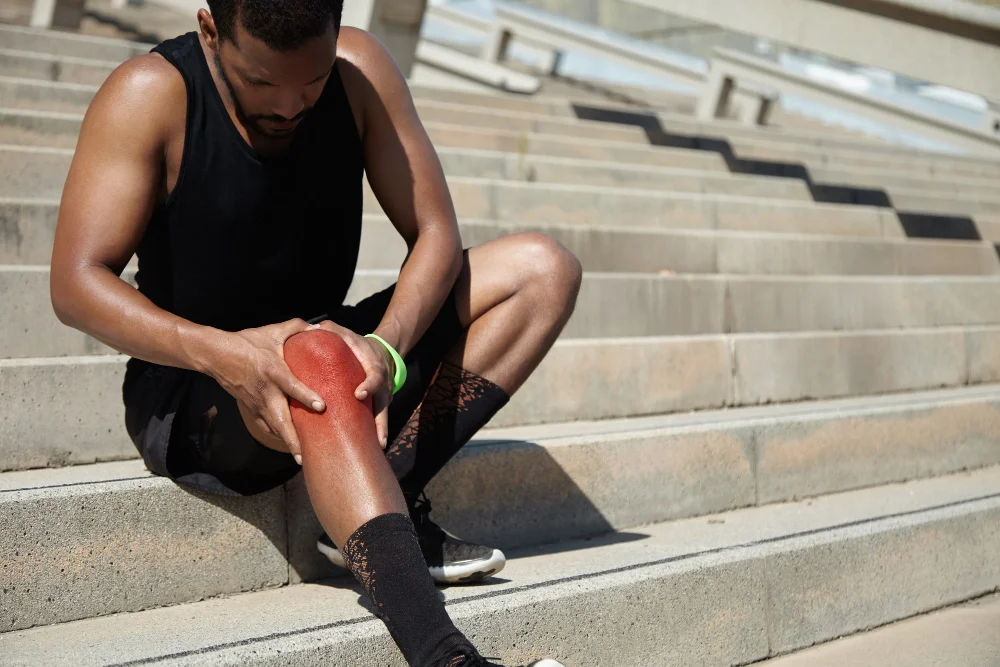
Yes. A chiropractor can help with IT band syndrome by identifying and correcting the movement problems contributing to ongoing irritation. IT band syndrome usually develops because of repetitive stress rather than a single injury. Hip weakness, pelvic dysfunction, muscle imbalances, and poor movement patterns often increase tension on the iliotibial band. Addressing these underlying factors may reduce pain on the outer side of the knee, improve movement, and lower the risk of recurring symptoms.
What Is IT Band Syndrome?
IT band syndrome is an overuse condition that causes pain along the outside of the knee when the iliotibial band becomes irritated. Before exploring can a chiropractor help with IT band syndrome, it is important to understand what the condition actually is.
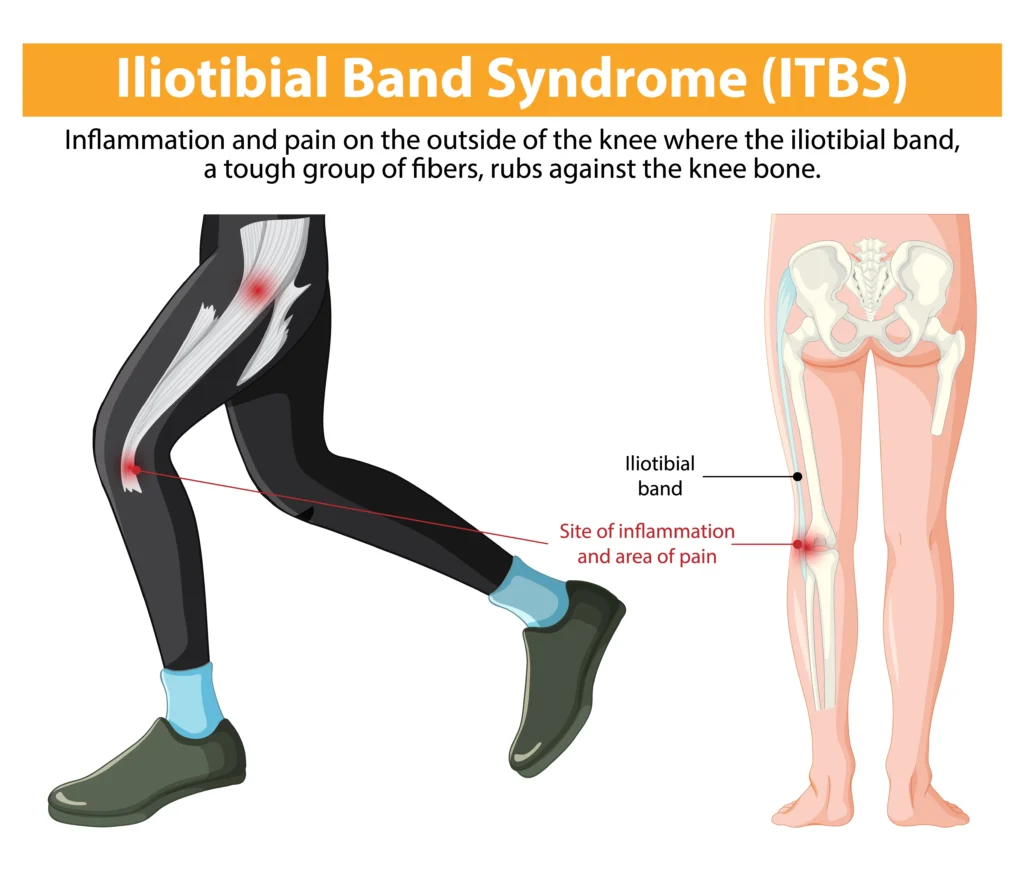
The iliotibial band, commonly called the IT band, is a thick band of connective tissue that extends from the outside of the hip to just below the outside of the knee. It is one of the largest connective tissue structures in the lower body and plays an important role in supporting the leg during movement.
Although the pain is usually felt on the outside of the knee, the discomfort is linked to irritation involving the iliotibial band near the knee. Because the pain is concentrated in one area, many people mistake it for a general knee injury or another common knee condition.
Unlike injuries caused by a single accident, IT band syndrome usually develops over time. The symptoms often begin gradually instead of appearing immediately after one specific movement or event. This slow progression is one reason the condition is frequently overlooked during its early stages. Understanding what IT band syndrome is makes it easier to recognize why an accurate diagnosis matters before beginning any treatment or rehabilitation plan.
What Causes IT Band Syndrome?
Several factors can contribute to IT band syndrome, and more than one is often involved. In many cases, the condition develops because small mechanical stresses build over time instead of resulting from a single event.
Common causes of IT Band Syndrome include:
- Sudden increases in running distance or training intensity
- Repetitive running, cycling, or similar activities
- Inadequate recovery between training sessions
- Running on uneven, sloped, or downhill surfaces
- Worn or poorly fitted footwear
- Poor walking or running mechanics
- Weak lower limb stabilizing muscles
- Reduced flexibility in the surrounding muscles
- Previous lower limb injuries that alter normal movement
IT band syndrome is commonly associated with more than one underlying cause. The combined effect of these causes influences how the condition develops and why symptom severity and progression can vary between individuals.
How the Hip and Pelvis Affect IT Band Syndrome
In the human body, the hip and pelvis help control how forces generated during walking, running, climbing stairs, and other weight bearing activities are transferred through the lower limbs. Changes in their normal function can increase the mechanical load placed on the iliotibial band, resulting in greater stress along the outside of the knee.
The gluteus medius, gluteus maximus, and tensor fasciae latae play an important role in stabilizing the pelvis while coordinating hip and knee movement. Weakness, restricted hip mobility, or poor muscle coordination within these structures may alter normal lower limb biomechanics, increasing the tension transmitted through the iliotibial band during repetitive activities.
Clinical studies have reported altered hip biomechanics and reduced hip muscle strength in many individuals diagnosed with IT band syndrome. These findings demonstrate that the condition is frequently associated with functional changes extending beyond the knee, reinforcing the close relationship between hip function, pelvic stability, and the mechanical loading experienced by the iliotibial band.
Who Is Most at Risk of IT Band Syndrome?
The following groups are more likely to develop IT band syndrome due to the repetitive demands placed on the lower limbs:
- Long distance runners who frequently increase mileage, pace, or training intensity.
- Cyclists who perform repetitive pedaling movements over extended periods.
- Trail runners and hikers who regularly run or walk on uneven terrain or steep inclines.
- Athletes participating in repetitive lower limb sports, including soccer, basketball, tennis, and field hockey.
- Individuals with occupations requiring prolonged walking or stair climbing, such as delivery workers, healthcare professionals, and warehouse employees.
- People returning to physical activity after a prolonged break, particularly when training volume increases too quickly.
- Individuals with previous lower limb injuries, especially involving the hip, knee, ankle, or foot.
- People with reduced hip muscle strength or limited hip mobility, which may alter normal lower limb movement patterns.
- Individuals with abnormal walking or running biomechanics, increasing mechanical stress on the iliotibial band during repetitive movement.
Although IT band syndrome is frequently associated with athletes, it is not limited to highly active individuals. Any activity involving repetitive knee flexion and extension can increase the risk when underlying biomechanical or functional factors are present.
Stages of IT Band Syndrome
IT band syndrome does not usually cause severe pain from the beginning. The symptoms often become more noticeable over time if the underlying problem is not addressed. The four stages below describe how the condition typically changes as symptoms become more persistent and begin affecting daily activities.
Stage 1: Pain After Activity
Stage 1 of IT band syndrome is identified by pain that develops only after physical activity has ended. Running, cycling, hiking, or brisk walking usually remain comfortable. The discomfort often begins after the activity is finished. Pain is commonly felt along the outside of the knee.
The pain is usually mild and settles with rest. Knee movement remains normal during daily activities. Swelling, joint locking, and knee instability are not typical findings during this stage.
For example, a runner may complete a 5 kilometer run without pain but notice soreness while cooling down. A cyclist may finish a long ride comfortably but develop pain later that evening. These early symptoms are often mistaken for normal post exercise soreness because they disappear after resting. Recurring pain after physical activity should not be ignored. A chiropractic assessment can help identify movement dysfunction contributing to ongoing knee pain.
Stage 2: Pain During Activity
Stage 2 of IT band syndrome begins when pain develops along the outside of the knee during physical activity. The pain often starts as a mild ache or burning sensation. It usually appears after several minutes of running, cycling, hiking, or brisk walking. Continuing the activity commonly makes the pain more noticeable.
Many people first notice the pain at a similar point during every workout. For example, a runner may feel pain after the third kilometer of every run. A cyclist may develop pain after riding for 30 minutes. Stopping the activity often reduces the pain. However, the symptoms usually return after movement resumes.
Unlike Stage 1, the discomfort now begins before the activity has finished. Some people reduce their pace or shorten their workout because of the pain. Recurring symptoms during exercise should not be ignored. A chiropractic assessment for knee pain and chiropractic care may help identify movement dysfunction before the condition becomes more limiting.
Stage 3: Pain That Limits Activity
Stage 3 of IT band syndrome develops when pain on the outer side of the knee limits normal movement. The painful area is usually located just above the outer knee joint. The pain often feels sharp during movement and may continue as an aching sensation afterward.
Activities that once felt comfortable now become difficult to finish. Shopping for groceries may end early because walking becomes painful. Standing through a child’s sporting event may also become uncomfortable. Walking across a large parking lot can trigger the same symptoms.
The pain usually appears sooner than before and lasts longer after activity. Pressing the painful area often causes tenderness. Some people also notice a burning sensation after repeated knee bending. Others begin limping without realizing they have changed their walking pattern. Many people start avoiding activities because they expect the pain to return. Everyday decisions become influenced by knee pain instead of personal choice. That change often indicates the condition has moved beyond the earlier stages.
Stage 4: Constant Pain
Pain is no longer linked only to physical activity. It may remain present throughout the day, including during periods of rest. The discomfort is commonly felt on the outer side of the knee, just above the knee joint. Some people also notice aching along the outer thigh.
The condition often begins affecting routine daily tasks. Sitting through a meeting, standing in a queue, or getting out of bed may become uncomfortable. Sleep may also be disturbed because lying on the affected side increases pressure over the painful area.
Constant pain often suggests that the irritation has progressed beyond an occasional overuse problem. Ongoing symptoms can also change normal walking patterns as people unconsciously avoid the painful leg. That added strain may place extra stress on the opposite knee, hip, or lower back.
Persistent pain deserves professional evaluation rather than repeated periods of rest. Chiropractic care may help reduce knee pain by identifying movement dysfunctions contributing to ongoing irritation.
Can a Chiropractor Help With IT Band Syndrome?
Yes. A chiropractor can help with IT band syndrome by identifying and addressing movement problems contributing to ongoing irritation. In many cases, the painful IT band is not the primary problem. Restricted hip mobility, altered pelvic movement, and muscle imbalances often increase tension on the iliotibial band. Abnormal walking or running mechanics may also contribute. Addressing these mechanical factors may reduce irritation. It may also improve movement and lower the risk of recurring symptoms.
Chiropractic care focuses on restoring normal joint motion rather than treating the IT band alone. A comprehensive assessment may identify movement patterns that continue placing stress on the outer side of the knee. This approach explains why symptoms often return after rest or stretching alone. When combined with rehabilitation, knee pain and chiropractic care may improve movement and support long term recovery.
Chiropractic Treatment for IT Band Syndrome
Chiropractic treatment is guided by the examination findings. The same treatment plan is not appropriate for every patient. The primary goal is reducing stress on the iliotibial band. Another goal is improving how the hip, pelvis, and knee move together.
Depending on the examination findings, treatment may include:
- Chiropractic knee adjustment when restricted joints affect normal lower limb movement.
- Soft tissue therapy to reduce excessive tension in the surrounding muscles.
- Mobility exercises to improve hip and pelvic movement.
- Strengthening exercises for weak hip and gluteal muscles.
- Chiropractic exercises for knee pain to improve movement control and reduce repeated strain.
- Advice about walking, running, workplace habits, or sports techniques that continue irritating the IT band.
Many people focus only on the painful knee. The underlying movement problem often begins higher in the kinetic chain. Identifying these contributing factors may improve recovery. It may also reduce the likelihood of future flare ups.
Tests for IT Band Syndrome
Several orthopedic tests help determine whether symptoms are consistent with IT band syndrome. These tests are never interpreted alone. Chiropractors also consider your medical history, movement assessment, and physical examination.
| Test | What the Test Evaluates | What a Positive Finding May Suggest |
|---|---|---|
| Ober’s Test | Hip flexibility and tension within the iliotibial band | Tightness affecting hip movement and increased tension through the IT band. |
| Noble Compression Test | Pain over the IT band during knee bending and straightening | Irritation where the IT band passes over the outer part of the thigh bone. |
| Renne Test | Symptoms during a weight bearing squat | IT band irritation that becomes painful during functional movement. |
No single orthopedic test confirms IT band syndrome. Diagnosis depends on the complete clinical picture. The location of the pain is equally important. Symptom history and movement patterns also guide the diagnosis. This comprehensive assessment helps rule out meniscus injuries, ligament sprains, and patellofemoral pain syndrome.
What Makes IT Band Syndrome Worse?
IT band syndrome usually becomes worse when the irritated tissue is exposed to the same stress that caused the symptoms. Recovery can slow when painful activities continue or normal movement patterns are not changed. Many people follow their recovery plan but unknowingly repeat habits that keep irritating the outer side of the knee. Those repeated stresses often explain why symptoms improve for a few days and then return again.
Running With IT Band Syndrome
Running is usually not recommended while IT band syndrome remains painful during or after a run. Every stride places repeated load through the hip, knee, and iliotibial band. If the irritated tissue has not recovered, each run may prolong inflammation and delay healing.
Some people believe they can continue running if the pain is manageable. That approach often leads to recurring flare ups. Pain that begins earlier during each run, lasts longer afterward, or becomes more intense usually indicates that the tissue is not tolerating the workload.
Reducing running distance alone is not always enough. Running on consecutive days, increasing pace too early, or returning to hills and speed sessions can all slow recovery. Running should only be resumed when daily activities are comfortable and symptoms no longer return after exercise.
Daily Habits That Increase IT Band Irritation
Recovery is not influenced by exercise alone. Small daily habits can repeatedly load the same tissues and prevent symptoms from settling. Many people overlook these activities because they seem harmless.
The following habits commonly delay recovery:
- Sitting for long periods without standing or walking.
- Crossing the same leg every time you sit.
- Standing with most body weight on one leg.
- Carrying a heavy bag on the same shoulder each day.
- Walking long distances despite increasing pain.
- Repeatedly climbing stairs when symptoms become worse.
- Wearing worn out footwear that changes normal walking mechanics.
- Ignoring a limp instead of correcting the walking pattern.
- Returning to physically demanding work before symptoms settle.
- Increasing daily activity because the pain feels slightly better.
Recovery often depends on consistent daily decisions. Avoiding repeated irritation allows the affected tissue more opportunity to recover between activities.
Why Does IT Band Syndrome Keep Coming Back?
IT band syndrome often returns because pain can improve before the body has fully recovered. Many people assume they have recovered because everyday activities become comfortable again. However, the tissues responsible for controlling hip and knee movement may still lack strength, endurance, or coordination. As activity levels increase, the same mechanical stress gradually builds again until pain returns on the outer side of the knee.
A recurrence does not always mean the previous treatment was unsuccessful. It often means one or more contributing factors remained unchanged after the pain settled. Identifying those factors is usually more valuable than repeatedly treating the symptoms alone.
Muscle Imbalances
Pain relief does not always mean normal muscle function has returned. Weakness in the gluteal muscles or hip stabilizers may remain without causing obvious symptoms. Daily activities often hide those deficits because they place relatively low demands on the body.
The problem usually appears after activity levels increase again. A longer walk, a weekend hike, or returning to recreational sports may expose those remaining weaknesses. The muscles fatigue sooner than expected and provide less support during movement. As a result, excessive stress gradually returns to the iliotibial band, allowing the same knee pain to develop again.
Hip and Pelvic Dysfunction
Hip and pelvic movement can appear normal during everyday activities while subtle movement faults remain. Those small changes are rarely noticeable without a detailed movement assessment. Even so, they can repeatedly increase the workload placed on the outer side of the knee.
Many recurring cases begin after people return to their normal routine without correcting those movement patterns. The body gradually compensates instead of moving efficiently. Symptoms often return because the same mechanical stress continues with every step, even though the previous pain had disappeared.
Repetitive Overuse and Training Errors
Recovery improves tissue tolerance, but it does not immediately restore full capacity. The body needs time to adapt as physical demands increase again. Returning to previous activity levels too quickly can exceed that capacity before recovery is complete.
A common mistake is judging recovery by pain alone. Feeling comfortable for several days does not always mean the tissues are ready for the same workload as before the injury. Increasing distance, intensity, or training frequency too quickly often recreates the same conditions that caused the previous flare up. Gradual progression allows the body to adapt to increasing demands. Rapid progression often allows the same pain to return, even after several symptom free weeks.
IT Band Syndrome vs. Other Knee and Hip Conditions
Pain around the knee or hip does not always indicate IT band syndrome. Several conditions produce similar symptoms but differ in where the pain is felt, what movements trigger it, and how the symptoms develop. Recognizing these differences helps narrow the possible cause before seeking a professional evaluation.
| Condition | Pain Location | Common Trigger | Key Distinguishing Feature |
|---|---|---|---|
| IT Band Syndrome | Outer knee, at the lateral femoral epicondyle | Running, cycling, repetitive knee flexion | Pain worsens with continued activity, eases with rest |
| Patellofemoral Syndrome | Behind or around the kneecap | Squatting, stair climbing, prolonged sitting | Pain increases with bent knee positions, not lateral movement |
| Meniscus Tear | Deep within the joint line | Twisting or pivoting on a planted foot | Often accompanied by clicking, locking, or swelling |
| LCL Sprain | Outer knee, but closer to the joint line itself | Direct impact or a forceful inward knee movement | Pain from a specific incident, not gradual onset |
| Hip Bursitis | Outer hip, sometimes radiating toward the thigh | Prolonged standing, lying on the affected side | Pain concentrated at the hip, not the knee |
| Trochanteric Bursitis | Outer hip, over the greater trochanter | Repetitive hip movement, direct pressure | Tender to touch directly over the hip bone |
IT Band Syndrome vs. Patellofemoral Syndrome
The core difference comes down to location and what triggers the pain. IT band syndrome affects the outer knee and worsens with activities like running. Patellofemoral syndrome, on the other hand, centers around the kneecap itself and tends to flare up during squatting or after long periods of sitting with a bent knee.
Patients sometimes describe patellofemoral pain as a dull ache behind the kneecap, almost like pressure building up. That’s rarely how IT band syndrome presents. The sharper, more localized pain of IT band syndrome sits further to the side, closer to where the femur and knee joint meet.
One detail overlooked in most comparisons involves running mechanics. Overstriding tends to aggravate IT band syndrome, while patellofemoral syndrome is more closely linked to poor kneecap tracking during knee flexion. Two entirely different mechanical issues, even though both get labeled generically as runner’s knee.
IT Band Syndrome vs. Meniscus Tear
A meniscus tear produces pain deep inside the joint, not along the outer edge of the knee. This is the clearest distinction from IT band syndrome, which stays localized to the lateral side.
Meniscus tears also come with symptoms IT band syndrome rarely produces. Clicking, catching, or a sensation of the knee locking during movement often points toward cartilage damage rather than soft tissue irritation. Swelling inside the joint itself is another indicator that leans toward a meniscus issue.
Mechanism of injury differs too. IT band syndrome builds gradually from repetitive strain. A meniscus tear frequently traces back to a specific twisting motion, often while the foot stayed planted and the knee rotated. That single moment of injury is something patients can usually recall, unlike the gradual onset typical of IT band syndrome.
IT Band Syndrome vs. LCL Sprain
An LCL sprain and IT band syndrome both cause pain on the outer knee, but the underlying cause could not be more different. LCL sprains result from trauma, usually a direct blow or a forceful inward movement of the knee.
IT band syndrome has no single triggering event. It develops slowly, often over weeks of repetitive movement. An LCL sprain, by contrast, is something a patient can typically point to and describe, a fall, a collision, a sudden twist during sport.
Location provides another clue. LCL pain tends to sit closer to the joint line, where the ligament actually attaches. IT band syndrome pain sits slightly higher, closer to where the band crosses the femoral epicondyle. Instability is also more common with an LCL sprain, something not typically present with IT band syndrome regardless of how advanced it becomes.
IT Band Syndrome vs. Hip Bursitis
Hip bursitis centers on the outer hip, not the knee, which is the most obvious point of separation from IT band syndrome. That said, the two conditions share enough overlap in cause that they sometimes get confused, particularly since both can involve irritation near the IT band’s attachment points.
Bursitis involves inflammation of the bursa, a small fluid filled sac that cushions the hip joint. Pain from bursitis often worsens when lying on the affected side at night, a symptom pattern IT band syndrome does not typically produce.
There’s a connection worth noting here that most articles skip entirely. Hip bursitis and IT band syndrome can coexist, since both often stem from the same underlying hip weakness or pelvic instability. Treating one without addressing the other frequently leads to incomplete recovery, which is why a broader hip and pelvic evaluation matters more than treating the knee in isolation.
IT Band Syndrome vs. Trochanteric Bursitis
Trochanteric bursitis and hip bursitis are closely related, but this specific form targets the bursa sitting directly over the greater trochanter, the bony prominence on the outer hip. Pain here stays localized to the hip and does not typically radiate down toward the knee the way IT band syndrome pain can sometimes feel like it does.
Direct pressure is the clearest test. Trochanteric bursitis is often tender to the touch right over the hip bone itself. IT band syndrome, by comparison, produces tenderness lower down, closer to the knee.
Repetitive hip movement contributes to both conditions, which explains why they get grouped together so often in generic health content. But treating trochanteric bursitis requires targeting the bursa and surrounding hip mechanics specifically, a different clinical focus than the knee centered approach used for IT band syndrome, even though both may ultimately trace back to hip and pelvic dysfunction.
IT Band Syndrome Exercises
Targeted exercises can help reduce IT band syndrome pain by improving hip strength, flexibility, and movement control. Unlike many knee conditions, these chiropractic exercises for knee pain mainly strengthen the muscles surrounding the hip. Stronger hip muscles help maintain better knee alignment during walking, running, and climbing stairs. Better movement control may reduce stress on the outer side of the knee during daily activities. Perform each exercise with slow, controlled movements and within a comfortable range. Stop exercising if sharp pain develops or your symptoms become noticeably worse afterward.
| Exercise | Area It Targets | Helps Relieve | Recommended Stage |
|---|---|---|---|
| Clamshell Exercise | Gluteus medius and outer hip muscles | Improves hip stability and reduces stress on the outer side of the knee. | Stage 1 and Stage 2 |
| Side Leg Raises | Hip abductors and outer hip muscles | Improves hip control and reduces excessive inward knee movement. | Stage 1 and Stage 2 |
| Glute Bridge | Gluteus maximus and pelvic stabilizers | Improves pelvic stability and reduces unnecessary strain on the outer knee. | Stage 1 through early Stage 3 |
| Hip Flexor Stretch | Hip flexor muscles at the front of the hip | Improves hip flexibility and supports normal pelvic movement. | Stage 1 through Stage 3 |
| Standing IT Band Stretch | Outer hip muscles and lateral thigh | Reduces tightness in the muscles surrounding the IT band. | Stage 1 and Stage 2 |
| Foam Rolling | Tensor fasciae latae, gluteus maximus, and outer thigh muscles | Reduces muscle tightness around the IT band and improves tissue mobility. | Stage 1 and Stage 2 |
| Hamstring Stretch | Hamstring muscles at the back of the thigh | Improves flexibility that supports normal hip and pelvic movement. | Stage 1 through Stage 3 |
Knee Pain and Chiropractic Care at Ashburn Village Chiropractic
If you are searching can a chiropractor help with IT band syndrome, Ashburn Village Chiropractic provides chiropractic care for knee conditions, including IT band syndrome. Dr. Jonathan Solomon has served the Ashburn community since 2000. He evaluates knee, hip, and other musculoskeletal conditions to identify the movement problems contributing to pain.
The clinic has an on site X ray machine, allowing further evaluation when imaging is clinically appropriate. This helps patients begin care without visiting another imaging facility. Each treatment plan is based on the findings from the examination and the patient’s symptoms.
Many people seeking knee pain and chiropractic care visit the clinic after pain begins affecting walking, running, exercise, or daily activities. Ashburn Village Chiropractic combines chiropractic care with physiotherapy to improve joint movement, muscle function, and overall mobility.
Conveniently located in Ashburn, the clinic welcomes patients from Brambleton, Sterling, Leesburg, Lansdowne, South Riding, Dulles, Reston, and Great Falls. Patients receive individualized care focused on identifying the cause of knee pain and helping them return to comfortable daily movement.
Get a summary of this article with your favorite AI: