
Can a Chiropractor Help Patellofemoral Pain Syndrome
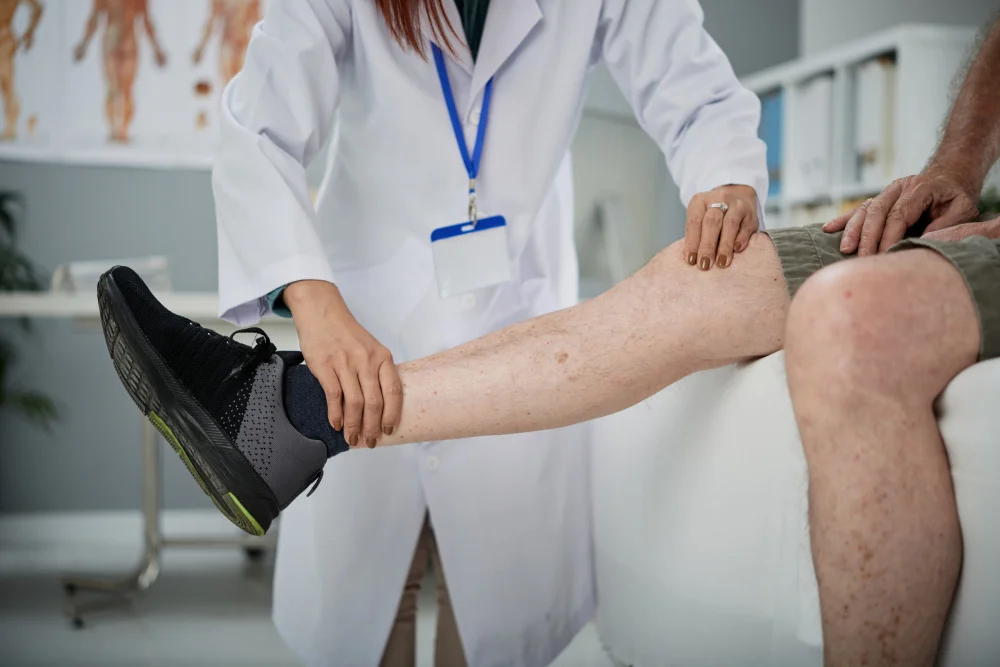
Yes. Chiropractic care may help manage patellofemoral pain syndrome when treatable mechanical factors are contributing to pain around or behind the kneecap. Can a Chiropractor Help Patellofemoral Pain Syndrome depends on what is placing excessive stress on the patellofemoral joint. Restricted movement, poor quadriceps function, reduced hip control, and certain movement patterns may all contribute. A proper evaluation can identify the factors involved and determine whether chiropractic care is appropriate. Treatment may then help reduce the stress aggravating the joint and improve your tolerance to activities that currently cause pain.
Chiropractic Treatment of Patellofemoral Pain Syndrome
Patellofemoral pain syndrome develops when the area around or behind the kneecap becomes painful. This often occurs during activities that repeatedly load the patellofemoral joint. Climbing stairs, squatting, running, jumping, or sitting with bent knees can increase pressure between the kneecap and femur. These activities can make symptoms more noticeable.
Chiropractic treatment focuses on identifying why these activities are placing more stress on the patellofemoral joint than your knee can comfortably tolerate. Can a chiropractor help patellofemoral pain syndrome depends on the factors contributing to that stress. Reduced hip control, poor quadriceps function, and restricted movement may all be relevant.
Certain movement patterns may also repeatedly increase pressure on the kneecap. These factors can be assessed individually during the examination. The purpose of treatment is to reduce mechanical stress that aggravates the patellofemoral joint. It also aims to improve how the knee handles movement and loading. Chiropractic treatment can gradually improve tolerance to climbing stairs, squatting, running, and other movements that increase stress on the patellofemoral joint.
Spinal and Hip Adjustments
Hip and pelvic movement can influence how the thigh moves beneath the kneecap. This relationship becomes important during squatting, running, or stepping down. Poor hip control may affect the alignment and loading of the entire leg. This can increase stress at the patellofemoral joint during repeated movement.
A chiropractor may assess the mobility and function of the hip, pelvis, and surrounding joints. The examination can determine whether restrictions contribute to inefficient lower-body movement. When appropriate, spinal or hip adjustments may be used to improve mobility. They may also support more efficient movement throughout the lower body.
The purpose is not to claim that an adjustment directly fixes the kneecap. Instead, treatment may address movement restrictions contributing to increased patellofemoral joint stress. Improved movement may also make it easier to progress with the active part of treatment.
Soft Tissue and Muscle Balance Work
The quadriceps play a direct role in controlling the knee and kneecap during movement. The muscles around the hip also help control leg position during weight-bearing activities. When muscle function or control is impaired, forces may pass differently through the knee. This can increase stress on an already sensitive patellofemoral joint.
Activities such as descending stairs, squatting, or running may then become more painful. These movements can repeatedly load the patellofemoral joint. Chiropractic treatment may include soft tissue techniques when muscle tension affects knee movement. Treatment may also help when restricted tissue movement makes rehabilitation more difficult.
This can be combined with exercises that improve quadriceps and hip strength. The exercises can also improve muscle control during everyday and athletic activities. Treatment is not limited to relieving muscle tension. It also works to improve the knee’s ability to control and tolerate repeated forces.
Gait and Movement Correction
Patellofemoral pain can occur when certain movements repeatedly place excessive load on the kneecap and the femur. This may happen differently depending on the activity causing your symptoms.
For example, descending stairs requires the quadriceps to control knee bending under body weight. Squatting and running can also increase pressure through the patellofemoral joint as the knee repeatedly bends and straightens.
A chiropractor can evaluate the specific movement that triggers your pain. This may reveal whether poor hip control, excessive inward knee movement, altered foot mechanics, or another movement pattern is increasing stress on the joint. Correction is then based on what occurs during that particular movement. Someone with pain while running may need different changes than someone whose symptoms occur mainly during squatting or stair use.
Treatment may include exercises and movement retraining to improve how the hip, knee, and foot work together. Changes to running, squatting, or stair mechanics may also be recommended when they reduce pain. This helps make movement correction specific to the activity causing your symptoms. It also helps reduce repeated stress on the patellofemoral joint during the movements you need to perform.
Quadriceps Sets
Quadriceps sets are a useful starting exercise when bending the knee remains painful. They allow the quadriceps to contract without repeatedly loading the patellofemoral joint through deeper knee movement.
Sit or lie with your affected leg straight and supported. Tighten the muscles at the front of your thigh. Gently press the back of your knee toward the surface beneath it. Hold the contraction briefly, then relax. Repeat with controlled contractions and avoid holding your breath. This exercise can help maintain quadriceps activity when deeper squats or repeated knee bending remain uncomfortable.
Straight Leg Raises
Straight leg raises strengthen the quadriceps while keeping the knee relatively straight. This can make them useful when deeper knee bending still aggravates patellofemoral pain.
Lie on your back with one knee bent and your affected leg straight. Tighten the muscles at the front of your thigh before lifting the straight leg. Slowly raise the leg to a comfortable height. Lower it with control and avoid swinging or using momentum. Keep the knee straight throughout the movement. Stop if the exercise produces sharp pain or clearly worsens your symptoms afterward.
Glute Bridges
Glute bridges strengthen the hip and posterior thigh muscles with less knee bending than many squatting exercises. They can be useful when rebuilding hip strength while limiting aggravation of the patellofemoral joint.
Lie on your back with both knees bent and your feet flat. Tighten your gluteal muscles and slowly lift your hips. Raise your hips until your body forms a comfortable line from your shoulders toward your knees. Pause briefly, then lower yourself with control. Do not force the hips higher by arching your lower back. The movement should remain controlled and comfortable at the knee.
Controlled Sit to Stands
Sit to stands introduce a functional weight-bearing movement that resembles everyday activities. They can help rebuild quadriceps and hip strength for activities such as standing and climbing stairs.
Begin with a chair that allows you to sit without excessive knee bending. Place both feet firmly on the floor and stand slowly. Keep your movement controlled and avoid letting the knees collapse inward. Slowly return to the chair without dropping into the seat. The chair height can be adjusted as your knee tolerance improves. A higher chair reduces the amount of knee bending required.
Patellofemoral Pain Syndrome Exercises to Avoid
Not every exercise is appropriate when patellofemoral pain syndrome is painful or easily aggravated. Exercises that repeatedly increase pressure through the patellofemoral joint can worsen symptoms when the knee is not ready for that level of loading.
Deep Squats
Deep squats require substantial knee bending. As the knee bends further, the forces acting between the kneecap and femur can increase. Repeated deep squatting may therefore aggravate pain around or behind the kneecap. This is particularly relevant when symptoms already occur during squatting.
Continuing to train through increasing pain may keep the patellofemoral joint irritated. Reducing the squat depth may be more appropriate until the knee tolerates greater bending.
Deep Lunges
Deep lunges can place significant load on the front of the knee. The exercise may become problematic when deeper knee flexion consistently reproduces patellofemoral pain.
Repeated painful lunges can increase irritation around the patellofemoral joint. They may also make everyday activities, including stairs or squatting, more uncomfortable afterward. The issue is not that all lunges are harmful. The problem is continuing with a depth or volume that repeatedly aggravates your symptoms.
High-Impact Jumping Exercises
Jumping exercises place repeated, high forces through the knee during takeoff and landing. Box jumps, jump squats, and similar plyometric exercises can increase patellofemoral joint loading.
When the knee cannot tolerate these forces, symptoms may worsen during or after exercise. Repeated landing can also make an already sensitive patellofemoral joint more difficult to settle. These exercises may be better postponed until the knee can tolerate lower-impact strengthening without symptom aggravation.
Running Downhill or on Stairs
Downhill running and stair running require repeated knee bending while the quadriceps control body weight. This can substantially increase demand on the patellofemoral joint.
If these movements consistently trigger pain, continuing them can repeatedly overload the painful area. Symptoms may then persist or worsen instead of improving. Reducing downhill running or repeated stair training may help limit symptom aggravation during recovery. These activities can be gradually reintroduced as knee tolerance improves.
Heavy Leg Extensions
Heavy knee extension exercises can place substantial stress on the patellofemoral joint. The amount and location of stress can also vary throughout the movement. If leg extensions consistently reproduce pain around or behind the kneecap, continuing with heavy resistance may aggravate symptoms. Painful loading can limit the knee’s ability to tolerate other strengthening exercises.
his does not mean leg extensions must always be avoided. Resistance and movement range may need adjustment based on individual symptoms and tolerance
How Long Does It Take to Cure Patellofemoral Pain Syndrome?
Recovery from patellofemoral pain syndrome varies. Some people improve within several weeks, while others continue to experience symptoms for several months. There is no fixed recovery timeline because the condition can develop from different contributing factors.
Improvement often depends on how long the pain has been present and how much the knee continues to be irritated. Continuing activities that repeatedly aggravate the patellofemoral joint can prolong recovery, especially when pain occurs during squatting, stair use, running, or other repeated knee-loading activities. Recovery may also take longer when the factors contributing to the pain remain unchanged. Poor hip or quadriceps control, movement patterns that repeatedly increase stress on the kneecap, and reduced tolerance to activity can all make symptoms more persistent.
Trying to return to demanding activities too quickly can also prolong the condition. Pain may temporarily improve before the patellofemoral joint has regained its ability to tolerate higher levels of loading. A proper assessment can help identify the factors contributing to ongoing symptoms. Treatment can then address those factors while gradually rebuilding the knee’s tolerance to the activities that previously caused pain.
When You Need More Than Chiropractic Care
Chiropractic care may be appropriate for some cases of patellofemoral pain syndrome. However, persistent or unusual symptoms may require evaluation or treatment from another healthcare professional. The right type of care depends on the symptoms, suspected cause, and response to conservative treatment.
| When Chiropractic Care May Be Appropriate | When You May Need Other Medical Care |
|---|---|
| Gradual pain around or behind the kneecap | A significant knee injury following a fall, twist, or direct impact |
| Pain without signs of a serious injury | Severe swelling or a visibly deformed knee |
| Symptoms linked to movement or physical activity | Inability to bear weight or walk normally |
| Ongoing symptoms that require conservative care | The knee repeatedly locks or cannot fully move |
| Reduced function without progressive neurological symptoms | Increasing redness, warmth, fever, or other signs of possible infection |
| Symptoms that improve with conservative treatment | Pain that continues or worsens despite appropriate conservative treatment |
If chiropractic care is not appropriate or does not provide sufficient improvement, other treatment options may be considered.
A primary care physician or orthopedic specialist can evaluate persistent symptoms and determine whether another knee condition may be causing the pain. Additional imaging or diagnostic testing may be considered when the clinical findings suggest it is necessary.
Physical therapy may also be recommended for a structured rehabilitation program. A physical therapist can provide progressive strengthening, functional training, and return-to-activity guidance based on your symptoms and physical capacity.
A sports medicine specialist may be appropriate when symptoms are related to athletic activity or continue to interfere with training. They can evaluate training demands, activity-related factors, and other possible causes of anterior knee pain.
If you experience a sudden injury, severe swelling, an obvious deformity, inability to bear weight, or signs of infection, seek prompt medical evaluation. These symptoms may indicate a problem that requires care beyond chiropractic treatment.
Chiropractic Knee Adjustment at Ashburn Village Chiropractic
At Ashburn Village Chiropractic, Dr. Jonathan Solomon provides chiropractic care for patients experiencing knee pain and other musculoskeletal conditions. Your visit begins with an examination to better understand your symptoms and determine whether chiropractic treatment is appropriate.
For patellofemoral pain syndrome, chiropractic care is based on the findings of your examination. Chiropractic adjustments may be used when joint restrictions or movement dysfunction are identified. Soft tissue treatment, corrective exercises, and other conservative approaches may also be incorporated when clinically appropriate.
The clinic has an on-site X-ray machine, allowing additional imaging when it is clinically necessary. This can provide further information when an examination indicates that imaging may be helpful. Ashburn Village Chiropractic is conveniently accessible for patients from Brambleton, Sterling, Leesburg, Lansdowne, Dulles, Reston, Great Falls, Herndon, and South Riding.
Get a summary of this article with your favorite AI: