
Yes. A chiropractor may help manage pain and movement problems associated with a torn meniscus, but chiropractic care cannot repair the torn tissue itself. The right treatment depends on the type of tear, the part of the meniscus involved, and how the injury affects your knee and daily activities. Understanding the signs, symptoms, diagnostic tests, treatment options, exercises, knee braces, and recovery process can help you make better decisions and avoid putting unnecessary stress on the injured knee.
What Is a Meniscus Tear?
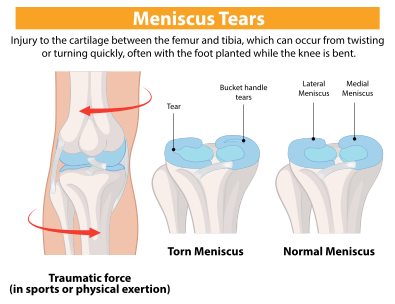
A meniscus tear is damage to one of the two menisci inside the knee. The medial meniscus sits on the inner side, while the lateral meniscus sits on the outer side. Both are made of tough fibrocartilage. They sit between the femur and tibia, helping spread pressure across the knee during movement and weight bearing.
A torn meniscus can vary considerably from one person to another. Some tears are small and remain in place. Others may create a loose or displaced section of meniscal tissue. The location of the tear also matters. The outer portion of the meniscus has a better blood supply than the inner portion. This difference can affect the tissue’s healing potential.
Meniscus tears are also described by their shape or pattern. These may include radial, horizontal, flap, bucket handle, and complex tears. That distinction is more than medical terminology. The size, location, and pattern of a tear can affect how it behaves inside the knee. In other words, a meniscus tear is not one uniform injury. Two people can have the same diagnosis but very different structural damage within the knee.
What Causes a Meniscus Tear?
A meniscus tear usually happens when the knee twists or rotates while supporting body weight. The meniscus can become trapped between the femur and tibia during that movement.
- A sudden pivot is a common mechanism. This can happen when the foot remains planted while the body changes direction.
- Deep squatting can also place substantial force through the meniscus. The risk may increase when the knee is bent deeply under a heavy load.
- Sports often involve these movements. Football, basketball, soccer, tennis, and similar activities can combine twisting, pivoting, or sudden changes in direction.
- Not every meniscus tear results from a single injury, though. Some develop gradually as the meniscal tissue becomes less resilient with age.
- Age related changes can make the fibrocartilage more vulnerable to tearing during movements that might not have caused an injury earlier in life. In these cases, the tear may develop without one clearly memorable incident.
- Previous knee injuries can also alter how force moves through the joint. Over time, abnormal loading may place additional stress on the meniscus.
- A useful distinction is that traumatic and degenerative tears do not always begin the same way. One may follow a sudden twisting event, while the other can develop through gradual tissue changes and everyday loading.
- In some cases, both factors may be involved. A meniscus that has already changed with age may tear during a relatively ordinary movement.
Signs of a Torn Meniscus
A torn meniscus can produce observable changes in how the knee looks or moves. These signs may appear immediately or develop after the initial injury.
The pattern can also vary. Some people develop noticeable swelling, while others mainly experience mechanical changes in knee movement. A physical examination may reveal findings that point toward meniscal involvement, although further assessment may still be needed.
Swelling and Stiffness in the Knee
Knee swelling may develop after a meniscus tear as the joint reacts to the injury. It is not always immediate, though. In some cases, swelling builds gradually over several hours or days.
The knee may also become visibly fuller around the joint. As fluid accumulates, bending or straightening the knee can become more restricted, contributing to stiffness.
A useful detail is that swelling alone does not confirm a meniscus tear. Several knee injuries can produce joint swelling. Its timing and the circumstances surrounding the injury can provide more useful clinical context.
Knee Locking or Catching
Knee locking or catching can occur when torn meniscal tissue interferes with normal joint movement. A displaced portion of the meniscus may physically obstruct the knee during bending or straightening.
True mechanical locking is different from simply avoiding movement because of pain. With mechanical locking, the knee may become physically unable to move through its normal range. Catching can be less dramatic. The knee may briefly hesitate or feel as though something is interfering with movement before continuing. These mechanical signs deserve particular attention because they can suggest that the torn tissue is affecting normal knee mechanics.
A Popping Sensation at the Time of Injury
Some people report hearing or feeling a pop when the knee is injured. This can occur when the knee twists or is subjected to sudden force. However, a popping sensation does not automatically mean the meniscus has torn. Ligaments and other knee structures may also be involved in injuries that produce a pop. The absence of a pop does not rule out a torn meniscus either. Degenerative tears may occur without a memorable sound or sudden event.
Meniscus Tear Symptoms
With a meniscus tear, the first thing many people notice is simply that the knee does not feel right anymore. Sometimes it hurts in one very specific spot. Other times, the pain feels deeper inside the knee and is harder to pinpoint.
It can be a sharp pain, especially with certain movements. You might be fine walking around the house, then feel it when getting out of the car or lowering yourself into a chair. For some people, the pain comes and goes enough that they are not sure what triggered it.
There can also be an ache that hangs around after activity. Someone may take a walk and feel reasonably comfortable throughout. Later that day, the knee starts bothering them. It might feel sore when they finally sit down and relax.
The knee can also feel unreliable. Not necessarily because it actually collapses, but because there is that uncomfortable sense of, “I do not really trust this knee right now.” Going downstairs, stepping off a curb, or turning quickly may suddenly make you more aware of it.
And the symptoms are not always consistent. A movement that causes pain one day might feel manageable the next. That can be frustrating. People sometimes keep testing the knee, trying to work out which positions they can still tolerate.
That variation is common with a meniscus tear. One person may mainly complain about occasional sharp pain. Another may describe a persistent ache or a feeling that the knee is unstable during everyday activities.
Meniscal Injury Tests to Diagnose a Meniscus Tear in the Knee
Several physical examination tests can help identify whether a meniscus tear may be contributing to knee problems. These tests place the knee in specific positions while applying pressure, rotation, or movement.
No single test can confirm every meniscus tear on its own. The findings are usually considered alongside the injury history, reported symptoms, and other examination results.
McMurray Test
The McMurray test is commonly used when a meniscus tear is suspected. During the test, the knee is bent while the lower leg is rotated and the knee is gradually straightened.
The examiner looks for pain, clicking, or other responses that may occur when the movement places stress on the meniscus. The direction of rotation can also help assess different areas of the medial and lateral meniscus.
A positive McMurray test can raise suspicion of a meniscal injury. Still, a negative result does not completely rule out a meniscus tear.
Apley Test
The Apley test is performed with the person lying face down and the knee bent. The examiner applies pressure through the lower leg while rotating it.
This movement is designed to place compressive and rotational stress through the knee joint. Pain during the maneuver may suggest meniscal involvement.
The test can also be compared with movements that apply traction rather than compression. That comparison may help the examiner consider whether the discomfort could involve another knee structure.
Thessaly’s Test
The Thessaly’s test evaluates the knee while the person stands and rotates their body over the supporting leg. The knee is usually held in a slightly bent position during the movement.
This test can reproduce the type of loading and rotation that may irritate a damaged meniscus. Joint line discomfort, catching, or a sense of instability during the test may raise suspicion.
Because the test requires standing and rotation, it may not be suitable for everyone. Significant pain or poor balance can limit its usefulness.
Steinmann Test
The Steinmann test involves moving and rotating the lower leg while assessing pain around the knee joint. Different versions of the test may be used during a physical examination.
The examiner may also assess whether the location of joint line tenderness changes as the knee moves. A shift in tenderness can provide additional information when evaluating possible meniscal involvement.
This test is generally interpreted as part of the overall examination. On its own, it cannot determine the exact type or extent of a meniscus tear.
MRI and Imaging for Meniscus Tears
An MRI can provide detailed images of the menisci and other soft tissues inside the knee. It may help identify the location and characteristics of a suspected meniscus tear.
However, MRI findings also need clinical context. Some people can have meniscal changes visible on imaging without those findings being the source of their current symptoms.
X rays do not directly show a meniscus tear because the meniscus is soft tissue. They may still be used to evaluate the bones and identify other conditions that could be contributing to knee pain.
Physical tests and imaging serve different purposes. Examination tests can help guide clinical suspicion, while MRI may provide more detailed information about the meniscal tissue.
Can a Chiropractor Help a Torn Meniscus?
Yes. Chiropractic care may help manage pain and functional problems associated with some meniscus tears. It cannot repair the torn meniscus itself.
A torn meniscus does not automatically mean every problem in the knee comes directly from the damaged tissue. The knee may remain painful because movement has changed, muscles are guarding the area, or the leg is no longer handling load normally.
That is where conservative care may have a role. Can a chiropractor help a torn meniscus without surgery? In appropriate cases, chiropractic care may address the pain and movement problems surrounding the injury. Whether it is suitable depends on the tear and the person’s overall knee function.
The approach also has limits. Chiropractic care is not a substitute for orthopedic assessment when the injury requires further medical management. The goal is to improve what can be managed conservatively, not to claim that the torn tissue can be manually repaired.
Addressing Hip, Ankle, and Lower Limb Biomechanics
Pain rarely stays isolated to one movement. A person may start changing the way they walk, climb stairs, squat, or transfer weight without noticing it.
Take someone who avoids bending the injured knee while going downstairs. The body may compensate by relying more heavily on the opposite side. Another person may rotate the foot outward to make certain movements feel easier. Those adaptations can persist. Even when the original irritation settles somewhat, the altered movement pattern may remain.
This is why the hip, ankle, and the rest of the lower limb can be relevant during an assessment. Hip control influences how the thigh moves over the knee. Ankle mobility can affect how the leg moves when the body travels forward over the foot. Neither issue should automatically be labelled as the cause of a meniscus tear. Improving them will not heal the damaged meniscus either.
What may be useful is identifying movement problems that developed alongside the injury. Manual therapy or rehabilitation may then target those specific findings rather than applying the same treatment to every knee. That broader assessment is one reason chiropractic care can be considered as part of conservative management for a meniscus tear.
Chiropractic Techniques Used for Meniscus and Knee Pain
Chiropractic treatment for knee pain associated with a meniscus tear can involve several techniques, depending on the examination findings. The purpose is not to repair the torn meniscus. Care may instead focus on pain, restricted movement, muscle guarding, and changes in how the knee functions.
Joint mobilization may be used when movement is restricted in the knee or nearby joints. Gentle, controlled movements can help address joint stiffness that developed after the injury. Depending on the findings, the hip or ankle may also be treated when their movement is affecting lower limb function.
Soft tissue therapy may be used for muscles that have become tight or guarded around the knee. After an injury, people sometimes unconsciously keep the leg tense or avoid using certain muscles normally. Manual soft tissue techniques may help address this protective response.
Some chiropractors may also use myofascial techniques to work with the muscles and connective tissues surrounding the knee. The goal is not to treat the torn meniscus directly. It is to address soft tissue restrictions that may be contributing to discomfort or altered movement.
Therapeutic exercises can be another important part of care. A person may need to gradually improve muscle control around the knee before returning to certain activities. Exercises may focus on the quadriceps, hamstrings, and other muscles involved in supporting and controlling the leg.
This is where a chiropractor for knee pain can provide a more functional approach. Treatment is not limited to one technique or a single appointment. The techniques used should depend on what the examination shows and how the knee responds.
A chiropractor for a meniscus tear should also modify or avoid techniques that aggravate the injury. Not every painful or restricted knee should be pushed through the same range of motion.
Treating a Meniscus Injury
Treating a meniscus injury depends on more than simply finding out that a tear exists. The location and pattern of the tear matter. So does the person’s age, activity level, daily demands, and the condition of the rest of the knee.
Some meniscus injuries can be managed with conservative treatment. Others may require orthopedic treatment or surgery. There is no single approach that works for every torn meniscus.
In many cases, treatment starts by reducing activities that repeatedly aggravate the knee. That does not always mean complete rest. Keeping the knee completely inactive for too long can contribute to weakness and make normal movement harder.
The treatment plan may then involve rehabilitation, pain management, and a gradual return to normal activities. Some people only need enough improvement to walk, work, and manage daily tasks comfortably. Others need to return to running, physically demanding work, or sports.
There is also a difference between healing a meniscus tear and improving how the knee functions. A person can sometimes experience less pain and better movement even when the meniscal tissue has not fully healed.
That distinction often gets missed in general advice. The goal of treatment is not always to make the tear disappear. Sometimes the focus is on improving function enough for the person to return to their normal life.
The exact treatment path should depend on the injury itself. When asking whether can a chiropractor help a torn meniscus, chiropractic care may be considered as part of conservative management. It may addess pain and functional limitations, but it does not replace treatment needed for the tear.
What Is the Fastest Way to Heal a Torn Meniscus?
There is no universal fastest way to heal a torn meniscus. The quickest appropriate recovery depends on the type of tear and its ability to heal.
One major factor is where the tear occurs. The outer portion of the meniscus has a better blood supply than the inner portion. Tears closer to that outer region may have greater healing potential.
That does not mean every tear in that area heals without further treatment. The pattern, size, and stability of the tear can also influence the treatment decision.
The fastest route is usually finding the right treatment approach early instead of trying every possible remedy. Some people may improve with activity modification and rehabilitation. Others may need orthopedic treatment.
A common mistake is assuming that reduced pain means the knee is ready for full activity. Someone might feel better after a week or two and immediately return to running or sport. The knee may feel fine during the activity, then become increasingly painful afterward.
Recovery is usually more successful when activity is progressed gradually. The right pace depends on how the knee responds and the demands the person eventually needs to meet.
Exercises for a Meniscus Tear
Gentle exercises may help relieve discomfort and prevent the leg from becoming weaker while recovering from a meniscus injury. They do not repair the torn meniscus. The aim is to maintain comfortable movement and muscle strength without repeatedly irritating the knee.
- Heel slides can be useful when the knee feels stiff after resting or sitting. Lie on your back and slowly slide the heel toward your body. Then slide it back out. Stay within a comfortable range rather than forcing the knee to bend further.
- Quad sets require very little knee movement. Sit or lie down with the affected leg straight. Tighten the front thigh muscles and gently press the back of the knee toward the surface beneath you. Hold briefly, then relax. This exercise can help keep the quadriceps active when more demanding movements are uncomfortable. It is simple, but useful for someone who has been avoiding normal use of the leg.
- Straight leg raises can be added if the knee tolerates them comfortably. Tighten the thigh with the leg straight, slowly lift the leg, then lower it with control. Avoid swinging the leg or using momentum.
- Glute bridges work the hips and muscles along the back of the legs. Lie on your back with both knees bent. Slowly raise your hips, pause briefly, and lower yourself back down. The exercise does not place the same demand on the knee as deeper squatting movements. That can make it a useful option when the person is still rebuilding tolerance for weight bearing activities.
- Calf raises can help maintain lower leg strength. Hold a stable surface if needed. Slowly rise onto your toes, pause, and lower your heels with control.
- A controlled sit to stand can become useful when getting up from a chair feels comfortable. Start with a chair that does not require excessive knee bending. Stand slowly and sit back down with control.
Is a Heating Pad Good for Meniscus Tears?
A heating pad may provide temporary relief from stiffness or surrounding muscle tightness, but it does not heal a meniscus tear. Some people notice that the knee feels uncomfortable after sitting for a long time. Gentle heat may make the area feel more relaxed before light movement or an exercise session.
For example, someone may wake up with a stiff feeling around the knee after sleeping in one position. Using gentle heat for a short period may improve comfort enough to make normal movement easier.
The benefit is temporary. Heat does not repair the damaged tissue or change the structure of the tear. It may also be less suitable when the knee already feels warm or has become more irritated. In those situations, additional heat may increase discomfort rather than relieve it. A heating pad should also be used carefully to avoid burns. It should not be left on the skin for extended periods or used while sleeping. Heat can be a comfort measure. It works best when viewed as one small part of managing a meniscus injury, rather than a treatment for the tear itself.
Knee Braces for Meniscus Injuries
A knee brace may provide support and make some activities feel more comfortable, but it cannot repair a torn meniscus. The type of brace matters. A simple compression sleeve may provide warmth and a feeling of support around the knee. Some people find that useful during walking or everyday activities.
A hinged brace serves a different purpose. It provides more structured support and may be recommended in specific situations where controlling certain knee movements is necessary. The brace itself should not be mistaken for treatment. Feeling more secure while wearing one does not mean the knee has recovered.
Someone might wear a brace, experience less discomfort, and then increase their activity too quickly. The external support can sometimes create more confidence than the knee’s actual capacity. A brace may be useful during a particular stage of recovery or for certain activities. Others may gain little benefit from wearing one.
The decision should depend on the injury, current knee function, and treatment plan. A brace is best used as a tool when there is a clear reason for it, not as a permanent replacement for rehabilitation or appropriate medical care.
Chiropractor for Knees at Ashburn Village Chiropractic
Knee pain can come from several different problems, including joint changes, soft tissue injuries, repetitive strain, or movement related issues. The right approach depends on what is actually contributing to the pain. That is why an evaluation should come before deciding whether chiropractic care is appropriate.
At Ashburn Village Chiropractic, Dr. Jonathan Solomon evaluates patients experiencing knee pain and related movement difficulties. The assessment may consider the history of the problem, where the pain is occurring, how the knee responds during movement, and whether the findings suggest that further evaluation is needed.
Ashburn Village Chiropractic also has an in house X ray machine, which can be used when X ray imaging is clinically appropriate. X rays can help assess bones and certain joint changes that may be relevant to knee pain. However, they cannot show a meniscus tear in the same way as an MRI. Soft tissue injuries may require different imaging or further medical evaluation.
When chiropractic care is appropriate, Dr. Jonathan Solomon may use conservative treatment to address factors contributing to knee pain and functional limitations. Depending on the clinical findings, care may include chiropractic techniques, soft tissue treatment, and rehabilitative exercises.
Not every knee problem should be managed with chiropractic care alone. Some injuries require additional medical assessment or treatment. Knowing when another type of evaluation is necessary is part of making an appropriate treatment decision.
Ashburn Village Chiropractic serves patients in Ashburn, Brambleton, Sterling, Leesburg, Lansdowne, Dulles, Reston, Great Falls, Herndon, and South Riding. The clinic provides a convenient option for people in these nearby communities seeking a chiropractor for knees and conservative care for knee pain.
If knee pain is affecting your work, daily activities, or ability to stay active, schedule an appointment with Dr. Jonathan Solomon at Ashburn Village Chiropractic. A proper evaluation can help determine whether chiropractic care is appropriate and what the next step should be.
Get a summary of this article with your favorite AI: