
Knee osteoarthritis gradually changes the structures within the joint, which can affect comfort, mobility, and everyday physical activity. A chiropractor can help with osteoarthritis of the knee by managing certain musculoskeletal and functional problems linked to the condition. Chiropractic care does not restore damaged cartilage, but it may support better knee function as part of conservative management.
What Is Osteoarthritis of the Knee?
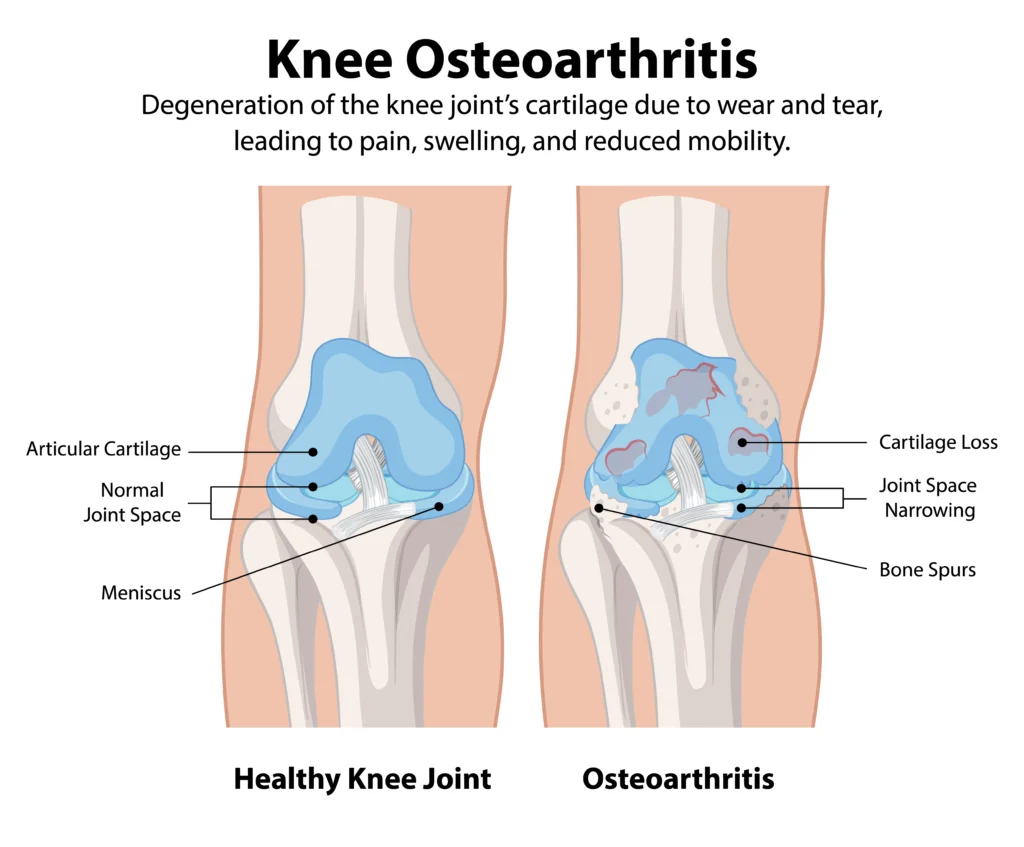
Knee osteoarthritis is a degenerative joint condition that affects the structures within the knee. The smooth cartilage covering the ends of the bones gradually becomes damaged and less effective. Changes may also occur in the bone, joint lining, menisci, ligaments, and surrounding tissues.
As these changes develop, the knee may become stiff, painful, or harder to move. Walking, climbing stairs, bending the knee, or standing after sitting can become uncomfortable. Some people also experience swelling, reduced range of motion, or grinding sensations in the joint.
Knee osteoarthritis is more than simple cartilage “wear and tear.” It can change how the entire knee functions and handles everyday movement. For someone asking can a chiropractor help with osteoarthritis of the knee, understanding these joint changes is important before considering how chiropractic care may help manage the condition.
What Causes Osteoarthritis of the Knee?
There is no single cause of knee osteoarthritis. It usually develops through a combination of changes within the joint and factors that increase stress on the knee over time.
Common causes and risk factors for knee osteoarthritis include:
- Age-related joint changes: The risk increases with age as cartilage and other tissues within the knee undergo gradual changes.
- Previous knee injuries: Damage to the meniscus, ligaments, cartilage, or bones can alter knee mechanics. Osteoarthritis may develop years after the original injury.
- Repeated stress on the knee: Frequent heavy loading and repetitive knee movements can place greater stress on joint structures over time.
- Excess body weight: Additional body weight increases the forces placed on the knee during walking, standing, and climbing stairs.
- Joint alignment: Differences in knee alignment can place greater load on one part of the joint, contributing to uneven stress.
- Muscle weakness: Weak muscles around the knee may provide less support and affect how forces are controlled during movement.
- Genetics and joint structure: Family history and inherited differences in joint structure can increase a person’s likelihood of developing knee osteoarthritis.
Knowing these factors can also help someone with knee osteoarthritis recognize what may be placing additional stress on the joint. However, the cause and severity can differ from person to person, which makes an accurate evaluation important before deciding how the condition should be managed.
What Are the 4 Stages of Knee Osteoarthritis?
Knee osteoarthritis is often described in four stages, from minor changes to severe joint damage. These stages generally correspond to Grades 1 through 4 of the Kellgren-Lawrence system used to assess osteoarthritis on X-rays. The stage seen on an X-ray does not always predict how much pain someone will experience. Some people have significant joint changes with limited symptoms, while others experience considerable pain with less severe changes.
Stage 1 of Knee Osteoarthritis: Minor
Stage 1 represents very early or doubtful signs of knee osteoarthritis on an X-ray. There may be possible narrowing of the joint space or the beginning of a small bone spur, known as an osteophyte.
At this point, structural changes can be subtle. A person may have few symptoms or none at all, so symptoms alone cannot reliably determine whether the knee is at this stage.
Stage 2: Mild
Stage 2 shows clearer evidence of osteoarthritis. Definite bone spurs are visible on an X-ray, while some narrowing of the space between the bones may also appear.
Knee discomfort or stiffness may become more noticeable during activity. However, symptoms still vary considerably between individuals. Radiographic findings and a clinical evaluation are both important when assessing the condition.
Stage 3: Moderate
Stage 3 involves more substantial structural changes. X-rays typically show definite joint-space narrowing, multiple bone spurs, and some hardening of the bone beneath the cartilage, called subchondral sclerosis. Changes in the shape of the bone ends may also begin.
Daily activities can become more difficult for some people. Walking, using stairs, squatting, or getting up after sitting may aggravate knee pain or stiffness. Reduced knee movement can also become more noticeable.
Stage 4: Severe
Stage 4 represents severe radiographic knee osteoarthritis. The joint space is markedly narrowed, large bone spurs may be present, and changes to the underlying bone are more pronounced. X-rays may also show significant sclerosis and deformity of the bone ends.
Pain, stiffness, and loss of mobility can substantially affect daily activities at this stage. Severe symptoms or major loss of function require appropriate medical assessment because management needs can differ significantly from those of early knee osteoarthritis.
The stage of osteoarthritis should therefore not be determined from pain alone. A healthcare professional considers symptoms, physical findings, function, and imaging when appropriate to understand how the condition is affecting the knee.
How Chiropractic Care Helps Manage Knee Osteoarthritis
Can a chiropractor help with osteoarthritis of the knee? Chiropractic care may help manage pain, stiffness, and movement limitations linked with knee osteoarthritis. It does not reverse cartilage damage or remove structural joint changes.
Care instead focuses on problems that can still be influenced. These may include restricted joint movement, muscle weakness, poor lower-limb control, and altered movement patterns. A chiropractor can assess these factors before deciding which approaches may be appropriate.
Joint Mobilization and Alignment
Knee osteoarthritis can restrict joint movement, making bending and straightening the knee more difficult. Reduced mobility can also interfere with walking, stairs, and other daily activities.
Joint mobilization uses controlled movements to address restrictions within the knee’s available range. A chiropractic knee adjustment may also be appropriate for some patients. The technique and force should reflect the condition of the joint and the patient’s tolerance.
The purpose is not to reposition damaged cartilage or remove arthritic changes. Instead, manual care aims to improve usable joint motion when stiffness limits function.
Reducing Knee Stress Through Hip and Ankle Function
The knee works with the hip, ankle, and foot during walking and other weight-bearing movements. Each area influences how the lower limb moves and manages force.
Limited ankle mobility can change how the leg moves over the foot during walking. Reduced hip strength or control can also influence thigh movement during weight-bearing activities.
These problems do not necessarily cause knee osteoarthritis. However, they can influence movement when someone already has a painful or stiff knee.
A chiropractor can assess the entire lower limb instead of examining only the painful area. Relevant hip or ankle limitations can then be addressed as part of improving overall movement.
Targeted Stretches and Corrective Exercises
Hands-on care can address restricted movement, but exercise has a different role. Exercise develops the strength and control needed to support movement during daily activities.
The quadriceps provide important support during walking, standing, and climbing stairs. Hip and calf muscles also contribute to lower-limb stability and movement control.
Chiropractic exercises for knee pain should match the limitations found during an individual assessment. Weakness may require strengthening, while restricted mobility may require appropriate stretching or mobility exercises.
Balance and control exercises can serve another purpose when stability is limited. Exercise difficulty should progress according to the person’s ability and response.
Improving Gait and Movement Patterns
Knee osteoarthritis can change walking patterns because people naturally try to avoid painful movements. These changes may develop gradually and become difficult to notice.
Someone may take shorter steps, reduce knee bending, or spend less time loading the painful leg. Another person may shift more work toward the opposite leg.
A gait assessment can identify how pain, stiffness, or weakness has changed movement. This provides information that examining the knee while resting cannot always reveal.
Care can then target the specific restriction contributing to that movement pattern. The goal is safer, more efficient movement within the person’s abilities.
Supporting Long-Term Joint Function
Knee osteoarthritis is a long-term condition, so management should focus on more than temporary symptom relief. Maintaining mobility and strength can support continued participation in everyday activities.
Chiropractic for knee pain may address relevant mobility restrictions through appropriate hands-on care. Active exercises can then strengthen the muscles needed to control and maintain that movement.
Long-term care should encourage active participation rather than dependence on repeated adjustments. Strength, mobility, balance, and movement practice can all contribute to maintaining physical function.
A chiropractor for knee osteoarthritis can identify manageable movement limitations and develop care around those findings. The overall goal is maintaining useful movement and activity despite the structural changes associated with osteoarthritis.
Best Exercises for Osteoarthritis of the Knees
The best exercises for knee osteoarthritis should improve strength, flexibility, mobility, or joint support without unnecessarily stressing the knee.
Strength matters because the muscles surrounding the knee help control movement during walking, standing, and climbing stairs. Flexibility also matters because tight muscles can restrict comfortable movement.
The following chiropractic exercises for knee pain target different parts of lower-limb function. They can also be performed at home without complex equipment. Exercise should remain comfortable and controlled. Stop if an exercise causes sharp pain, significant swelling, or worsening symptoms.
Straight Leg Raises
Straight leg raises strengthen the quadriceps while keeping the knee straight. This makes them useful when repeated knee bending feels uncomfortable. Stronger quadriceps can provide better muscular support during walking, standing, and other weight-bearing activities.
How to perform a straight leg raise:
- Lie on your back with one leg straight.
- Bend the opposite knee and place that foot flat on the floor.
- Tighten the thigh muscle of your straight leg.
- Keep that knee straight while slowly lifting the leg several inches.
- Hold the raised position for several seconds.
- Slowly lower your leg back to the starting position.
- Relax briefly before repeating the movement.
- Switch legs when you finish your repetitions.
Keep the movement slow and controlled. Avoid lifting the leg by arching your lower back.
Seated Knee Extensions
Seated knee extensions strengthen the quadriceps through active knee movement. These muscles help control the knee during many daily activities. The seated position also provides support while the knee moves through a comfortable range.
How to perform a seated knee extension:
- Sit upright in a sturdy chair.
- Keep both feet flat on the floor.
- Slowly straighten one knee and raise the foot forward.
- Stop when the leg reaches a comfortable straightened position.
- Hold the position briefly while tightening the thigh.
- Slowly lower the foot back to the floor.
- Repeat the movement with control.
- Switch to the opposite leg after completing your repetitions.
Do not force the knee completely straight if that position causes pain.
Hamstring Stretches
The hamstrings run along the back of the thigh and cross the knee. Tight hamstrings can limit comfortable movement of the lower limb. Gentle stretching can improve flexibility and make bending, straightening, and walking feel less restricted.
How to perform a seated hamstring stretch:
- Sit near the front of a sturdy chair.
- Keep one foot flat on the floor.
- Extend the opposite leg forward with its heel touching the floor.
- Point the toes of the extended leg upward.
- Keep your back straight and chest lifted.
- Lean forward gently from your hips.
- Stop when you feel a comfortable stretch behind your thigh.
- Hold the stretch for about 10 to 30 seconds.
- Return upright slowly and switch legs.
The stretch should feel gentle. Avoid bouncing or forcing your body farther forward.
Calf Stretches
Calf flexibility affects ankle movement, which influences how the lower leg moves during walking. A stiff ankle can make normal forward movement more difficult. Improving calf flexibility can support smoother movement through the ankle and lower limb.
How to perform a standing calf stretch:
- Stand facing a wall and place both hands against it.
- Step one foot backward while keeping both feet pointed forward.
- Keep the heel of your back foot on the floor.
- Keep the back knee straight without locking it.
- Bend your front knee and gently move your body forward.
- Stop when you feel a stretch through the back calf.
- Hold the position for about 20 to 30 seconds.
- Return to the starting position and switch legs.
Keep the back heel down throughout the stretch. Avoid pushing farther once you feel a comfortable stretch. These exercises address different needs rather than performing the same function. Leg raises and extensions build strength, while hamstring and calf stretches improve flexibility. The appropriate exercise level depends on pain, mobility, strength, and the severity of knee osteoarthritis. Individual assessment is important when symptoms significantly limit movement.
Conditions Commonly Confused With Knee Osteoarthritis
Knee pain, stiffness, and difficulty moving do not automatically mean osteoarthritis. Other conditions can produce similar symptoms but develop for different reasons. Two common comparisons are rheumatoid arthritis and runner’s knee. Knowing their differences can help explain why an accurate diagnosis matters before treatment begins.
Knee Osteoarthritis vs Rheumatoid Arthritis
Knee osteoarthritis and rheumatoid arthritis can both cause pain, stiffness, swelling, and reduced movement. However, they are different diseases.
Knee osteoarthritis involves gradual changes to cartilage and other tissues within the joint. Symptoms often develop slowly and may affect one knee more than the other.
Rheumatoid arthritis is an autoimmune disease. The immune system mistakenly attacks joint tissues, causing inflammation and potentially damaging the joint.
Several features can help distinguish them:
- Pattern: Rheumatoid arthritis often affects matching joints on both sides. Knee osteoarthritis can affect one or both knees differently.
- Morning stiffness: Osteoarthritis stiffness usually improves within 30 minutes. Rheumatoid arthritis stiffness commonly lasts longer than 30 minutes.
- Inflammation: Rheumatoid arthritis can cause noticeable warmth and swelling around affected joints.
- Other joints: Rheumatoid arthritis commonly affects several joints, especially the hands, wrists, and feet.
- Whole-body symptoms: Fatigue, low-grade fever, and appetite loss can occur with rheumatoid arthritis.
- Testing: Blood tests can help investigate rheumatoid arthritis. Osteoarthritis diagnosis relies more on symptoms, examination, and imaging when needed.
Symptoms alone cannot always determine which condition is present. Rheumatoid arthritis requires medical evaluation because it is a systemic autoimmune disease.
Runner’s Knee vs Osteoarthritis
Runner’s knee usually refers to patellofemoral pain syndrome, which causes pain around or behind the kneecap. Despite its name, the condition does not affect runners exclusively.
The main difference involves where the problem comes from. Runner’s knee involves pain around the kneecap without the characteristic joint changes defining osteoarthritis.
The symptom pattern can also provide useful clues:
- Pain location: Runner’s knee commonly causes pain around or behind the kneecap.
- Activity: Running, squatting, jumping, and stairs can aggravate runner’s knee.
- Prolonged sitting: Runner’s knee may hurt after sitting with the knee bent for extended periods.
- Osteoarthritis: Pain may occur during activity, alongside stiffness after rest and reduced joint movement.
- Joint changes: Osteoarthritis can involve cartilage loss, joint-space narrowing, bone changes, and bone spurs.
- Age: Runner’s knee frequently affects active people and can occur in younger adults.
Both conditions can make stairs, squatting, and knee bending uncomfortable. That overlap is one reason the location of pain alone cannot confirm the diagnosis. A proper assessment considers symptom history, knee movement, physical findings, and imaging when clinically necessary.
When Should You See a Chiropractor for Knee Osteoarthritis?
Chiropractic evaluation may be considered when knee osteoarthritis causes persistent stiffness, restricted mobility, or difficulty with normal movement. Changes in walking or lower-limb function may also indicate a need for further assessment.
The evaluation should extend beyond the location of knee pain. Hip mobility, ankle function, muscle control, and walking mechanics can influence how the lower limb manages movement. Identifying these limitations can determine whether conservative chiropractic care is appropriate.
At Ashburn Village Chiropractic, Dr. Jonathan Solomon performs thorough evaluations and explains clinical findings clearly to patients. Patient reviews repeatedly describe this approach, including detailed assessments, X-ray reviews, and individualized care recommendations. The clinic also has on-site X-ray capabilities when imaging is clinically appropriate.
Certain symptoms require medical assessment before routine chiropractic care. Severe swelling, significant deformity, inability to bear weight, or a hot knee with fever require prompt medical attention.
For appropriate cases, chiropractic care focuses on manageable movement restrictions and functional limitations associated with the condition. The objective is to support mobility and physical function without suggesting that chiropractic care reverses osteoarthritis.
Get a summary of this article with your favorite AI: