

Concerns about can chiropractor make sciatica worse are common among people already dealing with nerve pain. Sciatica symptoms may temporarily feel stronger during certain phases of care due to nerve sensitivity, inflammation, or changes in movement patterns. This does not mean chiropractic care is harmful. When sciatica is caused by mechanical or movement related factors, experienced chiropractic care focuses on proper assessment, gradual decompression, and controlled treatment to reduce nerve pressure safely. Outcomes depend on accurate identification of the pain source, appropriate technique selection, and patient response over time. If sciatica worsens, reassessment by an experienced chiropractor helps adjust care and support long term improvement rather than aggravation.
When Sciatica Pain Can Feel Worse After Chiropractic Care
Sciatica symptoms can sometimes feel more noticeable shortly after chiropractic care begins. This does not mean the condition is worsening or that care is inappropriate. Sciatic nerve pain often involves irritated, sensitive nerve tissue that reacts to changes in movement or pressure.
When patients search can chiropractor make sciatica worse, they are usually experiencing increased awareness of symptoms rather than new injury. Chiropractic care introduces controlled motion to areas that may have been restricted for long periods. This change can temporarily amplify sensations before improvement occurs.
Pain perception can increase as the nervous system adapts to restored movement patterns. This response is typically short lived and monitored closely during care progression. Experienced chiropractors adjust treatment intensity based on patient feedback and response.
Temporary Symptom Changes During Early Treatment
Early chiropractic care can lead to temporary symptom changes as tissues begin to move differently. Muscles surrounding the sciatic nerve may relax after being tight for extended periods. This change can briefly increase nerve sensitivity.
Inflamed nerve tissue may respond to improved joint motion with short term soreness. This response is similar to stiffness felt after starting a new exercise routine. Symptoms often fluctuate before stabilizing.
These temporary changes usually occur within the first few visits. They should gradually reduce as the body adapts to improved movement. Chiropractors monitor these responses carefully to ensure care remains appropriate.
Pre Existing Sciatic Nerve Irritation And Flare Ups
Sciatica often involves long standing nerve irritation before treatment begins. Symptoms may already be fluctuating based on posture, activity, or inflammation levels. A flare up may coincide with care timing rather than result from care.
Pre existing nerve compression can make the sciatic nerve highly reactive. Even minor changes in position or movement can increase symptoms temporarily. Chiropractic care does not create this sensitivity but may reveal it.
Flare ups related to existing nerve irritation usually settle as inflammation decreases. Treatment plans are adjusted to respect nerve tolerance and healing timelines. The goal remains gradual symptom reduction, not immediate forceful change.
Why Is My Sciatica Worse After A Chiropractor?
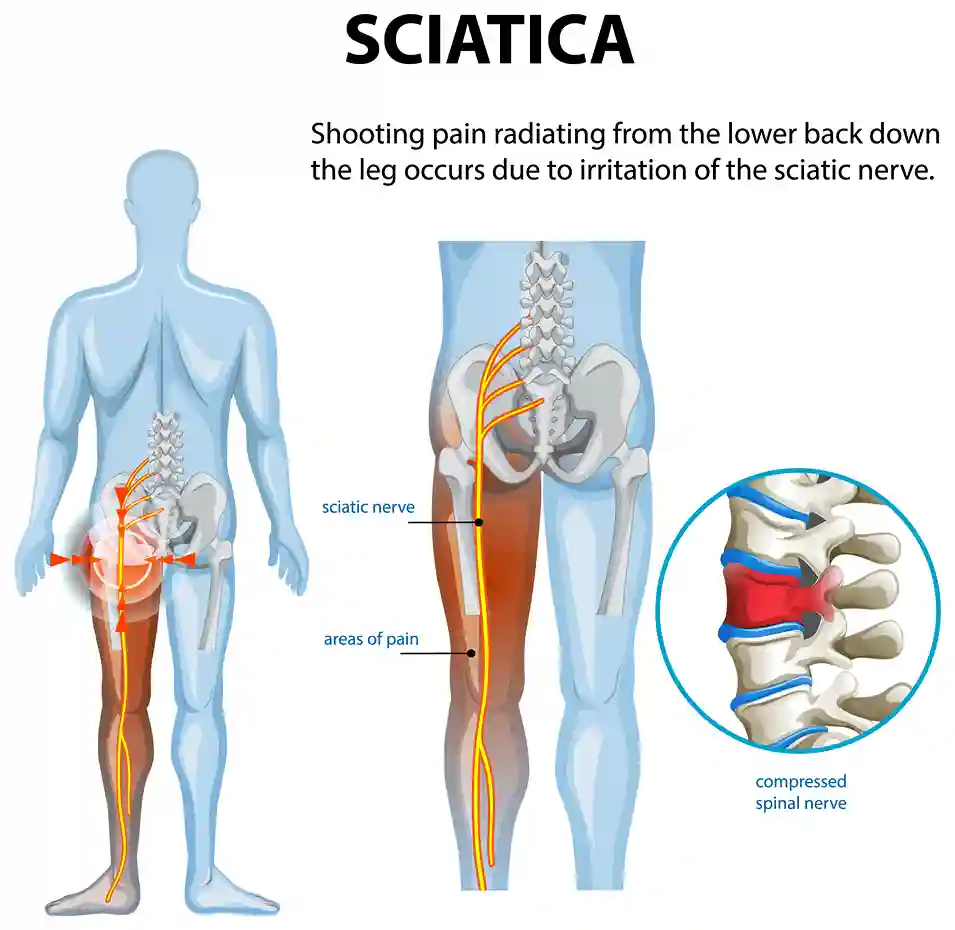
When sciatica feels worse after chiropractic care, the cause is often related to clinical decision factors rather than tissue reaction. Sciatica is not a single condition. It can originate from disc involvement, joint mechanics, muscular compression, or referred nerve irritation. If care is applied before the dominant pain generator is clearly identified, symptoms may shift or intensify instead of resolving.
This does not mean chiropractic care is harmful. It highlights the importance of matching treatment strategy to the correct sciatica driver. In these cases, discomfort reflects incomplete targeting rather than damage. Understanding this distinction helps answer concerns around whether can chiropractor make sciatica worse applies universally, which it does not.
Inflammation And Nerve Sensitivity After Initial Care
Sciatica pain can worsen when mechanical correction changes pressure distribution along the nerve pathway. Even without direct nerve contact, altered spinal mechanics can temporarily redirect load to already compromised tissues. This can increase perceived pain without increasing injury.
Local biochemical signaling can amplify pain when pressure patterns change. This includes inflammatory mediators already present before care began. The increase in discomfort reflects altered mechanical stress patterns, not treatment error. Once load distribution normalizes, symptoms typically stabilize. This mechanism differs from adaptation or timing responses. It is a mechanical load redistribution effect.
Importance Of Proper Assessment Before Treatment
Sciatica can mimic other conditions such as piriformis syndrome, hip joint pathology, or referred lumbar pain. If the source is misidentified, even correct techniques may be applied to the wrong region. This can delay relief or temporarily intensify symptoms.
Assessment determines whether sciatica is disc dominant, joint dominant, or soft tissue driven. Experience influences this differentiation. Without precise assessment, care may focus on symptom location instead of source origin.
Proper evaluation prevents unnecessary escalation of care intensity. It ensures force selection, positioning, and progression align with the actual cause of nerve irritation. This is why provider experience directly affects outcomes and why worsening symptoms do not equal ineffective chiropractic care.
Should I Go To A Doctor Or Chiropractor For Sciatica
Choosing between a doctor or chiropractor for sciatica depends on symptom type, severity, and underlying cause. Sciatica is not a uniform condition. Some cases involve mechanical nerve compression, while others reflect systemic or progressive pathology.
Patients often worry, can chiropractor make sciatica worse, when deciding where to seek care. The answer depends on whether the sciatica is appropriate for conservative management. Both doctors and chiropractors play important roles when used in the correct clinical context.
Medical doctors are essential when sciatica presents with red flag symptoms or neurological compromise. Chiropractors are often appropriate when sciatica is movement related and mechanically driven. Understanding this distinction helps patients choose safely and confidently.
When Chiropractic Care Is Recommended For Sciatica
Chiropractic care is recommended when sciatica is caused by mechanical dysfunction rather than structural damage. Common examples include joint restriction, spinal loading imbalance, postural stress, or movement related nerve irritation.
Patients who experience sciatica during sitting, standing transitions, bending, or walking often benefit from conservative chiropractic care. These patterns suggest functional compression rather than nerve injury. Chiropractic evaluation focuses on identifying these mechanical contributors.
Non surgical sciatica cases often respond well to conservative care. Chiropractic treatment aims to improve joint motion, reduce abnormal spinal stress, and restore movement efficiency. When applied correctly, this approach supports nerve decompression without aggravation.
Chiropractic care is also appropriate when imaging does not indicate surgical necessity. In these cases, conservative management is often the recommended first step before invasive intervention.
How Chiropractic Care Helps Reduce Nerve Pressure Safely
Experienced chiropractic care focuses on reducing mechanical stress around the sciatic nerve pathway. This is achieved by improving spinal alignment, joint mobility, and load distribution rather than forcing correction.
Sciatic nerve irritation often results from repeated compression during daily movement. Chiropractic care addresses how the spine moves under load. Improving motion patterns reduces pressure accumulation along the nerve.
Care plans are adjusted based on patient tolerance and response. Techniques are selected to respect tissue sensitivity and joint integrity. This controlled approach explains why chiropractic care does not worsen sciatica when properly applied.
Chiropractors avoid aggressive techniques when nerve sensitivity is present. The goal is gradual decompression and improved movement control. This conservative strategy positions chiropractic care as a safe first line option for appropriate sciatica cases.
Situations Where A Doctor Evaluation Is Necessary First
| Clinical Situation | Medical Doctor Recommended | Chiropractor Recommended |
|---|---|---|
| Progressive leg weakness | Yes | No |
| Loss of bowel or bladder control | Yes | No |
| Suspected disc rupture with neurological deficit | Yes | No |
| Non surgical nerve compression | No | Yes |
| Movement related sciatica pain | No | Yes |
| Postural or mechanical nerve irritation | No | Yes |
| Failure of conservative care | Yes | Supportive role |
| Imaging required for diagnosis | Yes | Referral when needed |
How Quickly Can A Chiropractor Fix Sciatica?
Sciatica does not resolve on a fixed timeline because its cause and severity vary between individuals. Many patients ask this question after worrying whether can chiropractor make sciatica worse, or whether improvement should be immediate. Chiropractic care does not aim for instant correction. It focuses on steady reduction of nerve stress through safe, progressive care.
Improvement speed depends on how long the nerve has been irritated and how the body responds to movement correction. Some patients feel relief early, while others improve gradually over weeks. A responsible chiropractor sets realistic expectations based on clinical findings, not promises.
Factors That Influence Sciatica Recovery Time
Sciatica recovery is strongly influenced by the underlying mechanical cause of nerve irritation. Compression from joint restriction or movement imbalance often improves faster than cases involving long term degeneration.
Duration of symptoms matters. Sciatica present for weeks typically resolves faster than pain lasting several months. Chronic nerve irritation requires more time for tissues to calm and adapt.
Daily activity level also affects recovery. Repetitive sitting, poor posture, or improper lifting can slow progress. Chiropractors consider these factors when designing care plans.
Patient consistency plays a major role. Following movement guidance and care recommendations supports steady improvement. Skipped visits or continued aggravating activities often delay recovery.
Why Sciatica Improvement Is Gradual Not Instant
Sciatic nerves become sensitive when compressed or irritated over time. Immediate correction can overload tissues that have adapted to restricted movement. Gradual care allows the nervous system to adjust safely.
Chiropractic care works by improving joint motion and reducing mechanical stress. These changes occur progressively, not instantly. The body requires time to restore normal movement patterns.
Rapid force or rushed treatment increases risk rather than benefit. Experienced chiropractors prioritize controlled improvement to prevent flare ups. This approach explains why responsible care avoids unrealistic timelines.
Gradual improvement reflects safe care, not ineffective care. When progress is steady and symptoms trend downward, treatment is working as intended.
Best Chiropractor Near Me For Sciatica At Ashburn Village Chiropractic
Ashburn Village Chiropractic has provided patient focused chiropractic care to the Ashburn community for over 20 years. The clinic specializes in conservative care for conditions involving nerve irritation, joint dysfunction, and movement related pain, including sciatica. Care is centered on accurate assessment, safe treatment planning, and consistent follow up.
Patients are evaluated and treated by Dr. Jonathan Solomon at every visit. Dr. Solomon has served the Ashburn area since 2000 and brings more than two decades of clinical experience. He earned his Doctor of Chiropractic degree cum laude from Life Chiropractic College and is licensed by the Virginia Board of Medicine. His approach emphasizes careful examination, movement based care, and treatment decisions guided by patient response rather than routine protocols.
Ashburn Village Chiropractic is equipped with on site X ray capability when imaging is clinically appropriate, helping support accurate evaluation without unnecessary delays. This allows care to remain efficient, precise, and individualized.
The clinic conveniently serves patients from nearby areas including Dulles, Belmont, Herndon, South Riding, Broadlands, Loudoun Valley Estates, Ashburn Village, and surrounding communities. Patients seeking experienced, conservative care for sciatica can access chiropractic treatment without extended travel.
For individuals concerned about whether can chiropractor make sciatica worse, Ashburn Village Chiropractic focuses on careful assessment, controlled care, and patient safety at every stage of treatment.