
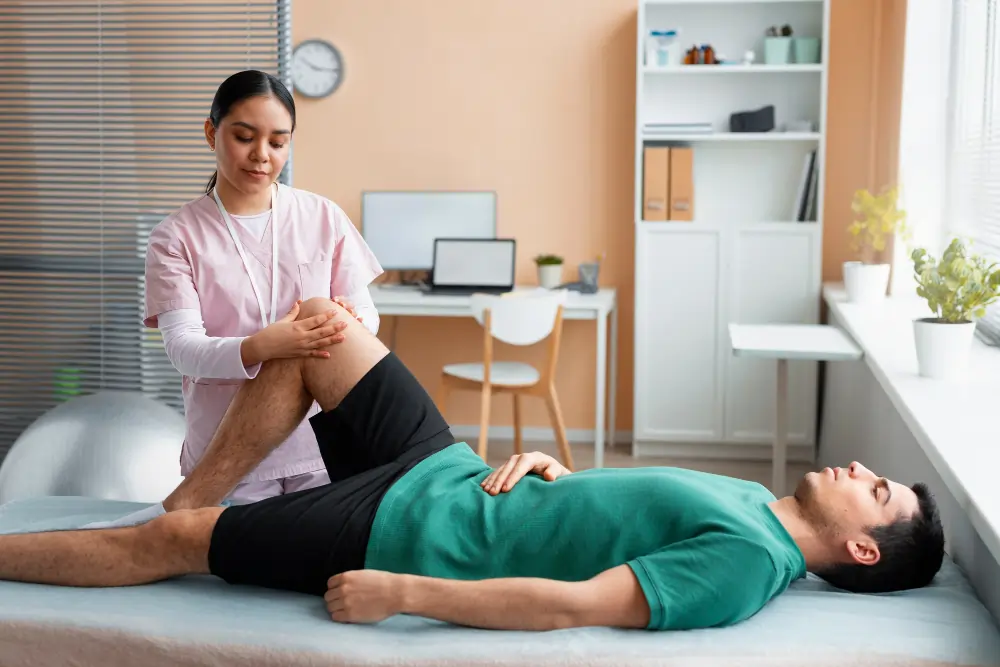
Can a Chiropractor Help With Knee Pain
Yes. A chiropractor can help with knee pain when the condition is related to joint dysfunction, mechanical overload, or movement imbalance. Knee discomfort often develops from ligament strain, cartilage irritation, altered patellar tracking, or progressive degenerative change. In many cases, contributing factors originate from hip instability, pelvic asymmetry, or impaired neuromuscular coordination rather than the knee alone.
A comprehensive chiropractic evaluation focuses on restoring proper joint mobility and improving muscular control. When mechanical stress is redistributed more efficiently, irritation within the joint decreases. This functional correction supports long term mobility and reduces the likelihood of recurring strain.
What Causes Knee Pain?
Knee pain develops when joint structures experience stress beyond their capacity to recover. The knee absorbs force during walking, running, and standing transitions. Even small alignment changes can increase joint pressure over time. Understanding the specific cause is essential before selecting the right treatment approach. Many patients search, Can a Chiropractor Help With Knee Pain, without first understanding why the pain began. A precise diagnosis always comes before corrective care.
Structural Knee Issues
Structural issues involve direct changes or irritation within the knee joint itself. These conditions typically affect cartilage, ligaments, or joint surfaces. Each structure plays a distinct role in stability and movement control.
Ligament Strain
Ligaments stabilize the knee during forward and rotational movement. Sudden twisting or overstretching can strain these supportive tissues. Mild strains create localized tenderness and swelling. More significant strain may cause instability during weight bearing. Incomplete healing can lead to recurring discomfort during activity. Early intervention helps protect long term joint integrity.
Meniscus Irritation
The meniscus acts as a shock absorbing cushion between the femur and tibia. Repetitive squatting or pivoting may irritate this cartilage. Patients often report catching or clicking sensations. Swelling may develop several hours after activity. Limited knee extension is another common sign. Persistent irritation alters load distribution across the joint surface.
Patellar Tracking Dysfunction
The kneecap must glide smoothly within its groove during bending. Muscle imbalance can shift the patella slightly off its optimal path. This creates uneven pressure behind the kneecap. Patients frequently notice pain when climbing stairs or standing from a seated position. Prolonged tracking dysfunction may irritate surrounding soft tissue. Correcting contributing alignment factors reduces repetitive strain.
Arthritis Related Degeneration
Cartilage gradually thins with age or repetitive stress exposure. Reduced cartilage increases friction within the joint. Morning stiffness and reduced mobility are common symptoms. Swelling may fluctuate depending on activity level. Joint degeneration often progresses slowly over time. Early mechanical correction may help reduce excessive loading patterns.
Hidden Biomechanical Causes
Not all knee pain begins in the knee itself. The lower body functions as a connected kinetic chain. Dysfunction above or below the joint can increase internal stress. Identifying these hidden contributors often changes treatment outcomes.
Hip Weakness
The hip stabilizes the femur during walking and single leg stance. Weak lateral hip muscles allow inward knee collapse. This inward motion increases strain on joint surfaces. Over time, repetitive stress irritates cartilage and ligaments. Strength restoration improves lower limb control and reduces overload.
Pelvic Imbalance
Pelvic asymmetry alters leg length mechanics during movement. Even subtle imbalance can shift weight unevenly across the knees. This imbalance may increase compressive force on one side. Patients sometimes experience pain without recalling injury. Restoring pelvic alignment improves symmetrical load transfer.
Tight Hamstrings And Hip Flexors
Restricted posterior and anterior thigh muscles limit normal stride length. Limited flexibility changes knee bending mechanics. Excess tension pulls unevenly across joint surfaces. Tight hip flexors can also tilt the pelvis forward. Balanced flexibility supports smoother knee motion during activity.
Poor Movement Mechanics
Improper squatting, prolonged sitting, and repetitive bending alter joint stress patterns. Small deviations in foot placement influence knee alignment. Over time these patterns become habitual. Repetitive faulty mechanics increase cumulative tissue strain. Correcting movement patterns reduces chronic irritation risk.
What Causes Knee Pain In Females?
Female knee pain patterns often differ in onset, presentation, and progression. Hormonal variability and anatomical structure both influence joint behavior. Pain commonly presents around the kneecap rather than deep within the joint. Subtle movement deviations during daily tasks increase cumulative stress. When patients ask, Can a Chiropractor Help With Knee Pain, understanding gender specific characteristics improves treatment precision and clinical decision making.
Anatomical Alignment Differences
Structural characteristics unique to female anatomy influence force distribution during motion.
Increased Q-Angle
A wider pelvis alters the angular relationship between the hip and knee. This alignment increases lateral pull on the patella. Repetitive lateral tracking may irritate cartilage beneath the kneecap. Even minor angular variation can change joint pressure patterns. Careful measurement helps determine clinical significance.
Hip To Knee Loading Patterns
Female athletes often demonstrate greater dynamic valgus during landing tasks. Valgus collapse increases medial joint compression. This loading pattern raises ligament strain risk. Neuromuscular timing plays a significant role in joint protection. Movement retraining improves joint resilience.
Muscle Imbalances That Increase Knee Stress
Neuromuscular activation patterns differ between males and females.
Tight Hip Flexors
Prolonged sitting shortens anterior hip structures. Reduced hip extension shifts joint loading forward. Forward weight shift increases patellofemoral compression. Addressing mobility restores balanced stride mechanics.
Weak Glute Stabilization
Delayed glute activation reduces frontal plane control. Poor lateral stability increases medial knee drift. Improved neuromuscular coordination enhances joint protection.
Hamstring Tension
Altered posterior chain flexibility affects knee deceleration control. Insufficient eccentric control may increase strain during downhill walking. Optimizing muscle balance supports functional stability.
Can A Chiropractor Realign A Knee?
The term realign is often misunderstood in knee care. Chiropractors do not forcibly reposition the knee joint. Instead, they restore proper joint motion and mechanical balance. The knee relies on coordinated movement between the femur, tibia, and patella. Even minor motion restrictions can alter load distribution.
When patients ask, Can a Chiropractor Help With Knee Pain, the focus should be on functional correction. Limited tibial glide or altered patellar tracking increases surface pressure. Over time, this contributes to irritation and stiffness. Chiropractic adjustments improve joint mobility and reduce abnormal compression.
True realignment also involves the hip and ankle. Excess femoral rotation or foot instability changes knee tracking patterns. Addressing these contributing factors improves mechanical efficiency. The objective is optimized movement rather than structural relocation.
How Chiropractic Care Helps Relieve Knee Pain
Knee pain often reflects mechanical overload rather than isolated tissue damage. Chiropractic care focuses on restoring controlled joint motion and coordinated muscle function. Precise adjustments improve segmental mobility within the knee and surrounding structures. Improved mobility reduces focal stress concentration across cartilage surfaces.
Joint dysfunction frequently alters proprioceptive signaling. Impaired joint awareness affects muscular response timing during movement. Chiropractic correction enhances neuromuscular feedback between the joint and central nervous system. Improved feedback supports more efficient load absorption during walking and stair use.
Soft tissue techniques further reduce abnormal tension around the joint capsule. Decreased myofascial restriction allows smoother patellar tracking. Better tracking limits repetitive compressive irritation. Over time, mechanical efficiency reduces inflammatory response within the joint.
Many patients ask, Can a Chiropractor Help With Knee Pain, after conservative measures fail. Chiropractic care addresses functional contributors that imaging may not reveal. Restoring biomechanical balance improves movement quality rather than masking discomfort. Sustainable relief depends on correcting motion patterns that continually stress the knee.
Exercises For Knee Pain
The following exercises focus on mobility and stability that influence knee mechanics. Perform each movement slowly and with controlled breathing. Stop if pain increases.
Hamstring Stretch
- Sit on the floor with one leg extended forward.
- Keep your back straight and bend at the hips.
- Reach toward your toes without rounding your spine.
- Hold for 20 to 30 seconds.
- Repeat on the opposite side.
Piriformis Stretch
- Lie on your back with both knees bent.
- Cross one ankle over the opposite knee.
- Gently pull the uncrossed leg toward your chest.
- Hold for 20 to 30 seconds.
- Switch sides and repeat.
Hip Flexor Stretch
- Kneel on one knee with the opposite foot forward.
- Keep your torso upright and core engaged.
- Gently shift your hips forward.
- You should feel a stretch in the front of the hip.
- Hold for 20 to 30 seconds and change sides.
Pelvic Tilt
- Lie on your back with knees bent and feet flat.
- Tighten your abdominal muscles gently.
- Flatten your lower back against the floor.
- Hold for five seconds while breathing steadily.
- Relax and repeat for 10 repetitions.
Bird Dog Exercise
- Start on your hands and knees.
- Keep your spine neutral and core engaged.
- Extend one arm forward and the opposite leg backward.
- Hold for five seconds without rotating your hips.
- Return slowly and alternate sides.
Windshield Wiper Stretch
- Lie on your back with knees bent and feet flat.
- Extend your arms out to the sides for support.
- Slowly drop both knees to one side.
- Keep your shoulders flat on the floor.
- Return to center and repeat on the other side.
Cat Camel
- Begin on your hands and knees.
- Arch your back upward while tucking your chin.
- Slowly lower your spine into a gentle curve.
- Move through the motion with controlled breathing.
- Repeat for 10 slow repetitions.
Knee Chiropractic Care At Ashburn Village Chiropractic
At Ashburn Village Chiropractic, knee care is delivered through personalized, non surgical chiropractic treatment. For over 20 years, the practice has provided expert care for musculoskeletal conditions affecting mobility and function. Patients are evaluated thoroughly to identify the exact cause of discomfort before treatment begins.
Every visit is performed by Dr. Jonathan Solomon, ensuring consistency and clinical precision. He takes a whole person approach, addressing mechanical dysfunction of the joints and their effects on the nervous system. When necessary, on site X ray imaging helps pinpoint the source of joint dysfunction.
Care may include hands on adjustments and state of the art physiotherapy to restore proper movement. The goal is to relieve pain, improve mobility, and support long term joint health. Patients searching for the best chiropractor near me in Ashburn VA receive trusted, patient focused care grounded in experience and clinical expertise.
Get a summary of this article with your favorite AI: