

Can Scoliosis Cause Sciatica? Yes, scoliosis can cause sciatica when a lumbar spinal curve creates uneven pressure on a nerve root in the lower back. This imbalance may irritate the sciatic nerve and produce radiating leg pain, numbness, or weakness.
Understanding the mechanical relationship between spinal curvature and nerve irritation is essential for accurate diagnosis. Sciatic scoliosis differs from structural scoliosis, and each requires a different clinical approach. Recognizing progression signs and reviewing appropriate treatment options allows patients to pursue targeted, conservative care with confidence.
What Is Sciatic Scoliosis
Sciatic scoliosis is a temporary spinal curvature that develops as a protective response to nerve pain. It is not the same as structural scoliosis. This condition occurs when the body shifts away from sciatic nerve irritation.
When a lumbar disc or nerve root becomes inflamed, the body attempts to reduce pressure. The spine may lean to one side to relieve tension. This side bending posture creates a visible curve. The curve is reactive rather than structural.
Unlike structural scoliosis, sciatic scoliosis does not involve permanent vertebral rotation. Imaging often shows a normal spinal structure once nerve irritation resolves. The curvature typically improves when the underlying sciatic pain is treated.
This condition is sometimes called an antalgic posture. The body is attempting to minimize nerve compression. The curvature is a symptom of nerve irritation, not a primary spinal deformity.
Understanding this distinction is important when asking, Can Scoliosis Cause Sciatica. In true sciatic scoliosis, nerve irritation causes the curve. In structural scoliosis, the curve may contribute to nerve stress. Proper evaluation determines whether the curvature is reactive or structural. This distinction guides the direction of care and prevents unnecessary treatment.
What Causes Sciatica Pain?
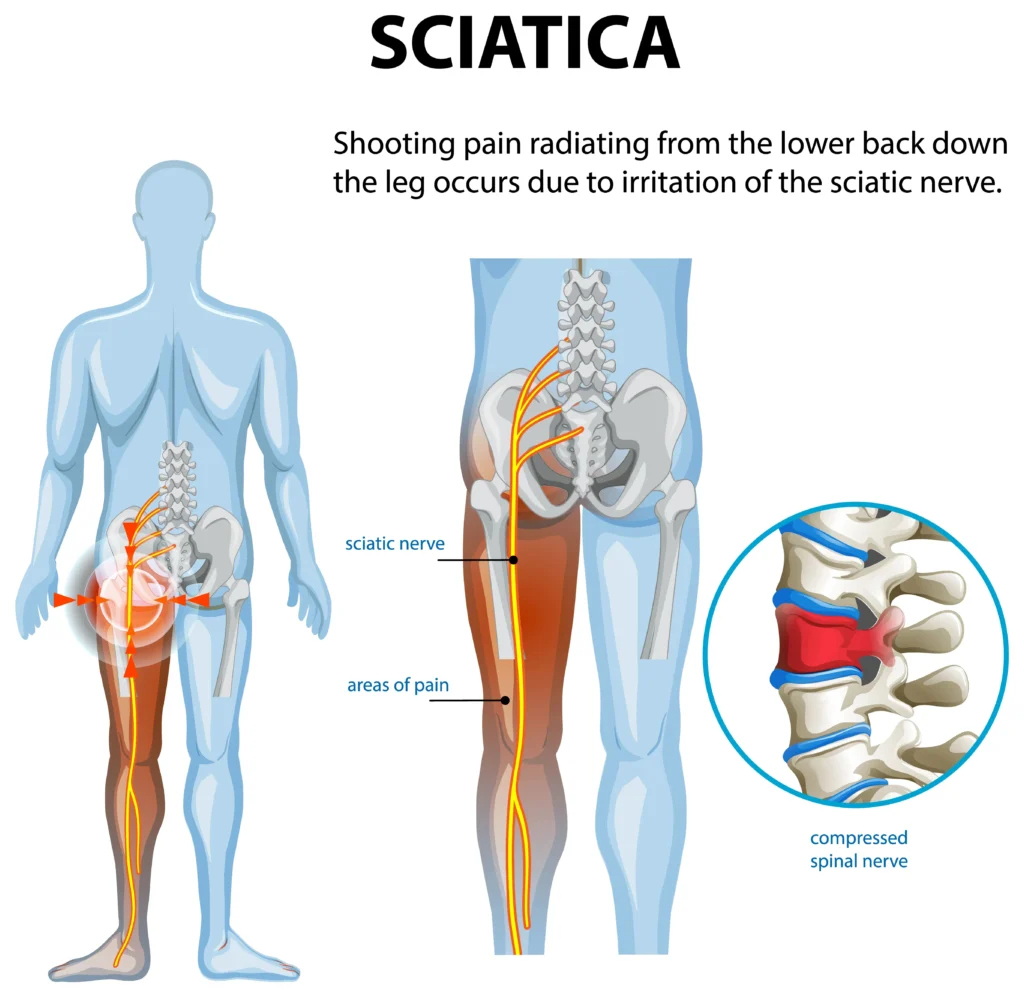
Sciatica pain develops when the sciatic nerve becomes irritated or compressed. The nerve begins in the lower spine and travels through the hips and down each leg. When pressure affects this nerve, symptoms can extend beyond the lower back.
Understanding the root causes is important before asking, Can Scoliosis Cause Sciatica, because sciatic nerve pain often develops from several independent spinal conditions.
Below are the primary medical causes of sciatica pain.
Lumbar Disc Herniation
A disc herniation occurs when the inner disc material pushes outward. This material can press against a nearby nerve root. Nerve compression may produce sharp leg pain, numbness, or tingling.
Lumbar Spinal Stenosis
Spinal stenosis refers to narrowing of the spinal canal. This narrowing reduces space available for nerve roots. Symptoms often worsen with prolonged standing or walking.
Degenerative Disc Changes
Age related disc wear can decrease disc height. Reduced disc space may increase pressure on adjacent nerves. Patients often report stiffness combined with leg discomfort.
Foraminal Narrowing
The foramina are small openings where nerves exit the spine. When these spaces narrow, nerve irritation can occur. This condition may produce one sided leg pain.
Piriformis Muscle Irritation
The piriformis muscle lies deep in the buttock region. If this muscle becomes tight or inflamed, it may irritate the sciatic nerve. Pain typically increases with prolonged sitting.
Spondylolisthesis
Spondylolisthesis occurs when one vertebra shifts forward over another. This shift can compress nearby nerve roots. Leg pain may accompany lower back discomfort.
Inflammatory Irritation
Inflammation around a nerve root can trigger sciatic symptoms without significant structural compression. Chemical irritation alone may create burning or radiating pain.
Sciatic pain patterns vary depending on the level of nerve involvement. L4, L5, and S1 nerve roots produce different symptom distributions. Identifying the affected level improves diagnostic accuracy and treatment precision.
Can Scoliosis Cause Sciatica?
Yes, scoliosis can cause sciatica when a lumbar spinal curve alters pelvic alignment and increases pressure on a nerve root in the lower back. The curvature may narrow the space where nerves exit the spine, especially on the concave side of the curve. This asymmetrical loading can irritate or sensitize the sciatic nerve, leading to leg pain, tingling, or weakness. Not every case of scoliosis produces nerve symptoms, but when structural imbalance affects lumbar mechanics, sciatic irritation can develop.
What Are Signs That Scoliosis Is Getting Worse?
Scoliosis progression is identified through measurable structural changes rather than temporary discomfort. Worsening curvature often presents with visible asymmetry and functional imbalance. Early recognition allows timely intervention.
The following signs may indicate progression.
Increasing Shoulder Imbalance
One shoulder may appear consistently higher than the other. Clothing may hang unevenly. This change reflects structural shift rather than posture alone.
Rib Prominence With Forward Bending
When bending forward, one side of the rib cage may appear more elevated. This finding suggests rotational progression within the thoracic spine.
Progressive Pelvic Tilt
The hips may no longer appear level. Uneven pelvic alignment can affect gait and weight distribution.
Worsening Trunk Shift
The upper body may gradually lean to one side. This shift indicates structural compensation rather than muscular tightness.
Reduced Spinal Mobility
Patients may notice increasing stiffness during rotation or extension. Decreased movement efficiency can accompany curve progression.
Increasing Curve Measurement On Imaging
Radiographic evaluation may show an increase in Cobb angle. Even a small measurable change can indicate structural progression.
New Onset Neurological Symptoms
Numbness, radiating leg pain, or weakness should be evaluated promptly. These signs may suggest nerve involvement.
What To Do If My Scoliosis Is Causing Sciatic Nerve Pain?
When scoliosis contributes to sciatic nerve irritation, treatment depends on curve severity and nerve involvement. The goal is to reduce nerve compression while improving spinal stability.
The primary treatment options include the following.
Chiropractic Treatment
Chiropractic care focuses on restoring joint mobility and improving spinal alignment. Specific adjustments aim to reduce mechanical stress on affected nerve roots. Corrective strategies may also address pelvic imbalance associated with lumbar curvature.
Physical Therapy And Rehabilitation
Structured rehabilitation strengthens core and hip stabilizers. Improving muscular support reduces uneven spinal loading. Targeted mobility exercises may improve lumbar flexibility without increasing nerve tension.
Orthopedic Evaluation
If nerve symptoms persist or worsen, orthopedic assessment may be recommended. Advanced imaging can evaluate disc involvement or structural narrowing. Surgical consultation is typically reserved for severe or progressive neurological deficits.
For individuals wondering, Can Scoliosis Cause Sciatica, treatment focuses on the mechanical relationship between curvature and nerve irritation. Conservative care is typically considered first before invasive intervention.
Can Chiropractor Help Sciatica?
Yes, a chiropractor can help sciatica in many cases, especially when the pain is caused by spinal misalignment, disc irritation, or muscular imbalance in the lower back. Sciatica occurs when a nerve root in the lumbar spine becomes compressed or inflamed. Chiropractic care focuses on correcting the mechanical stress contributing to that irritation rather than only reducing symptoms.
Through targeted spinal adjustments, chiropractors work to restore proper joint motion and reduce pressure on affected nerve roots. Improving alignment in the lumbar spine and pelvis can help decrease inflammation and improve nerve function. Many patients report reduced leg pain, improved mobility, and better tolerance for daily activities after consistent care.
Chiropractic treatment may also include soft tissue therapy to release tight muscles and structured exercises to improve spinal stability. This combined approach supports long term recovery and reduces the likelihood of recurrence. Treatment plans are individualized based on examination findings and symptom severity.
Chiropractic care is most effective in mild to moderate cases where there is no severe neurological deficit. A comprehensive evaluation helps determine whether conservative spinal care is appropriate. For individuals seeking a non invasive and drug free option, chiropractic treatment provides a clinically focused pathway toward sciatic nerve relief and functional improvement.
Chiropractic Treatment For Sciatica At Ashburn Village Chiropractic
Ashburn Village Chiropractic has provided expert, non surgical chiropractic care to the Ashburn community since 2000. As the longest standing chiropractic office in town, the clinic focuses on personalized treatment that relieves pain and restores mobility.
Dr. Jonathan Solomon delivers care at every visit, ensuring consistency and attention to each patient’s history. He earned his Doctor of Chiropractic degree, cum laude, from Life Chiropractic College in 1996 and holds a Bachelor of Arts from Rutgers College. He is licensed by the Virginia Board of Medicine and is nationally board certified in chiropractic care.
New patients receive a thorough examination to identify the exact cause of their condition. When needed, on site X ray imaging helps support accurate diagnosis. The clinic uses modern chiropractic and physiotherapy equipment to assist recovery.
Sciatica is one of the musculoskeletal conditions treated at the office. Chiropractic adjustments are used to improve joint mobility and relieve nerve related discomfort. Care is drug free and focused on restoring function.
Patients from Ashburn, Brambleton, Broadlands, Leesburg, Sterling, and nearby Loudoun County communities visit the clinic for evaluation and treatment. Same day new patient appointments are available for those seeking timely care.