
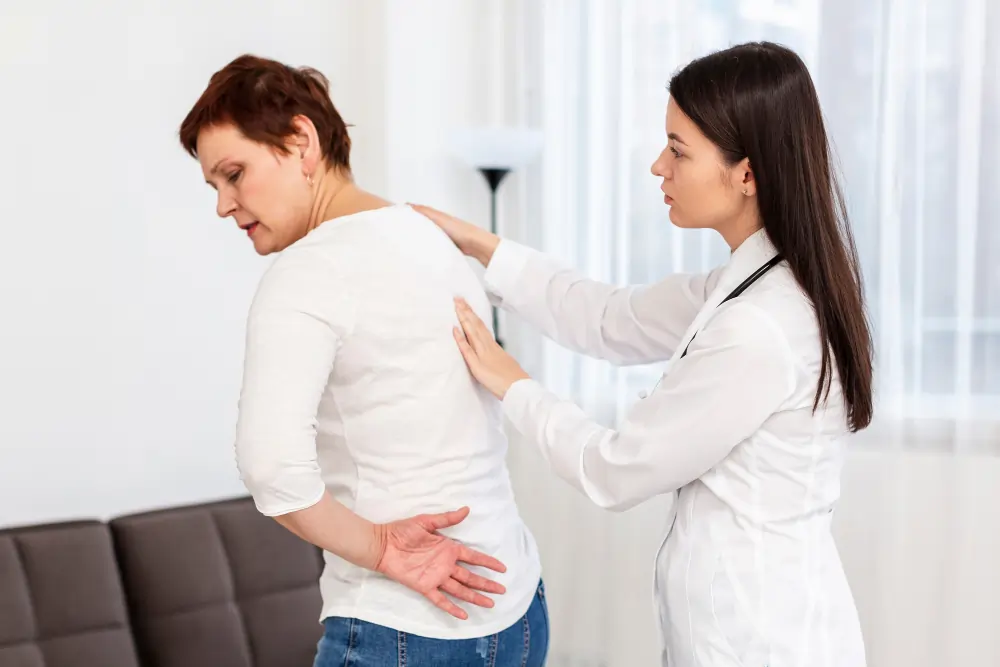
Yes. A chiropractor can help with scoliosis when care focuses on improving spinal mobility, muscular balance, and functional stability. Scoliosis is a three dimensional spinal curvature that may influence posture, endurance, and nerve irritation depending on severity. While structural curves are not permanently straightened through conservative care, many symptoms relate to joint restriction and muscular imbalance rather than curvature alone.
Effective management emphasizes restoring coordinated movement, reducing mechanical strain, and improving postural control. Targeted adjustments, guided exercise, and comprehensive biomechanical assessment aim to enhance stability without surgical intervention. When treatment addresses functional limitations rather than radiographic appearance alone, patients often experience improved comfort and better tolerance for daily activities.
What Is Scoliosis?
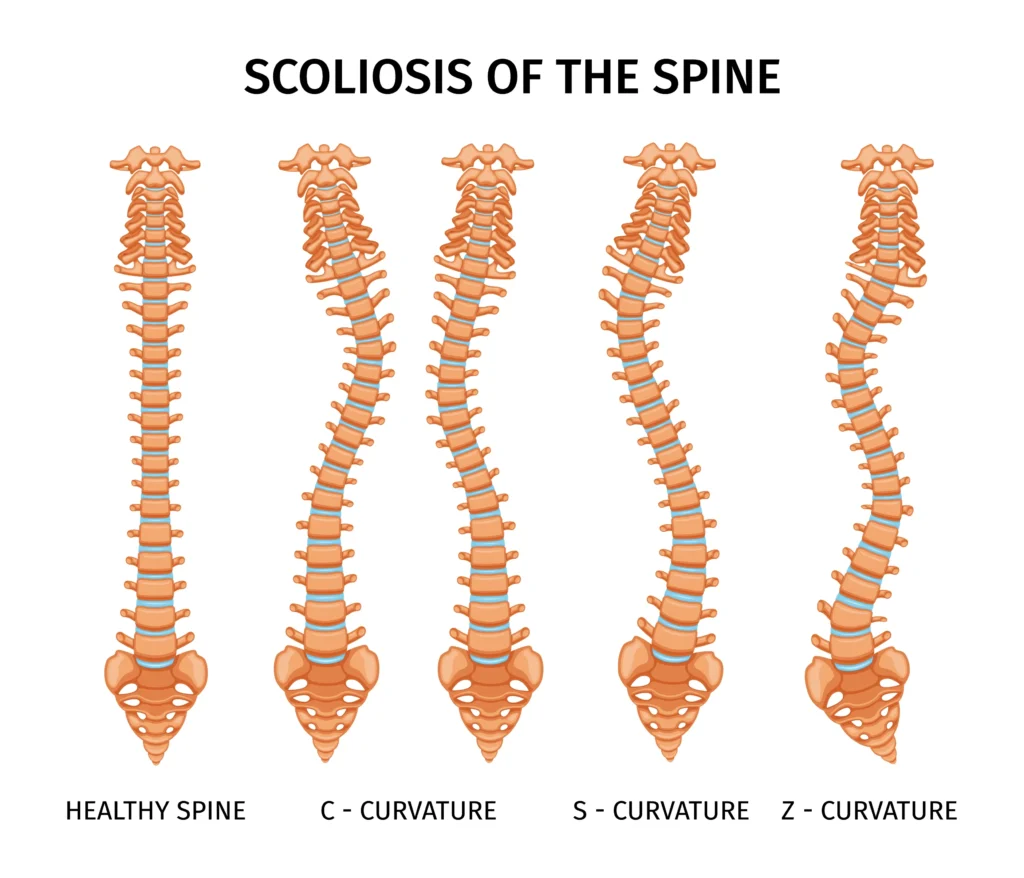
Scoliosis is a three dimensional spinal deformity characterized by lateral curvature and vertebral rotation. It is not simply a side bend of the spine. True scoliosis involves structural changes in vertebral alignment. These changes influence muscular balance, rib positioning, and overall posture.
The condition may develop during adolescence or later in adulthood. Some cases remain mild and stable. Others progress over time depending on skeletal maturity and mechanical stress. When patients ask, Can A Chiropractor Help With Scoliosis, understanding the type and severity of curvature is essential before discussing management options.
Scoliosis can alter spinal load distribution and muscular symmetry. Over time, uneven force transmission may contribute to stiffness, fatigue, or localized discomfort. Early evaluation helps determine whether the curvature is structural or functional in nature.
Structural Vs Functional Scoliosis
Structural and functional scoliosis differ significantly in cause, presentation, and management. Differentiating between them guides appropriate care decisions.
| Feature | Structural Scoliosis | Functional Scoliosis |
|---|---|---|
| Vertebral Rotation | Present | Absent |
| Curve Flexibility | Rigid or partially rigid | Flexible |
| Cause | Idiopathic, congenital, or degenerative | Muscle imbalance, leg length discrepancy, pelvic asymmetry |
| Visible Rib Prominence | Common | Rare |
| Progression Risk | May worsen during growth | Typically resolves when cause corrected |
| Imaging Findings | Persistent curvature on X ray | Curve reduces when underlying issue addressed |
Structural scoliosis involves fixed vertebral changes. The curve does not fully correct with posture adjustment. Functional scoliosis develops secondary to mechanical imbalance. When the underlying issue is addressed, the curvature may reduce significantly.
Recognizing this distinction prevents unnecessary alarm and supports targeted intervention strategies.
How Spinal Curvature Progresses With Age
Scoliosis progression depends on age, skeletal maturity, and curve magnitude. During adolescence, rapid growth increases progression risk. Curves greater than twenty five degrees require closer monitoring. Growth plates influence how rapidly curvature may change.
In adults, progression often relates to degenerative disc changes. As disc height reduces, asymmetrical loading may increase curvature. Muscle imbalance and reduced spinal stability further influence progression. Pain in adults often relates to muscular fatigue rather than the curvature itself.
Mild curves may remain stable for decades. Larger curves may affect posture, endurance, and respiratory mechanics over time. Early identification allows for conservative management focused on mobility and muscular balance. Understanding progression patterns helps set realistic expectations for long term spinal health.
Symptoms Associated With Scoliosis
The symptoms of scoliosis vary depending on the location and severity of the spinal curvature. Some individuals notice visible posture changes before experiencing discomfort. Others develop fatigue, stiffness, or asymmetrical muscle tightness. Symptoms often relate to how the spine compensates during daily activity. Understanding clinical presentation is important when considering whether “Can A Chiropractor Help With Scoliosis” in a specific case.
Can Scoliosis Cause Pain In Upper Back?
Yes, upper back discomfort is common with thoracic curvature. Patients often describe aching between the shoulder blades. Pain may worsen after prolonged sitting or standing. Muscle fatigue on one side of the spine is frequently reported. Discomfort typically feels dull and persistent rather than sharp.
Can Scoliosis Cause Sciatica?
Scoliosis can contribute to radiating leg pain in certain cases. Symptoms may include tingling, numbness, or shooting pain down one leg. This occurs more often when curvature affects the lower spine. Not every lumbar curve causes nerve symptoms. A clinical examination determines whether nerve involvement is present.
Can Scoliosis Cause Headaches?
Headaches may occur when spinal imbalance affects upper neck posture. Patients often report tension at the base of the skull. Symptoms may worsen after computer use or prolonged forward head positioning. Headaches related to scoliosis are usually muscular in nature. Frequency varies depending on posture demands.
Can Scoliosis Cause Edema?
Mild to moderate scoliosis rarely causes noticeable swelling. In advanced cases, significant pelvic imbalance may influence circulation. Patients might observe mild leg heaviness rather than visible edema. Persistent swelling typically suggests another medical condition. Proper evaluation is important to determine the cause.
Can Scoliosis Cause Pulmonary Artery Disease?
Scoliosis does not directly cause pulmonary artery disease. Severe thoracic curvature may reduce chest expansion capacity. In advanced cases, individuals may notice reduced exercise tolerance. Shortness of breath would typically occur only in significant structural deformity. Most mild curves do not impair cardiovascular function.
Chiropractic Treatment For Scoliosis
Chiropractic treatment for scoliosis focuses on functional improvement rather than structural reversal. The primary objective is to optimize spinal mechanics and muscular coordination. Curve magnitude alone does not determine symptom severity. Functional limitation and neuromuscular imbalance often influence discomfort more than radiographic appearance.
When evaluating Can A Chiropractor Help With Scoliosis, realistic expectations are essential. Chiropractic care does not claim to straighten structural curves permanently. Instead, it addresses joint restriction, muscular asymmetry, and postural compensation. The goal is to improve movement efficiency and reduce mechanical stress.
Treatment plans are individualized based on age, curve type, and functional presentation. Monitoring response to care is an important part of clinical management.
Improving Spinal Mobility And Muscle Balance
Scoliosis alters normal joint motion between vertebral segments. Restricted segments may develop adjacent hypermobility as compensation. This imbalance increases localized muscle fatigue and tension. Gentle joint adjustments aim to restore controlled segmental motion.
Improved mobility supports more symmetrical muscular activation. Balanced muscle engagement enhances postural endurance. Over time, improved coordination reduces repetitive strain during daily activity. The focus remains on functional stability rather than cosmetic change.
Reducing Pain Without Surgical Intervention
Many individuals with scoliosis experience muscular discomfort rather than structural instability. Conservative care prioritizes pain reduction without invasive procedures. Manual therapy may decrease soft tissue tension along the convex side of the curve. Reduced tension often improves tolerance for prolonged standing or sitting.
Pain management strategies also include guided exercise and postural correction. Surgical referral is reserved for severe progressive curves. Most mild to moderate cases respond to conservative management. Care decisions are based on clinical evaluation and functional impact.
Whole Person Biomechanical Assessment
Scoliosis influences more than spinal alignment alone. Pelvic positioning, hip rotation, and lower extremity mechanics contribute to overall balance. A comprehensive assessment examines movement patterns across the kinetic chain. Identifying compensatory strategies guides targeted intervention.
Neuromuscular control is evaluated during functional tasks such as bending and gait. Asymmetrical loading patterns are documented and addressed. Whole person evaluation supports long term stability rather than isolated symptom treatment. This approach aligns with evidence based conservative spinal care.
Best Exercises For Scoliosis
These exercises focus on controlled spinal mobility and muscular balance. Perform each movement slowly and without forcing range of motion. Stop if pain increases.
Cat Camel
- Start on your hands and knees with a neutral spine.
- Place your hands under your shoulders and knees under your hips.
- Slowly round your back toward the ceiling.
- Tuck your chin gently toward your chest.
- Hold for a few seconds.
- Then lower your abdomen and lift your head slightly.
- Move through the motion in a controlled manner.
- Repeat for 10 slow repetitions.
Prayer Stretch
- Begin on your hands and knees.
- Sit your hips back toward your heels.
- Extend your arms forward on the floor.
- Lower your chest gently toward the ground.
- Keep your breathing steady and relaxed.
- Hold for 20 to 30 seconds.
- Return slowly to the starting position.
Bird Dog Exercise
- Start on your hands and knees with your spine neutral.
- Engage your abdominal muscles lightly.
- Extend one arm forward at shoulder height.
- Extend the opposite leg backward at hip height.
- Keep your hips level and avoid rotation.
- Hold for five seconds.
- Return slowly and switch sides.
- Repeat 8 to 10 times per side.
Pelvic Tilt
- Lie on your back with knees bent and feet flat.
- Place your arms at your sides.
- Gently tighten your abdominal muscles.
- Flatten your lower back against the floor.
- Hold for five seconds while breathing normally.
- Relax slowly.
- Repeat for 10 to 15 repetitions.
Hip Flexor Stretch
- Kneel on one knee with the opposite foot forward.
- Keep your torso upright and shoulders relaxed.
- Shift your hips forward slightly.
- You should feel a stretch in the front of the hip.
- Avoid arching your lower back.
- Hold for 20 to 30 seconds.
- Switch sides and repeat.
Piriformis Stretch
- Lie on your back with both knees bent.
- Cross one ankle over the opposite knee.
- Gently pull the uncrossed leg toward your chest.
- Keep your shoulders relaxed on the floor.
- Hold for 20 to 30 seconds.
- Lower slowly and switch sides.
Hamstring Stretch
- Sit on the floor with one leg extended.
- Bend the opposite knee with the foot near the inner thigh.
- Keep your back straight.
- Lean forward from the hips toward the extended leg.
- Reach toward your shin or ankle.
- Hold for 20 to 30 seconds.
- Repeat on the other side.
Windshield Wiper Stretch
- Lie on your back with knees bent and feet flat.
- Extend your arms out to the sides for support.
- Slowly drop both knees to one side.
- Keep your shoulders in contact with the floor.
- Hold briefly at the end range.
- Return to center and move to the opposite side.
- Repeat for 8 to 10 slow repetitions.
Frequently Asked Questions About Scoliosis
Scoliosis varies widely in cause, severity, and functional impact. The following answers address common concerns with clinical precision.
Is Scoliosis A Genetic Disease?
Yes. Certain forms of scoliosis have a genetic component. Idiopathic scoliosis often appears in families without a single identifiable gene. Having a family history increases the likelihood of developing a similar curvature pattern. However, genetics does not guarantee progression or severity.
Some types of scoliosis are linked to congenital spinal development. Others develop without a clearly defined hereditary cause. Genetic influence affects risk, not outcome certainty. Each case requires individual evaluation.
Is Scoliosis A Disability?
No. Most cases of scoliosis do not qualify as a disability. Mild to moderate curves often allow normal daily function. Many individuals live active lives without significant limitation.
Yes, scoliosis can be considered disabling in severe cases. Large progressive curves may impair mobility or endurance. Disability classification depends on functional restriction rather than curvature alone. Clinical documentation determines eligibility when necessary.
Can Scoliosis Be Caused By Poor Posture?
No. Poor posture does not cause structural scoliosis. True scoliosis involves rotational changes within the vertebrae. Postural habits alone cannot create permanent spinal curvature.
Yes, poor posture can contribute to functional spinal imbalance. Sustained asymmetrical positioning may mimic a curved appearance. This type of imbalance typically improves when corrected. Distinguishing between structural and functional patterns is essential for proper management.
Can A Chiropractor Help With Scoliosis – Ashburn Village Chiropractic
At Ashburn Village Chiropractic, care is centered on accurate diagnosis and personalized treatment. Ashburn Village Chiropractic has served the Ashburn community for over 20 years and remains the longest standing chiropractic office in Ashburn, VA. Every patient is evaluated thoroughly before a chiropractic treatment plan is recommended. The focus is on identifying mechanical dysfunction of the joints and its effect on the nervous system.
All visits are performed by Dr. Jonathan Solomon, ensuring consistency and continuity of care. Dr. Jonathan Solomon takes a whole person approach to treatment. He combines hands on chiropractic techniques with state of the art physiotherapy and wellness strategies. His goal is to relieve pain, restore mobility, and support long term spinal health.
When clinically appropriate, the Ashburn Village Chiropractic utilizes an on site X ray machine to help pinpoint the exact cause of a condition. This allows for a more precise understanding of spinal alignment and structural changes. Diagnostic clarity guides appropriate conservative management decisions.
For individuals researching whether Can A Chiropractor Help With Scoliosis, the answer depends on proper evaluation and functional assessment. At Ashburn Village Chiropractic, care is non surgical and tailored to each patient’s presentation. The objective is not cosmetic correction but improved function, stability, and quality of life through expert chiropractic management.