
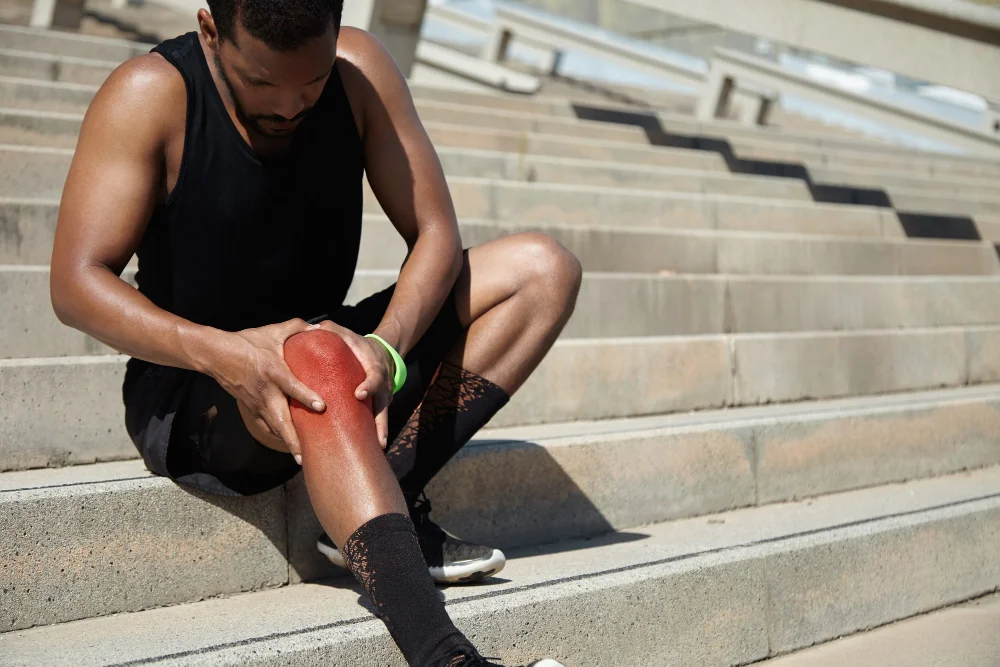
Yes, a chiropractor can help with runner’s knee by identifying movement dysfunctions, improving joint mobility, reducing stress on the kneecap, and addressing factors that may contribute to ongoing knee pain. Runner’s knee, also known as Patellofemoral Pain Syndrome, often develops from repetitive stress, muscle imbalances, poor running mechanics, or dysfunctions affecting lower body movement. Chiropractic care may include joint adjustments, soft tissue therapy, corrective exercises, and movement recommendations designed to improve function and support recovery. For individuals searching for a chiropractor for runners knee, a comprehensive evaluation can help identify the underlying factors contributing to symptoms while supporting long term knee health and performance.
What Is Runner’s Knee?
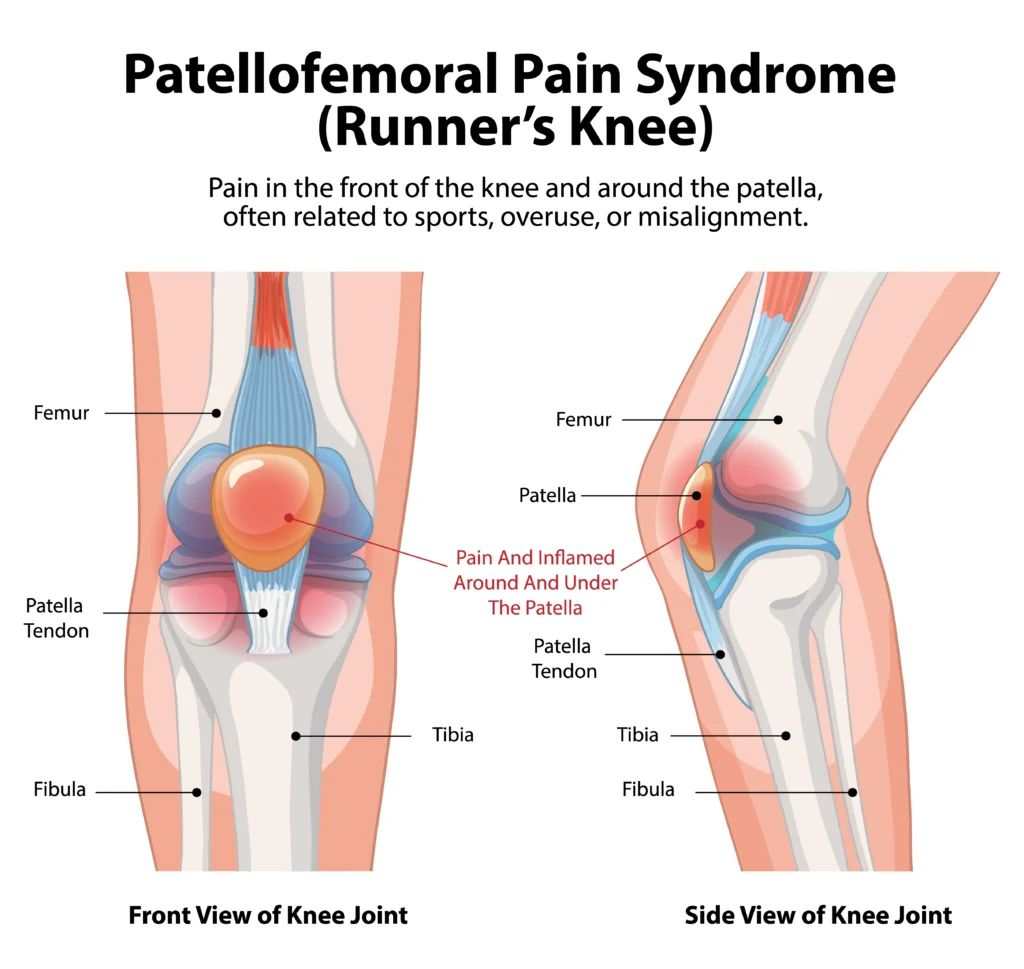
Runner’s knee is a common condition that causes pain around or behind the kneecap. The medical term for this condition is Patellofemoral Pain Syndrome. It develops when the kneecap and surrounding structures become irritated during movement.
Many people assume runner’s knee only affects runners. That is not always the case. The condition can also affect walkers, hikers, cyclists, and people who spend long periods on their feet. Anyone who repeatedly bends and straightens the knee may experience symptoms.
A common misconception is that runner’s knee is a single injury. In reality, it is often a pain syndrome rather than a specific tissue injury. This distinction matters because pain may develop even when imaging shows no major structural damage. Many patients experience persistent discomfort despite having no fracture, tear, or severe joint disease.
People searching “can a chiropractor help with runners knee” are often dealing with pain that interferes with daily activities. The discomfort may appear during exercise, climbing stairs, squatting, or prolonged sitting. Understanding the condition is the first step toward finding the right approach to care.
Understanding Patellofemoral Pain Syndrome
Patellofemoral Pain Syndrome occurs when pain develops between the kneecap and the groove where it moves during activity. The kneecap, known as the patella, plays an important role in knee movement and force distribution.
The knee experiences significant pressure during everyday activities. Walking, running, squatting, and stair climbing all increase the load placed on the patellofemoral joint. When this area becomes irritated, even simple movements may become uncomfortable.
One reason Patellofemoral Pain Syndrome receives so much attention is its prevalence among active individuals. It is one of the most frequently reported causes of knee pain in sports medicine clinics. However, the condition is not limited to athletes.
An important insight often overlooked is that the level of pain does not always match the severity of tissue irritation. Some individuals experience significant discomfort during activity while showing minimal physical changes on imaging studies. This highlights why a comprehensive clinical evaluation is often more valuable than relying on imaging alone.
Common Symptoms of Runner’s Knee
The most common symptom of runner’s knee is a dull, aching pain around the front of the knee. Many people notice discomfort behind or around the kneecap rather than inside the joint itself.
Symptoms may develop gradually over time. The pain often becomes more noticeable during activities that increase pressure on the kneecap.
Common symptoms include:
- Pain around or behind the kneecap
- Discomfort when climbing or descending stairs
- Pain during running or jogging
- Knee discomfort while squatting
- Aching after prolonged sitting
- Sensations of grinding or clicking during movement
- Mild swelling around the knee in some cases
Many patients report that prolonged sitting worsens symptoms. This is sometimes called the “movie theater sign.” The knee remains bent for an extended period, which can increase pressure within the patellofemoral joint.
Another frequently overlooked symptom is reduced confidence in movement. Some individuals begin avoiding stairs, exercise, or recreational activities because they expect pain to occur. Over time, this can affect activity levels and overall quality of life.
Recognizing these symptoms early may help individuals seek appropriate care before the condition begins interfering with daily routines and physical activity.
What Causes Runner’s Knee?
Runner’s knee develops when the kneecap is exposed to repeated stress that exceeds the body’s ability to adapt. While the pain is felt in the knee, the contributing factors often begin long before symptoms appear. Training habits, movement patterns, muscle function, and joint control can all influence how much pressure reaches the patellofemoral joint.
Overuse and Repetitive Stress
A runner completes thousands of strides during a single training session. Each stride places force through the knee. The body usually adapts to this demand when training progresses gradually.
Problems often begin when activity increases faster than recovery. A runner may add extra mileage, increase running frequency, or introduce hill workouts within a short period. The knee absorbs the additional workload before the surrounding tissues have fully adapted.
Interestingly, runner’s knee is not always linked to high mileage. Some runners develop symptoms after returning from a break. Others experience pain when preparing for an event and changing their training routine too quickly. The issue is often the rate of change rather than the activity itself.
Hip and Pelvic Dysfunction
Imagine a runner standing on one leg. The pelvis should remain stable while the body moves forward. When pelvic control decreases, the entire lower extremity can compensate.
As the thigh moves inward, the kneecap may no longer travel through its ideal path. This subtle change is repeated during every stride. Over time, the increased joint stress can contribute to irritation around the front of the knee. This explains why some runners continue experiencing symptoms despite resting the knee. The underlying movement pattern remains unchanged, allowing the same stress to return once activity resumes.
Muscle Imbalances and Weakness
Not all muscles contribute equally during running. Some muscles create movement, while others provide stability.
When the gluteal muscles fail to control hip motion effectively, the knee often absorbs forces it was not designed to manage alone. At the same time, tight hip flexors or quadriceps may restrict normal movement patterns.
The result is not always obvious. A runner may feel strong and capable during exercise. However, inefficient muscle coordination can gradually increase joint loading without producing immediate symptoms. This delayed response is one reason runner’s knee often seems to appear unexpectedly.
Poor Running Mechanics
Two runners can cover the same distance and place very different demands on their knees.
One runner may land with efficient positioning and smooth force transfer. Another may overstride, allowing the foot to contact the ground too far ahead of the body. This small difference changes how impact forces travel through the lower extremity.
Running cadence can also influence knee loading. A slower cadence often increases the amount of force absorbed with each stride. Fatigue may further alter mechanics as the body begins compensating for tired muscles.
Rather than focusing on a single faulty movement, it is often more useful to evaluate how the entire running pattern functions. Small inefficiencies repeated thousands of times can have a greater impact than one isolated movement error. People researching “Can a Chiropractor Help With Runner’s Knee?” are often looking for relief from knee pain. Identifying the factor creating the stress is equally important because the source of the problem and the location of the pain are not always the same.
What Is Runner’s Knee?
Runner’s knee is pain that develops around or behind the kneecap. It shows up during runs, while going downstairs, or even after sitting too long. The frustrating part? It rarely comes from a single injury. It builds up quietly over time until it stops you mid-stride.
Understanding Patellofemoral Pain Syndrome
Patellofemoral pain syndrome (PFPS) is the actual clinical name for runner’s knee. It happens when the kneecap stops tracking smoothly along the femoral groove and starts rubbing against the cartilage underneath. That repeated friction is what causes the irritation and pain.
What most articles won’t tell you is that the problem rarely starts at the knee. Weak hip abductors and poor external hip rotation are consistently found in people with PFPS. The knee is just where the pain shows up. The real issue is usually higher up in the kinetic chain.
Here’s another thing worth knowing. The cartilage under your kneecap has very few nerve endings. The pain you feel often comes from the surrounding synovial tissue and fat pad, which are heavily innervated. This is why two people with similar imaging can have completely different pain levels.
At Ashburn Village Chiropractic, a chiropractor for runner’s knee won’t just look at your kneecap. They’ll assess your hip mechanics, foot pronation, and how your whole lower body moves together.
| Contributing Factor | What It Does |
|---|---|
| Weak hip abductors | Causes the knee to collapse inward during running |
| Tight IT band | Pulls the patella off its natural track |
| Overpronated foot | Increases tibial rotation and joint stress |
| VMO weakness | Lets the kneecap drift outward |
Common Symptoms of Runner’s Knee
The pain usually starts as a dull ache around the front or inner edge of the kneecap. Most runners notice it first on longer runs or going downhill. It might ease up during warm-up, then come back once you stop.
A grinding or clicking sensation under the kneecap is also common. This is called crepitus. It happens when the patella moves unevenly over the joint surface. On its own it doesn’t always mean damage, but combined with pain it tells you something is off.
Stiffness after sitting is another telltale sign. Many runners call it “theatre sign.” You sit through a movie with your knee bent, then stand up and it aches. That’s because the patellofemoral joint is under higher pressure when held at 60 to 90 degrees for extended periods.
Pain going downstairs more than upstairs is one of the most reliable signs of PFPS specifically. Descending stairs forces the knee to absorb load while bent under your full body weight. That compressive force between the patella and femur spikes quickly, which is why that one movement can feel unbearable even early in the condition.
How Can Chiropractic Care Help With Runner’s Knee?
Yes, chiropractic care may help runner’s knee by addressing joint restrictions, movement dysfunction, and biomechanical factors that can increase stress on the knee.
Runner’s knee is often associated with repetitive stress around the kneecap. While the pain is felt in the knee, chiropractors evaluate how the entire lower extremity functions during movement. The goal is to identify restrictions or dysfunctions that may contribute to abnormal joint loading.
Identifying the Underlying Cause of Knee Pain
A chiropractic evaluation examines more than the painful area. Joint mobility, posture, gait patterns, lower extremity alignment, and movement quality may all be assessed. This approach helps determine whether mobility restrictions or functional deficits are contributing to ongoing knee stress.
Chiropractic Adjustments for Joint Function
Restricted motion within the lower extremity can affect how forces move through the knee during activity. Chiropractic adjustments are used to improve joint motion and restore normal movement patterns. Improved mobility may reduce unnecessary stress placed on the patellofemoral joint during walking, running, and exercise.
Soft Tissue Therapy for Muscle Tension and Mobility
Muscle tension can influence how the knee functions during movement. Soft tissue techniques may be used to address tight muscles and improve tissue mobility. Areas commonly evaluated include the quadriceps, hip flexors, hamstrings, and surrounding structures that affect lower body mechanics.
Corrective Exercises to Improve Lower Body Stability
Exercise is often an important part of chiropractic care for runner’s knee. Corrective exercises may be recommended to improve stability, balance, muscular control, and movement efficiency. These exercises are selected based on the individual’s functional findings rather than a one size fits all approach.
Movement Modifications to Reduce Knee Stress
Certain movement habits may place unnecessary demand on the knee. A chiropractor may recommend modifications to activity, training habits, or movement patterns to reduce joint stress while supporting recovery and long term function.
Exercises Commonly Recommended for Runner’s Knee
The following exercises are commonly recommended to improve mobility, stability, and lower body function. Perform each exercise in a controlled manner and stop if you experience increased pain.
Bird Dog Exercise
- Start on your hands and knees.
- Position your hands directly below your shoulders.
- Place your knees directly below your hips.
- Tighten your abdominal muscles.
- Extend your right arm straight forward.
- Extend your left leg straight behind you.
- Keep your hips level throughout the movement.
- Hold the position for 3 to 5 seconds.
- Return to the starting position.
- Repeat with the opposite arm and leg.
- Complete 10 repetitions on each side.
Hamstring Stretch
- Sit on the floor with one leg extended.
- Bend the opposite leg and place the foot against your inner thigh.
- Keep your back straight.
- Slowly lean forward from your hips.
- Reach toward your toes as far as comfortable.
- Hold the stretch for 20 to 30 seconds.
- Return to the starting position.
- Repeat 2 to 3 times on each leg.
Hip Flexor Stretch
- Begin in a half kneeling position.
- Place one knee on the floor.
- Position the opposite foot flat on the ground in front of you.
- Keep your chest upright.
- Gently shift your weight forward.
- Continue until you feel a stretch in the front of the hip.
- Avoid arching your lower back.
- Hold the stretch for 20 to 30 seconds.
- Return to the starting position.
- Repeat 2 to 3 times on each side.
Pelvic Tilt
- Lie on your back with your knees bent.
- Keep both feet flat on the floor.
- Relax your shoulders and neck.
- Tighten your abdominal muscles.
- Gently flatten your lower back against the floor.
- Tilt your pelvis upward slightly.
- Hold the position for 5 seconds.
- Slowly return to the starting position.
- Repeat 10 to 15 times.
What Is the Fastest Way to Heal Runner’s Knee?
The fastest way to heal runner’s knee is to reduce aggravating activities, follow a structured rehabilitation program, and address the factors contributing to ongoing knee stress. Many people focus on eliminating pain as quickly as possible. A better approach is restoring normal function while allowing irritated tissues to recover. Returning to full activity too soon may prolong symptoms and delay recovery.
Managing Activity Levels
Managing activity levels does not always mean complete rest. In many cases, modifying activity is more effective than stopping all movement. Activities that increase knee pain should be temporarily reduced or adjusted. Running volume, training intensity, and repetitive knee loading may need to be scaled back during recovery.
At the same time, maintaining appropriate movement can help prevent stiffness and deconditioning. The goal is to keep the knee active without continually aggravating symptoms.
Following a Structured Rehabilitation Plan
Recovery is often more successful when exercises progress in a logical sequence.
A structured rehabilitation plan typically focuses on restoring mobility, improving stability, and gradually increasing the knee’s ability to tolerate load. Each phase builds upon the previous stage.
Progression should be based on function rather than arbitrary timelines. Some individuals recover quickly, while others require additional time depending on activity demands and symptom severity.
Consistency is often more important than intensity. Small improvements performed regularly tend to produce better long term results than occasional aggressive rehabilitation efforts.
Addressing Underlying Biomechanical Issues
Symptoms may improve temporarily if only the painful area is treated. Long term improvement often depends on correcting the factors that continue placing stress on the knee. Biomechanical issues can affect how forces move through the lower extremity during walking, running, and exercise. When these factors remain unaddressed, symptoms may return after activity resumes.
This is one reason some individuals experience recurring episodes of runner’s knee despite taking time off from exercise. Recovery involves more than reducing pain. It also involves improving how the body moves and responds to physical demands.For individuals seeking a chiropractor for runners knee, evaluating movement quality and functional limitations may provide valuable insight into factors affecting recovery and future performance.
Why Choose Ashburn Village Chiropractic for Runner’s Knee Treatment?
Ashburn Village Chiropractic provides comprehensive evaluations and individualized care for patients experiencing runner’s knee and other musculoskeletal conditions. Dr. Jonathan Solomon has been serving the Ashburn community since 2000, helping patients improve mobility, function, and overall joint health.
Our approach focuses on identifying factors that may be contributing to knee pain while developing a care plan based on each patient’s needs and activity level. We also offer on site digital X ray imaging when clinically necessary to support a thorough evaluation and informed treatment decisions.
Get a summary of this article with your favorite AI: