
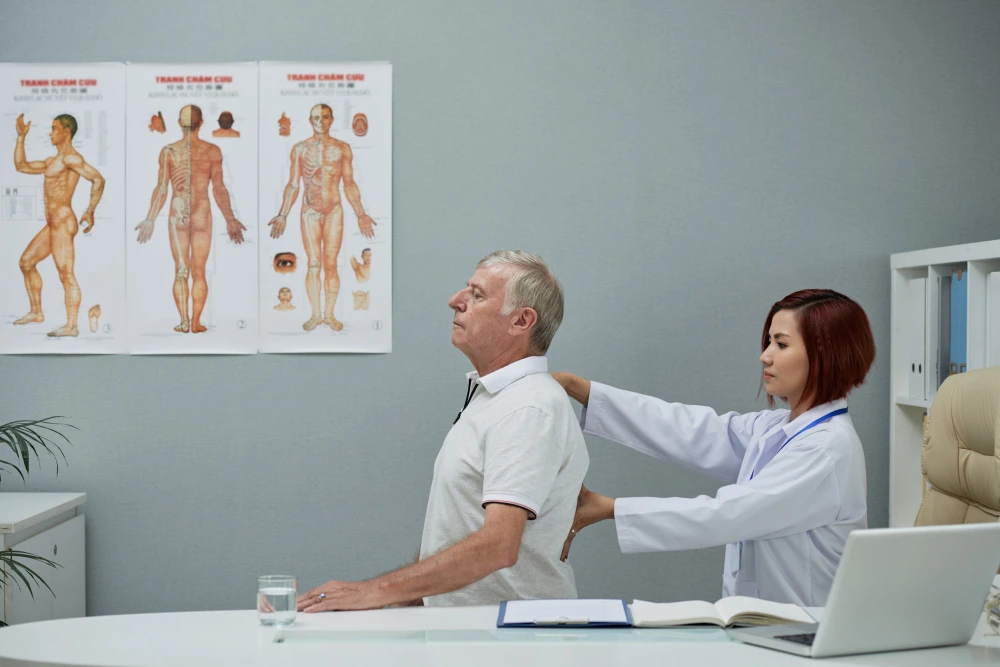
Can Scoliosis Cause Pain In Upper Back? Yes, especially when the spinal curve involves the thoracic region. Upper back discomfort may develop due to structural alignment changes that affect joint motion and muscular balance. Not every case causes symptoms, but curve location and functional stress play a critical role.
Scoliosis is a structural spinal condition that can influence posture, rib mechanics, and movement efficiency. While many individuals remain asymptomatic, others experience stiffness, asymmetrical tension, or localized upper back discomfort. Understanding the difference between muscular strain and structural influence is essential for proper management.
Learn how scoliosis affects the upper back, what symptoms to watch for, when organ involvement becomes relevant, and how targeted mobility exercises may support spinal function. Clear evaluation helps determine whether upper back pain is mechanical, muscular, or structurally related.
What Is Scoliosis?
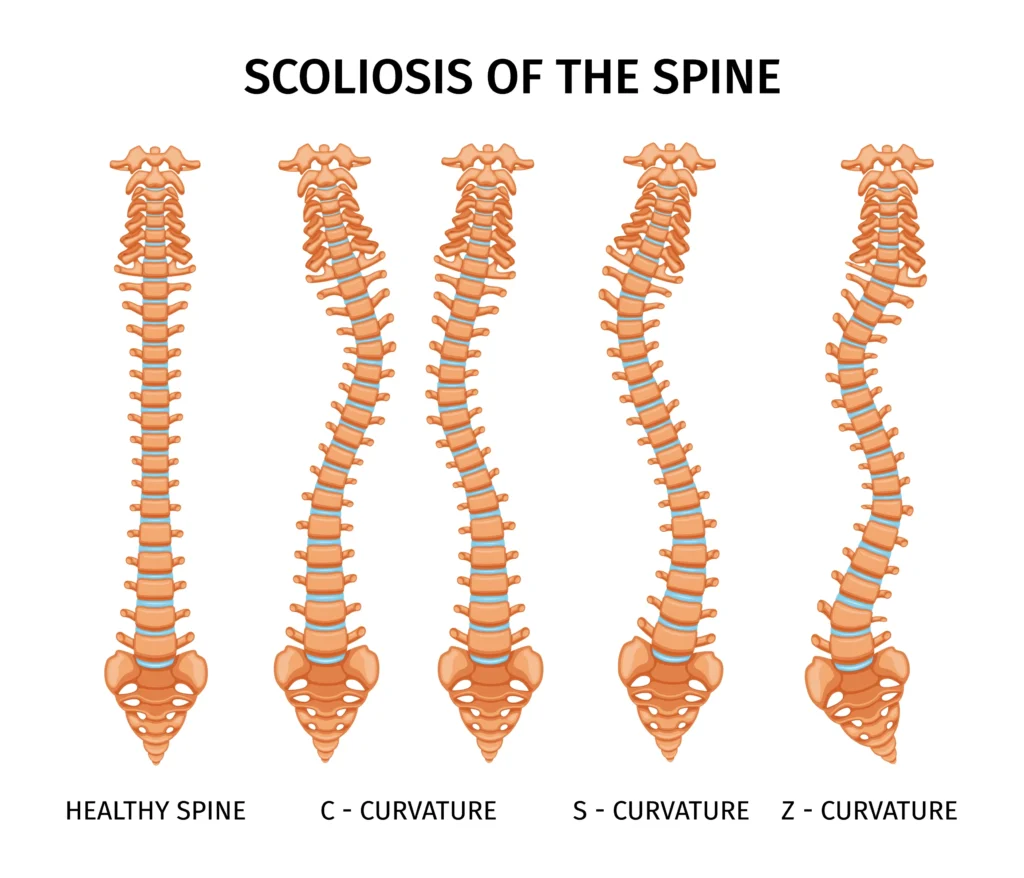
Scoliosis is a structural condition in which the spine curves sideways beyond normal alignment. It is confirmed when imaging shows a measurable lateral curvature. The condition may also involve subtle rotation of the vertebrae.
This is not the same as poor posture. Postural imbalance can improve with correction and strengthening. Structural scoliosis reflects a fixed spinal change.
Scoliosis can develop during adolescence or later in adulthood. In younger patients, growth patterns often influence its progression. In adults, spinal degeneration may contribute to curve development.
The condition is classified by curve location. Thoracic scoliosis affects the upper and mid back. Lumbar scoliosis affects the lower back. Curve location plays a key role in symptom patterns.
Many individuals with scoliosis experience no symptoms. Others may notice muscular tightness or asymmetry. This leads many patients to ask, Can Scoliosis Cause Pain In Upper Back? Understanding the structural nature of scoliosis provides context for how it may influence spinal comfort and function.
What Causes Upper Back Pain?
Upper back pain usually develops within the thoracic spine. This area connects the neck to the lower back. It also anchors the rib cage and supports shoulder movement. Because it is built for stability, even small mechanical stress can create discomfort.
Below are the most common causes of thoracic pain explained in a clear clinical context.
1. Thoracic Spine Strain
Thoracic strain often results from repetitive forward bending or prolonged sitting. Office work and device use increase static loading on spinal joints. Muscles between the shoulder blades remain contracted for extended periods. This sustained contraction reduces circulation and increases fatigue.
Over time, joint capsules and ligaments become irritated. Patients often describe a dull ache or stiffness between the shoulders.
2. Poor Posture Versus Structural Curvature
Poor posture is typically flexible and position dependent. When posture improves, discomfort often decreases. Structural curvature, however, changes spinal alignment even when standing upright.
This distinction is clinically important. Flexible postural pain responds well to corrective exercise. Structural alignment issues may require targeted spinal care.
3. Muscle Imbalance And Spinal Asymmetry
Upper back pain frequently develops from uneven muscle activation. One side of the thoracic musculature may work harder to stabilize movement. This imbalance creates localized tension and trigger points.
Spinal asymmetry also alters scapular mechanics. When shoulder blades move unevenly, surrounding tissues compensate. Compensation increases mechanical stress across the thoracic region.
4. Degenerative Changes In The Thoracic Spine
Although less mobile than the lumbar spine, the thoracic region can experience age related changes. Disc dehydration reduces shock absorption. Facet joints may become sensitive with cartilage thinning.
These changes increase stiffness and reduce movement efficiency. Patients often report morning tightness that improves with light activity.
5. Muscular Pain Versus Structural Pain
Understanding the source of pain helps guide appropriate care. The following table highlights key differences.
| Feature | Muscular Pain | Structural Joint Pain |
|---|---|---|
| Onset | Gradual after activity | Often position specific |
| Sensation | Tight, aching, tender | Deep, sharp, localized |
| Response To Movement | Improves with mobility | Worsens with extension or rotation |
| Relief Pattern | Better with stretching | May require targeted spinal evaluation |
Can Scoliosis Affect The Upper Back?
Yes. Scoliosis can affect the upper back when the curve involves the thoracic spine. The thoracic spine supports the rib cage and shoulder girdle. A lateral curve in this region alters spinal alignment and symmetry. This structural change can influence how the upper back moves and bears load.
In thoracic scoliosis, the vertebrae may rotate slightly. Rotation can affect rib positioning and shoulder balance. This may lead to localized stiffness near the shoulder blades. Upper back symptoms are more likely when the curve is structural rather than postural. Structural curves change spinal mechanics even when standing upright.
For patients asking, Can Scoliosis Cause Pain In Upper Back?, the answer depends on curve location and functional impact. Thoracic curves are more likely to influence upper back comfort than lumbar curves. Not every case causes pain. Symptoms usually develop when spinal alignment begins affecting movement efficiency or joint mobility.
What Part Of Your Back Hurts If You Have Scoliosis?
The area of discomfort depends on the location of the spinal curve.
When the curve involves the thoracic spine, pain is usually felt in the upper back. Patients often describe tightness or aching between the shoulder blades. In some cases, one side feels more prominent or fatigued.
If the curvature affects the lumbar spine, symptoms are more common in the lower back. This may present as stiffness or localized soreness with standing or movement.
Pain associated with scoliosis is often uneven. One side of the back may feel tighter due to asymmetrical spinal alignment. A clinical evaluation helps determine which region of the spine is responsible for the symptoms and guides appropriate care.
What Organ Is Most Affected By Scoliosis?
The lungs are the organ most associated with thoracic scoliosis. The thoracic spine forms the structural support for the rib cage. When a curve develops in this region, rib alignment may shift slightly.
In mild cases, this structural change does not affect lung function. Most individuals continue to breathe normally without limitation. The body adapts well to small degrees of curvature.
In more pronounced thoracic curves, rib mobility can become somewhat restricted. Limited rib movement may reduce full chest expansion during deep breathing. This effect is typically seen in more advanced cases.
It is important to note that organ involvement is not common in mild or moderate scoliosis. Clinical concern usually arises only when the curve progresses significantly.
For most patients, scoliosis primarily affects spinal alignment rather than internal organs. Proper evaluation determines whether the curvature has any functional impact beyond the musculoskeletal system.
Chiropractic Stretches for Upper Back Pain
Targeted mobility work can support upper back comfort when spinal alignment is uneven. These exercises focus on controlled thoracic movement and postural stability. Perform each movement slowly and without force. Stop if pain increases. Many patients ask, Can Scoliosis Cause Pain In Upper Back?, especially when persistent discomfort between the shoulder blades begins to affect posture and daily movement, and targeted mobility exercises can help improve spinal balance and reduce muscular strain.
Thoracic Extension Stretch
Purpose is to improve mid back extension.
- Step 1: Sit upright on a firm chair with feet flat on the floor.
- Step 2: Place both hands behind your head.
- Step 3: Gently lift your chest toward the ceiling.
- Step 4: Keep your lower back neutral.
- Step 5: Hold for five seconds and return to neutral.
- Repeat eight to ten times.
This movement encourages controlled extension in the thoracic spine.
Seated Postural Retraction Exercise
Purpose is to strengthen upper back stabilizers.
- Step 1: Sit upright with shoulders relaxed.
- Step 2: Gently draw your shoulder blades backward.
- Step 3: Avoid lifting the shoulders upward.
- Step 4: Hold the contraction for five seconds.
- Step 5: Relax slowly.
- Repeat ten repetitions.
This exercise supports improved shoulder alignment.
Cat Camel Mobility Movement
Purpose is to improve spinal flexibility.
- Step 1: Position yourself on hands and knees.
- Step 2: Slowly round your upper back toward the ceiling.
- Step 3: Hold for three seconds.
- Step 4: Then gently lower your chest toward the floor.
- Step 5: Move within a comfortable range.
- Repeat ten slow cycles.
This movement promotes controlled spinal motion.
Scapular Stabilization Exercise
Purpose is to improve shoulder blade control.
- Step 1: Stand upright with arms at your sides.
- Step 2: Pull both shoulder blades slightly downward and back.
- Step 3: Maintain a neutral neck position.
- Step 4: Hold for five seconds.
- Step 5: Release slowly.
- Repeat ten times.
Improved scapular control reduces upper back strain.
Gentle Spinal Rotation Stretch
Purpose is to improve thoracic rotational mobility.
- Step 1: Sit upright with feet flat on the floor.
- Step 2: Cross your arms over your chest.
- Step 3: Slowly rotate your upper body to one side.
- Step 4: Hold for five seconds.
- Step 5: Return to center and repeat on the other side.
- Perform eight repetitions each direction.
These exercises support mobility and muscular balance. They are not a substitute for clinical evaluation. If upper back discomfort persists, a professional assessment is recommended.
When Should You See A Chiropractor For Upper Back Pain?
Upper back discomfort is common. Mild soreness after activity may resolve on its own. However, certain signs indicate the need for professional evaluation.
You should consider seeing a chiropractor if you notice:
Persistent Pain
If upper back pain lasts more than two weeks, it should be assessed. Ongoing discomfort may indicate joint restriction or spinal imbalance.
One Sided Discomfort
Pain that stays on one side of the upper back deserves attention. Asymmetrical symptoms can reflect uneven spinal loading.
Limited Mobility
Difficulty turning your upper body or lifting your arms overhead may suggest thoracic restriction. Reduced movement efficiency increases strain on surrounding tissues.
Visible Postural Changes
Uneven shoulders or noticeable rib prominence should not be ignored. Structural alignment changes require proper clinical evaluation.
Increasing Stiffness Or Radiating Symptoms
Progressive stiffness or discomfort that spreads toward the shoulders needs assessment. These patterns may indicate joint irritation.
Many patients ask, Can Scoliosis Cause Pain In Upper Back?, when symptoms become consistent. A chiropractor can determine whether the discomfort is muscular or related to spinal alignment. Early evaluation allows conservative care before symptoms progress. Proper assessment ensures that treatment targets the actual source of pain.
Chiropractor for Upper Back Pain at Ashburn Village Chiropractic
For patients experiencing persistent upper back discomfort or concerns related to scoliosis, Ashburn Village Chiropractic provides structured, personalized care. The clinic has served the Ashburn community since 2000 and remains the longest standing chiropractic office in the area.
Dr. Jonathan Solomon earned his Doctor of Chiropractic degree, cum laude, from Life Chiropractic College in 1996. He also holds a Bachelor of Arts from Rutgers College. Dr Jonatha Solomon is licensed by the Virginia Board of Medicine and is nationally board certified in chiropractic care. He is an active member of both the Virginia Chiropractic Association and the American Chiropractic Association.
Each patient receives a thorough examination at every visit. On site digital X ray imaging is available when clinically indicated. This allows accurate identification of spinal alignment concerns, including scoliosis related changes.
Dr. Solomon follows a whole person approach to care. Treatment focuses on restoring joint mobility, improving spinal balance, and reducing mechanical stress. Care is conservative, non surgical, and tailored to each individual.
Ashburn Village Chiropractic serves patients in Ashburn as well as nearby communities including Brambleton, Broadlands, Leesburg, Sterling, and surrounding Loudoun County areas.
If upper back pain persists or spinal asymmetry is suspected, early evaluation allows for structured, conservative management. Patients searching for trusted chiropractic care in Ashburn receive consistent, experienced treatment from the same doctor at every visit.
Get a summary of this article with your favorite AI: