
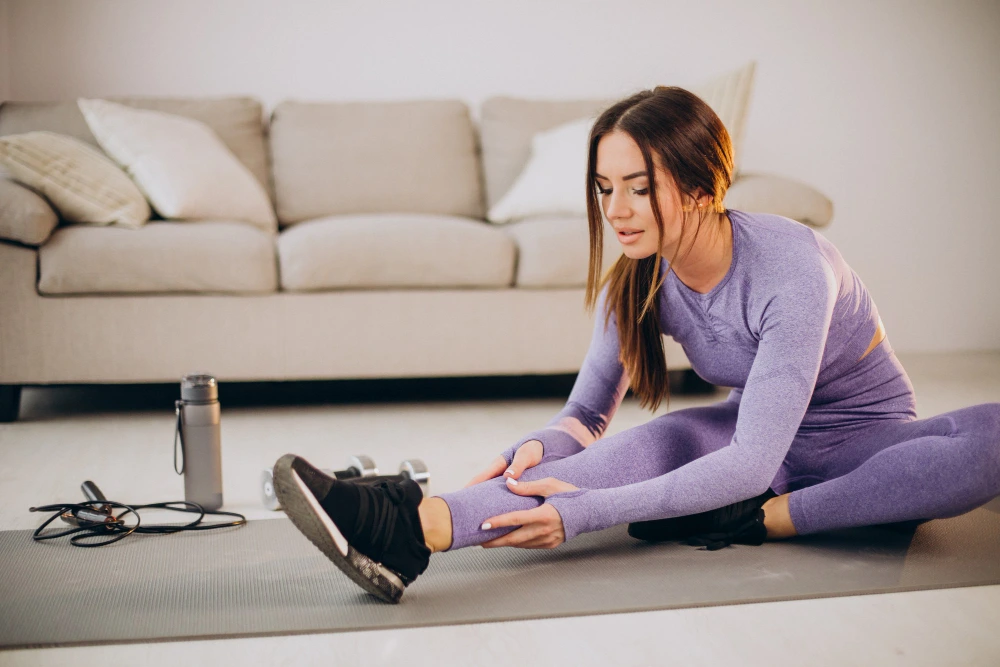
What Exercises To Avoid With Plantar Fasciitis
People with heel and arch pain need clear guidance on What Exercises To Avoid With Plantar Fasciitis. Some movements overload the heel, while certain footwear choices keep the plantar fascia irritated. High impact drills, sudden training jumps, and narrow or unsupportive shoes often delay recovery. Warning signs show when a workout is too aggressive for your current stage of heel pain. With that clarity, you can protect sore tissue, stay active, and decide when expert help is needed.
Why Some Exercises Make Plantar Fasciitis Worse
Plantar fasciitis occurs when the plantar fascia under the heel is repeatedly strained without enough time to heal. The plantar fascia is a thick strip of connective tissue on the bottom of the foot that supports the arch. When certain movements create strong force through this area, irritation increases and pain becomes more persistent. Understanding What Exercises To Avoid With Plantar Fasciitis helps you protect this tissue while you stay active. The aim is not to stop all exercise but to avoid patterns that keep driving pain higher.
How Repeated Impact Increases Heel Pain
Each step sends force from the ground into the heel, then forward through the arch. With plantar fasciitis the tissue near the heel is already sensitive and slower to recover. High impact exercise increases both the peak force and the number of loaded steps. Running on hard surfaces, repeated jumping, or fast direction changes all raise that burden. If rest between sessions is too short, the tissue starts each workout in a vulnerable state. Over time the body interprets this pattern as injury rather than normal training stress. People then notice earlier pain during activity and a stronger ache later the same day. In this situation even well chosen low impact work can feel less effective until impact is reduced.
Signs An Exercise Is Irritating The Plantar Fascia
Clear patterns show when an exercise is too aggressive for the heel. Pain appears sooner in the workout than it did the week before. Discomfort climbs quickly from mild to sharp instead of staying steady and manageable. Morning heel pain lasts longer or feels worse after training days than after rest days. You may start limping, shorten your stride, or avoid placing weight on part of the foot. Swelling or warmth around the heel can also increase after certain activities. Any exercise that repeatedly produces these patterns belongs on your personal list of exercises to avoid. At that point the plan should shift toward lower impact options and shorter sessions until symptoms are better controlled.
What Exercises To Avoid With Plantar Fasciitis
What Exercises To Avoid With Plantar Fasciitis depends mainly on how much force reaches the heel each session. Movements that involve repeated hard landings or long periods on unforgiving surfaces can keep the plantar fascia irritated. Avoiding or modifying these patterns helps the tissue calm down so gentler rehabilitation and daily walking feel easier.
Running And Jogging On Pavement Or Hard Tracks
Running and jogging place several times body weight through the heel with every step. When this happens hundreds or thousands of times in one session, heel irritation often increases. Pavement, track surfaces, and other hard paths give very little natural cushioning under the foot. People notice stronger pain with the first steps after a run and more stiffness the next morning. If running is important, many clinicians suggest pausing it during a painful phase rather than forcing shorter runs. Walking on softer ground or using low impact cardio is usually safer until symptoms are better controlled.
Jumping Moves Such As Jumping Jacks Burpees And Box Jumps
Jumping drills create sudden impact at landing and rapid loading through the arch. Examples include jumping jacks, burpees with a jump, and box jumps in fitness classes. These moves demand strong shock absorption from the calf, ankle, and plantar fascia on every repetition. When the fascia is already sensitive, repeated jumps can turn brief discomfort into sharp heel pain. Pain often increases during the workout and lingers for many hours afterward. Most people with active plantar fasciitis should substitute step based or floor based conditioning instead of jump sequences.
High Impact Aerobics Or Dance Classes With Repeated Leaps
Group classes that include hops, quick direction changes, and repeated leaps can strain the heel. Choreography often combines side steps, turns, and partial jumps with music that encourages faster movement. This pattern keeps the plantar fascia under frequent impact without predictable rest periods. Symptoms may spike during sections that ask for jumping while turning or landing on the forefoot. People who enjoy classes can ask instructors for low impact versions that keep one foot on the floor. If pain still rises, it is better to switch to cycling, pool exercise, or strength work during recovery.
Deep Heel Drop Calf Raises Off A Step Or Curb
Calf stretching is often helpful, but deep heel drops with full body weight can aggravate heel pain. In this exercise the forefoot rests on a step while the heel hangs below the edge. Lowering too far places strong tension through the Achilles tendon and the plantar fascia near the heel. For some people this creates a sharp pulling sensation or burning pain under the foot. A safer approach is a milder calf stretch with the whole foot on the ground or on a small incline. Any heel drop that produces strong pain or next day stiffness should be avoided until a clinician reviews the plan.
Barefoot High Intensity Workouts On Hard Floors
Barefoot training removes the cushioning and support that shoes normally provide under the heel. On hard floors, that means every jump, lunge, or quick step sends more force into the plantar fascia. Examples include barefoot high intensity circuits, martial arts drills, and fast body weight workouts on tile or wood. People may not feel pain immediately, but symptoms often surge later that day or the next morning. Supportive athletic shoes or cushioned indoor footwear are usually a better choice during plantar fasciitis recovery. If a program requires bare feet, it should be postponed or modified until heel pain is stable and well controlled.
What’s The Worst Thing You Can Do For Plantar Fasciitis?
Many people search What Exercises To Avoid With Plantar Fasciitis but overlook the biggest problem. The worst pattern is not a single move. It is continuing high impact training while clear warning signs keep getting stronger. Morning pain, growing stiffness, and sharper heel tenderness all show that the plantar fascia is overloaded. Ignoring these changes and repeating the same routine turns a short lived injury into a long standing problem.
Pushing Through Morning Heel Pain And Ignoring Flares
Morning heel pain is one of the key features of plantar fasciitis. It shows that the tissue under the heel stayed irritated overnight. Walking through this pain without any change in plan increases small strains inside the fascia. The risk rises when people still do fast walks, runs, or sports on those days. Pain that needs a few careful steps to settle is very different from pain that worsens with activity. If discomfort grows as you move, that session is too demanding for your current stage. Continuing anyway is often the single worst thing you can do for plantar fasciitis recovery.
Doubling Training Time Or Intensity In A Single Week
The plantar fascia handles gradual change better than sudden jumps. Big increases in distance, speed, or workout frequency raise force through the heel very quickly. Common examples include doubling weekly walking miles or adding several new classes in one week. These jumps give the tissue very little chance to repair early strain from the previous sessions. People then notice heel pain starting sooner, lasting longer, and appearing on more days. Any time you raise training demands, changes should be small and tested over several weeks. If pain clearly rises after an increase, step back and return to the last comfortable level.
What Should You Not Wear With Plantar Fasciitis?
Footwear strongly affects how much pressure reaches the heel with every step you take. Poor shoes can quietly undo progress from careful stretching and activity changes. When planning What Exercises To Avoid With Plantar Fasciitis it also helps to ask what not to wear. Shoes that lack structure, cushion, or fit increase strain on the plantar fascia during normal daily walking.
Flat Unsupportive Shoes And Flip Flops
Very flat shoes and basic flip flops provide almost no structure under the arch. The heel often sinks toward the floor with each step, stretching the plantar fascia at its sore attachment. Thin soles also fail to reduce force from the ground, so the heel pad absorbs more shock. Over a full day this pattern can turn mild morning stiffness into stronger pain by evening. People with plantar fasciitis usually do better in shoes with a defined arch and a firm heel counter.
Worn Out Sneakers Without Cushion Or Arch Support
Old athletic shoes often look acceptable but lose cushioning and support inside the midsole. As the material softens the foot sinks more on every step, increasing strain on the plantar fascia. The arch may collapse inward, causing the heel to twist slightly with each contact. This twisting movement can be just as irritating as direct pressure on the sore area. Replacing worn sneakers with newer pairs that match your foot type is a simple way to reduce symptoms.
High Heels And Very Narrow Toe Boxes
High heels shift body weight forward so more pressure moves toward the front of the foot. That position tightens the calf and shortens the Achilles tendon, which increases pull on the plantar fascia during walking. Very narrow toe boxes squeeze the forefoot and can change how the arch loads with each step. People often notice more heel soreness after days spent in tight dress shoes or formal boots. Choosing lower heel heights, wider fronts, and supportive insoles is usually kinder to a painful plantar fascia.
When To See A Chiropractor For Plantar Fasciitis
Many people try rest, shoe changes, and simple stretches before they consider professional care. It is reasonable to schedule an assessment when heel pain keeps returning or starts to limit walking, work, or sleep. It also makes sense to seek help if you feel unsure about What Exercises To Avoid With Plantar Fasciitis and which ones are safe.
Ashburn Village Chiropractic is the longest standing chiropractic office in Ashburn and has served local families for more than twenty years. The practice is led by Dr Jonathan Solomon, who has provided chiropractic care to the Ashburn community since 2000. He is licensed by the Virginia Board of Medicine and is nationally board certified in chiropractic care. He is also a member of the Virginia Chiropractic Association and the American Chiropractic Association.
Patients see Dr Jonathan Solomon at each visit, which allows consistent follow up rather than rotating providers. His approach focuses on the whole person, including posture, work demands, daily habits, and specific areas of pain. Care is centered on non surgical treatment for musculoskeletal problems, with careful examination before any spinal or joint adjustment.
If heel or foot pain is not improving with calm activity changes and basic home care, an in person evaluation can clarify the next step. A structured plan from a chiropractor who knows your history can help you match daily exercises and activity levels to your current condition.
Get a summary of this article with your favorite AI: